What Mileage Is Too High for a Used Electric Car?
Mileage matters less for used EVs than most buyers expect. Here is what actually determines whether a high-mileage electric car is worth buying
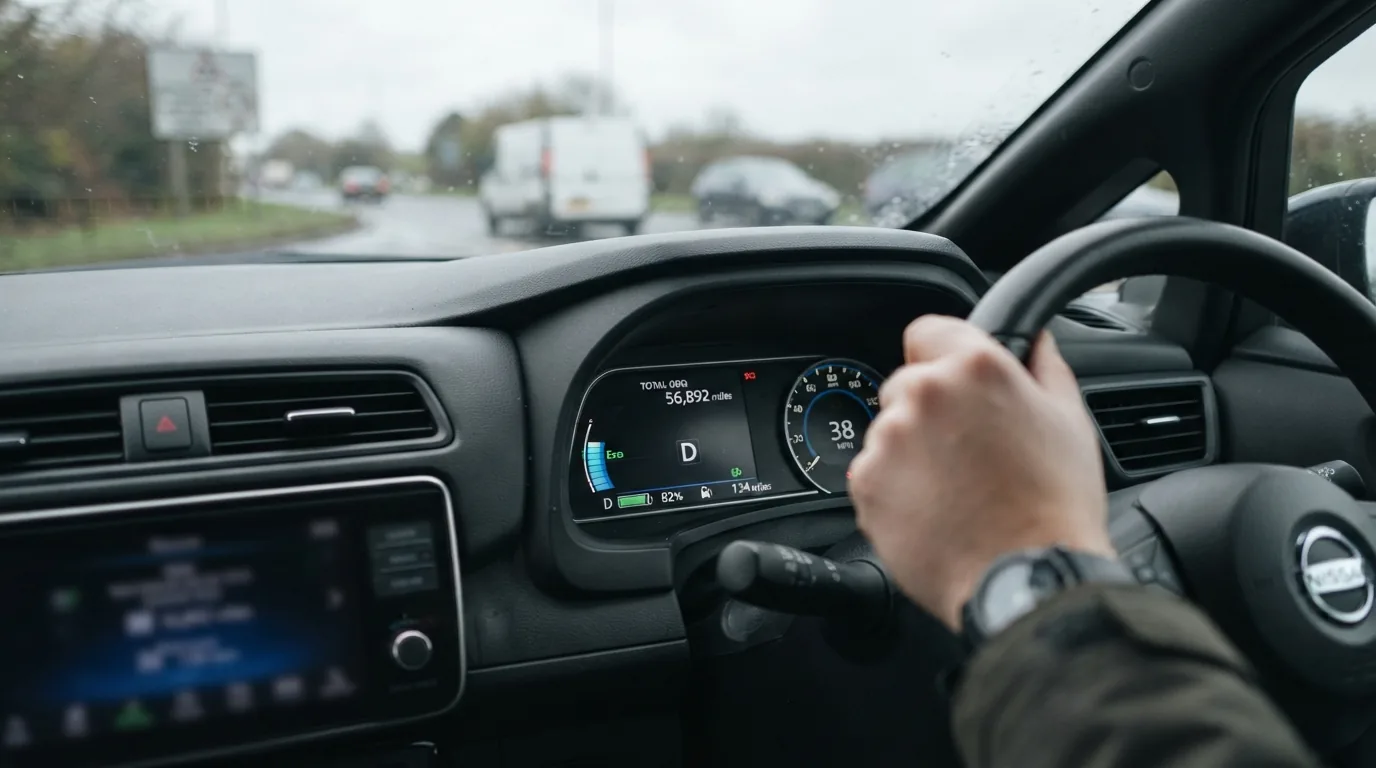
Quick answers
- There is no single mileage threshold that makes a used electric car too high to buy. Unlike a petrol engine, an EV's electric motor has no oil to degrade, no timing belt to snap and no exhaust to corrode.
- In a combustion engine vehicle, high mileage signals wear across dozens of components: the engine, gearbox, clutch, exhaust and more.
- Research across large fleets of used EVs, including studies by Geotab and data aggregated by Cap HPI, shows that average EV battery degradation runs at roughly 1.5% to 2.3% capacity loss per year in typical UK use.
- The more useful framing is to look at mileage in context of age and, above all, battery state of health.
- If you can answer all three satisfactorily, mileage becomes a secondary concern.
- The common myth to correct: Many buyers approach used EV shopping with the same instinct they would apply to a used diesel: low mileage good, high mileage bad.
There is no single mileage threshold that makes a used electric car too high to buy. Unlike a petrol engine, an EV’s electric motor has no oil to degrade, no timing belt to snap and no exhaust to corrode. The key variable is battery state of health, and that does not track mileage as closely as most buyers assume.
That said, mileage is not irrelevant. Here is how to think about it properly.
Why mileage is less important in EVs than in petrol cars
In a combustion engine vehicle, high mileage signals wear across dozens of components: the engine, gearbox, clutch, exhaust and more. In an EV, the drivetrain is dramatically simpler. An electric motor has one moving part. There is no transmission fluid to replace, no clutch to slip and no multi-gear gearbox to fail.
The battery is the one component where cumulative use genuinely matters, but even here the relationship between miles covered and capacity lost is not straightforward. Battery degradation is driven more by:
- Number of charge cycles completed
- Proportion of charging done at high-power DC rapid chargers
- Time spent at or near 100% or 0% charge states
- Thermal stress (very hot or very cold ambient temperatures)
- Age of the battery, regardless of mileage
A 60,000-mile car that has been mostly home-charged to 80% overnight may have significantly better battery health than a 30,000-mile car that was regularly rapid-charged to 100% at motorway services.
What does the data say about EV mileage and degradation?
Research across large fleets of used EVs, including studies by Geotab and data aggregated by Cap HPI, shows that average EV battery degradation runs at roughly 1.5% to 2.3% capacity loss per year in typical UK use. That is the dominant factor, not the odometer.
A study published in 2026 found that even cars aged eight to nine years showed a median state of health around 85%, which is well above the 70% threshold generally considered the end of a battery’s practical automotive life.
Modern EV batteries are built to retain at least 70% to 80% of capacity after either 100,000 miles or eight years, whichever comes first. Many manufacturers offer a warranty to that effect.
So what mileage should you actually worry about?
The more useful framing is to look at mileage in context of age and, above all, battery state of health.
| Scenario | What to think |
|---|---|
| 80,000 miles, 5 years old, SoH 91% | Strong buy: battery is healthy, motor is fine, good value |
| 40,000 miles, 7 years old, SoH 78% | Age has degraded the battery more than mileage; negotiate hard |
| 100,000 miles, 6 years old, SoH 88% | High miles but well maintained; value depends on model and charging history |
| 25,000 miles, 8 years old, SoH 68% | Battery is near end of viable life despite low mileage; avoid or budget for pack replacement |
| 50,000 miles, air-cooled Nissan Leaf, SoH 72% | Air cooling limits longevity; check carefully and price accordingly |
Does model make a difference?
Yes, substantially. Not all EV batteries are created equal.
Nissan Leaf (pre-2019, 24kWh and 30kWh): These use passive air cooling, which means the battery is more vulnerable to thermal stress. UK owners have generally fared better than US owners (a hotter climate accelerates degradation), but early Leafs with 80,000 or more miles should be inspected carefully. Expect 70% to 80% SoH at this mileage level.
Renault Zoe: Similar air-cooled design in earlier versions. Better in later 52kWh variants, which have improved thermal management.
Tesla Model 3 and Model Y: Liquid-cooled batteries with sophisticated thermal management and active battery management software. Telemetry data shows Tesla batteries typically lose around 5% to 7% of capacity over the first 150,000 miles. A 100,000-mile Model 3 is far less of a concern than a 100,000-mile early Leaf.
Hyundai Ioniq 5 and Kia EV6 (2021 onwards): 800V architecture with active cooling. Degradation data is limited by relative youth of these models, but initial evidence is positive.
BMW i3 (60Ah, 94Ah, 120Ah variants): Liquid cooling, sturdy cells. Batteries have held up well in UK conditions, even at high mileages.
Is there a mileage above which you should automatically walk away?
Not a firm one. But as a practical guide:
- Under 60,000 miles: Very little to worry about on any modern EV. Focus on SoH and charging history.
- 60,000 to 100,000 miles: Check SoH carefully. Most cars will still be in excellent condition, but the range of outcomes is wider.
- Over 100,000 miles: Not a disqualifier, but get a professional battery health inspection. On air-cooled models particularly, SoH can be the difference between a bargain and a liability.
- Over 150,000 miles: These are relatively rare on the used market in 2026, but taxis and private hire vehicles occasionally come up at this mileage. Battery replacement cost should be factored into any offer.
What really matters: the three questions to ask
- What is the battery state of health, and how was it checked?
- What proportion of charging was done at DC rapid chargers?
- Is the battery covered by any remaining manufacturer warranty?
If you can answer all three satisfactorily, mileage becomes a secondary concern. Get an OBD2 diagnostic or ask for a battery health certificate (typically £60 to £100 from an independent specialist), and use the SoH figure to negotiate the price.
The common myth to correct
Many buyers approach used EV shopping with the same instinct they would apply to a used diesel: low mileage good, high mileage bad. In EVs, a younger car with moderate to high mileage and a healthy battery is often a better buy than an older, low-mileage car whose battery has degraded through time and charging habits rather than miles covered.
In 2026 the used EV market is mature enough that battery health data is increasingly easy to obtain. Use it. The mileage figure on the listing is one data point, not the whole picture.
Where to next?
Read the full used EVs guide for a complete overview of what to look for when buying, or visit our best used electric cars page to see ranked model recommendations across every budget.
How we test and where our numbers come from
Range figures are official WLTP combined values taken from manufacturer UK specification pages, with real-world estimates drawn from independent comparative testing. Prices are UK list prices at the time of the latest update. Tax, grant and charging-scheme figures come from GOV.UK and HMRC publications. We re-check every guide when pricing, specification or policy changes. Last checked 11 August 2026.
Frequently asked questions
What does the data say about EV mileage and degradation?
Research across large fleets of used EVs, including studies by Geotab and data aggregated by Cap HPI, shows that average EV battery degradation runs at roughly 1.5% to 2.3% capacity loss per year in typical UK use. That is the dominant factor, not the odometer.
So what mileage should you actually worry about?
The more useful framing is to look at mileage in context of age and, above all, battery state of health.

EV Compared
The EV Compared editorial team tracks the UK electric vehicle market full time: new model launches, list prices, WLTP and real-world range, public charging tariffs and the tax rules that decide what an EV actually costs to run. Every guide is checked against manufacturer specifications and official GOV.UK figures, and updated whenever the numbers move.
Related reading
View all
What Are the Biggest Myths About Switching to an EV?
The claims that put UK drivers off going electric, and what the evidence actually says
Should You Buy an EV in 2026 or Wait for Cheaper Models?
An honest look at where EV prices are heading and whether the wait is worth it for UK buyers
Buying and Owning an Electric Car in the UK: The Complete 2026 Guide
Everything you need to know about costs, charging, depreciation and day-to-day life with an EV