Best Used Electric Cars Under £10,000 in the UK
What you can actually buy for under £10,000 in the 2026 UK used EV market, with honest range, battery and reliability assessments
Quick answers
- For under £10,000 you can buy a used electric car in the UK that covers most urban and suburban journeys. These cars have real limitations, particularly on range, but for the right buyer they represent some of the best value in the entire used car market.
- Under £10,000 in the used EV market generally means a car that is at least four to seven years old, has a battery offering 100 to 180 miles of real-world range (less in cold weather), and uses earlier charging technology with maximum speeds of 40 to 50 kW DC.
- For a buyer spending up to £10,000, the 40kWh Leaf is almost always the best choice.
- 2. Renault Zoe 52kWh (battery owned): The 52kWh Zoe offers the most range of any car on this list when in good condition: 155 to 180 miles in real-world mixed driving.
- 3. BMW i3 (94Ah variant, 2015 to 2017): For under £10,000 you can reach the older 94Ah i3 (33.2kWh usable), which offers around 110 to 135 miles in real-world mixed driving.
- 4. Volkswagen e-up!: Volkswagen's e-up! is a small, city-focused EV that occupies a niche at the extreme budget end of the market.
For under £10,000 you can buy a used electric car in the UK that covers most urban and suburban journeys. These cars have real limitations, particularly on range, but for the right buyer they represent some of the best value in the entire used car market.
This is an honest guide to what that money buys in 2026, including the trade-offs you should know before committing.
What the budget buys: the realistic picture
Under £10,000 in the used EV market generally means a car that is at least four to seven years old, has a battery offering 100 to 180 miles of real-world range (less in cold weather), and uses earlier charging technology with maximum speeds of 40 to 50 kW DC. These are not motorway-trip machines. They are practical, cheap-to-run urban and suburban cars.
The running cost advantage is real regardless of price. Home-charging a Nissan Leaf at 8p per kWh (off-peak EV tariff) costs around £2 to £3 per full charge, delivering 120 to 140 miles of range. That is approximately 1.5p to 2p per mile, compared to 14p to 18p per mile in a 40mpg petrol car at current fuel prices.
The shortlist
| Model | Typical price | Real-world range | Max DC | Notes |
|---|---|---|---|---|
| Nissan Leaf 40kWh (2018-2020) | £7,500 to £10,000 | 120 to 145 miles | 50 kW | Top pick; check SoH carefully |
| Renault Zoe 52kWh battery owned (2019-2020) | £8,500 to £10,000 | 155 to 180 miles | 50 kW / 22 kW AC | Confirm battery owned, not leased |
| BMW i3 94Ah (2015-2017) | £7,000 to £10,000 | 110 to 135 miles | 50 kW | Great build quality; narrow tyres |
| Hyundai Ioniq Electric 28kWh | £7,000 to £9,500 | 110 to 135 miles | 50 kW | Efficient; earlier variant of strong model |
| Nissan Leaf 30kWh (2016-2018) | £5,500 to £8,000 | 80 to 110 miles | 50 kW | Only for short-range needs |
| Volkswagen e-up! | £8,000 to £10,000 | 80 to 100 miles | 40 kW | Urban only; tiny, well built |
1. Nissan Leaf 40kWh: the top pick under £10,000
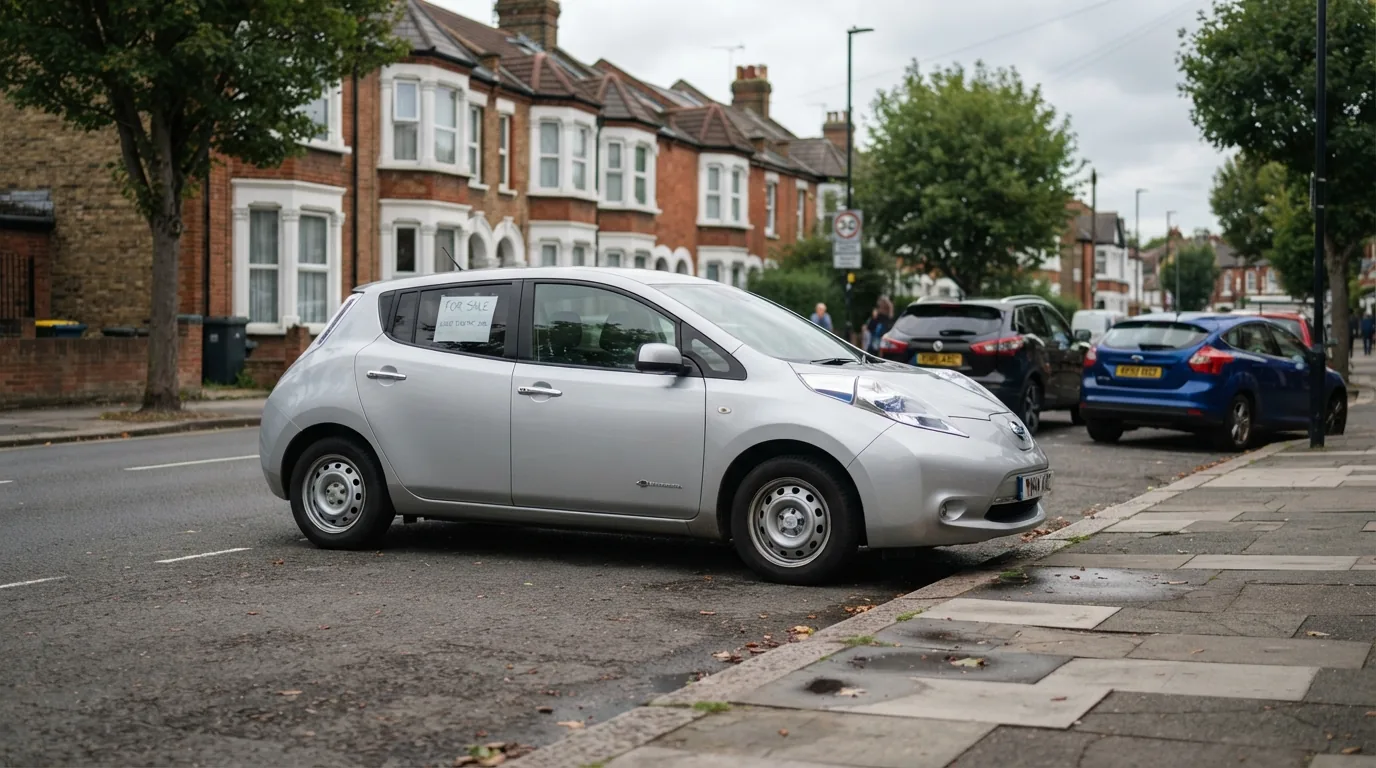
For a buyer spending up to £10,000, the 40kWh Leaf is almost always the best choice. It is the most common used EV in the UK, so there are more to choose from, making it easier to find one in good condition with a full service history. The 40kWh battery offers enough range for most UK commutes. E-Pedal and ProPilot are useful features on higher trims.
The key caveat at this price point is age and battery condition. A Leaf for under £10,000 will typically be from 2018 to 2020 and may have 50,000 to 90,000 miles. Battery SoH check is essential before buying.
Use LeafSpy: plug a Bluetooth OBD2 dongle (under £20 from Amazon) into the car’s OBD port, download the free LeafSpy app, and you will see an exact SoH reading within minutes. A 40kWh Leaf from 2019 should show at least 85% SoH. Below 80%, the car’s real-world range in winter could drop to under 100 miles.
2. Renault Zoe 52kWh (battery owned)
The 52kWh Zoe offers the most range of any car on this list when in good condition: 155 to 180 miles in real-world mixed driving. The 22 kW AC charging is also faster than most rivals in this price range, making it quicker to top up at home or at a public Type 2 charger.
At under £10,000 you are looking at 2019 or early 2020 examples. The critical thing to confirm is that the battery is owned outright rather than leased. A battery-owned Zoe listing will state this clearly; a leased battery adds £50 to £110 per month to the cost of ownership. See our full guide to Zoe battery leasing for what this means in practice.
3. BMW i3 (94Ah variant, 2015 to 2017)
For under £10,000 you can reach the older 94Ah i3 (33.2kWh usable), which offers around 110 to 135 miles in real-world mixed driving. This is less than the Leaf 40kWh or Zoe 52kWh, but the i3 experience is markedly different from either car.
The carbon fibre reinforced plastic body is unusual and provides real benefits: the car is lighter and more agile than it has any right to be. The interior quality and material choices are excellent. The two-door design with rear-hinged back doors is genuinely practical for urban use.
Liquid cooling has kept i3 batteries in good health even at higher mileages. Check SoH via an OBD2 diagnostic or specialist inspection.
The i3 REX variant (which includes a small range extender petrol engine) adds a further 60 to 80 miles in an emergency, but brings the complexity of maintaining a petrol engine alongside the EV system. Ensure petrol REX cars have a current service history for both systems.
4. Volkswagen e-up!
Volkswagen’s e-up! is a small, city-focused EV that occupies a niche at the extreme budget end of the market. It offers around 80 to 100 miles of range from its 32.3kWh battery and maximum 40 kW DC charging. It is genuinely pleasant to drive in urban conditions: quiet, responsive, and remarkably well built for a budget car.
For a pure city commuter who does not need more than 80 miles of range on any day and wants something easy to park, the e-up! is compelling. At £8,000 to £10,000 for a 2020 or 2021 example, it is not the cheapest option, but it is probably the most refined at this price.
What the budget does not buy
Under £10,000 in 2026 does not realistically buy you:
- More than 180 miles of real-world range
- DC charging faster than 50 kW
- CCS rapid charging (most cars in this range use CHAdeMO or CCS 50kW)
- A car that is comfortable doing regular motorway runs from London to Manchester
- A vehicle newer than 2020 (with very few exceptions)
This is not a criticism of these cars. They are purpose-built for the use case they serve. But if your driving regularly involves long motorway journeys or you have no access to home charging and rely entirely on public rapid chargers, a slightly higher budget will serve you much better.
The biggest mistake at this price point
Buying on price alone without checking battery health. A Leaf listed at £7,500 with 78% SoH is not a bargain. It delivers significantly less range than the same car with 91% SoH listed at £9,500. At 78% SoH a 40kWh Leaf’s nominal range of 168 miles (WLTP) drops to around 130 miles in ideal conditions and 90 to 100 miles on a cold winter day with heating running.
Spend £15 to £20 on an OBD2 dongle, download LeafSpy (Leaf) or Car Scanner (most other models), and check the SoH before you make any decision.
A note on home charging access
The value proposition for a used EV under £10,000 is strongest for drivers who can home-charge. If you have off-street parking and can install a 7 kW home charger (a standard single-phase unit costs around £800 to £1,000 including installation), you will spend approximately £2 to £3 per full charge and effectively never visit a petrol station for daily driving. That is a substantial saving over time even at this modest purchase price.
If you cannot home-charge and depend entirely on public chargers, the economics are less compelling at this price point. Paying 60p to 80p per kWh at a public rapid charger while also covering the maintenance and depreciation of an older car may not save you as much as you expect over equivalent petrol running costs.
Where to next?
See the full used EVs guide for a complete overview of the buying process, or view the broader best used electric cars shortlist if your budget extends beyond £10,000.
How we test and where our numbers come from
Range figures are official WLTP combined values taken from manufacturer UK specification pages, with real-world estimates drawn from independent comparative testing. Prices are UK list prices at the time of the latest update. Tax, grant and charging-scheme figures come from GOV.UK and HMRC publications. We re-check every guide when pricing, specification or policy changes. Last checked 11 August 2026.

EV Compared
The EV Compared editorial team tracks the UK electric vehicle market full time: new model launches, list prices, WLTP and real-world range, public charging tariffs and the tax rules that decide what an EV actually costs to run. Every guide is checked against manufacturer specifications and official GOV.UK figures, and updated whenever the numbers move.
Related reading
View all
What Are the Biggest Myths About Switching to an EV?
The claims that put UK drivers off going electric, and what the evidence actually says

Should You Buy an EV in 2026 or Wait for Cheaper Models?
An honest look at where EV prices are heading and whether the wait is worth it for UK buyers
Buying and Owning an Electric Car in the UK: The Complete 2026 Guide
Everything you need to know about costs, charging, depreciation and day-to-day life with an EV