Most Reliable Used Electric Cars in the UK
Which used electric cars have the strongest reliability records in 2026? Warranty data, owner surveys and long-term evidence ranked
Quick answers
- Electric cars are mechanically simpler than petrol or diesel equivalents, but that does not mean they are all equally reliable. Battery durability, software quality, build precision and the design of supporting electrical systems all vary between manufacturers.
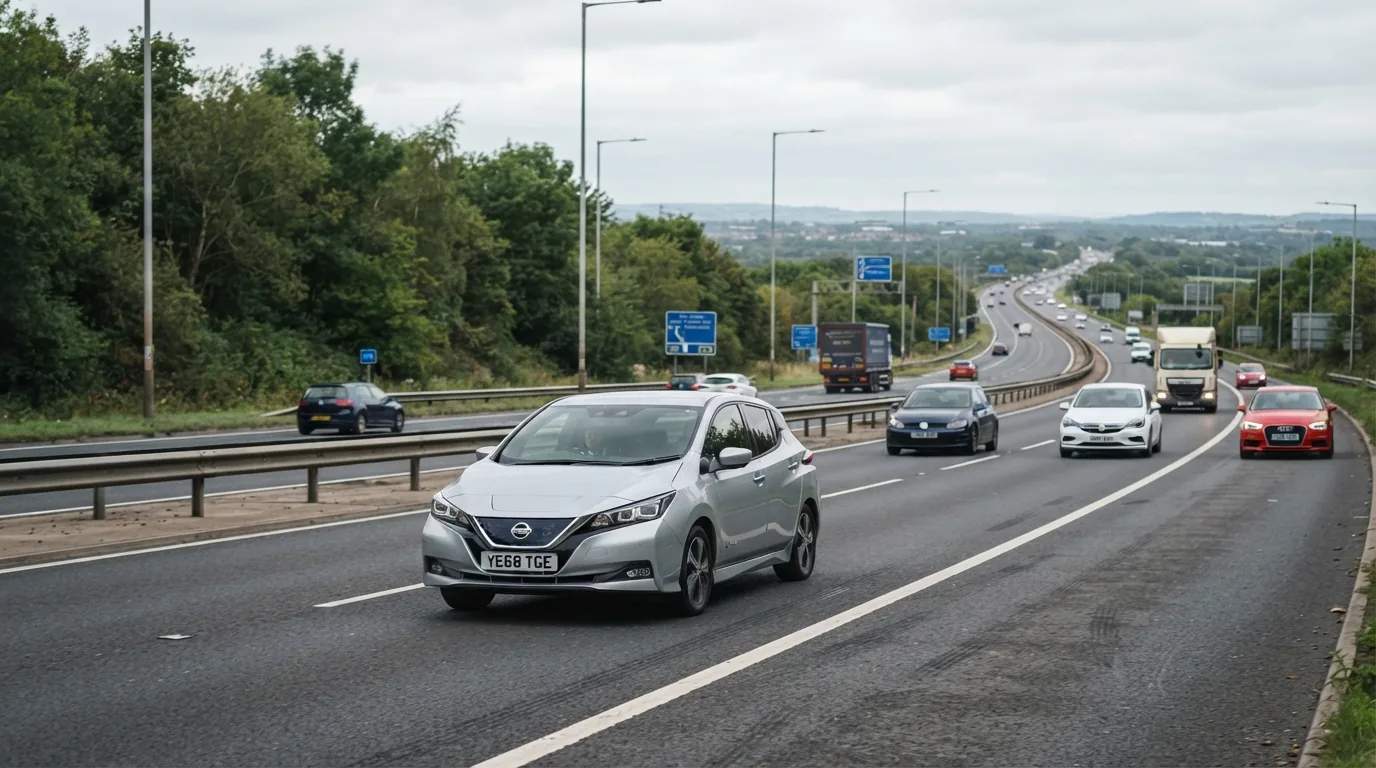
- The Nissan Leaf's claim to the top spot in reliability data is not coincidental.
- The first-generation Ioniq Electric (2016 to 2022) is consistently underrated in the used EV market.
- The e-Niro's 2.3% claim rate is particularly impressive given that the 64kWh battery is regularly used for genuine long-distance driving, with the associated charging cycles this implies.
- Tesla's reliability story is mixed depending on which aspect you focus on.
- 5. BMW i3: strong for a pioneering design: The i3 was BMW's first serious EV and uses a unique carbon fibre construction approach.
Electric cars are mechanically simpler than petrol or diesel equivalents, but that does not mean they are all equally reliable. Battery durability, software quality, build precision and the design of supporting electrical systems all vary between manufacturers. Here is what the data shows about which used EVs have the strongest reliability records.
How is EV reliability measured?
For this article we draw on three sources:
- Warranty claims data from Warranty Solutions Group (2026): This analysis covers thousands of used EV warranty claims, tracking claim rates and average repair costs by model.
- RAC and AA breakdown callout data: Patterns in callout reasons and frequency by model.
- Consumer surveys: Including Which? and Auto Express driver satisfaction surveys where available.
None of these sources is perfect. Warranty data reflects only cars covered by warranty. Owner surveys are self-selected. But together they provide a clearer picture than any single source.
The reliability ranking
| Model | Warranty claim rate | Avg repair cost | Top issues | Overall |
|---|---|---|---|---|
| Nissan Leaf (40kWh, 2018-2022) | 1.52% | £818 | Lane assist camera, shock absorbers | Excellent |
| Hyundai Ioniq Electric (38kWh) | 2.1% | £640 | Minor electrical components | Excellent |
| Kia e-Niro (64kWh) | 2.3% | £720 | Charging components, minor software | Very Good |
| Tesla Model 3 (2019-2023) | 2.8% | £950 | Build quality, 12V battery, software | Very Good |
| BMW i3 (94Ah/120Ah) | 2.9% | £880 | Rear door hinges, charging modules | Very Good |
| Audi e-tron (2019-2022) | 3.23% | £570 | Charging system, minor electrical | Good |
| Hyundai Kona Electric (64kWh) | 2.5% | £710 | Charging components | Very Good |
| Renault Zoe (52kWh) | 3.4% | £680 | Charging port, battery management | Good |
| Volkswagen ID.3 (2020-2023) | 4.1% | £890 | Software, touchscreen, minor electrical | Moderate |
| Jaguar I-Pace (2018-2023) | 4.8% | £1,240 | High-voltage electrical, recall items | Fair |
1. Nissan Leaf (40kWh): the most reliable used EV
The Nissan Leaf’s claim to the top spot in reliability data is not coincidental. The Leaf has been in UK production since 2013, and the 40kWh version (from 2018) benefits from over five years of refinement of the platform. It is a mechanically straightforward car with no unnecessary complexity.
Warranty claims come in at just 1.52%, the lowest of any used EV in the 2026 data set. When repairs are needed, average cost is £818, with the most common items being the lane-assist camera (a technology issue, not an EV-specific one), shock absorbers (wear-related) and steering wheel control switches.
The caveat, as always with the Leaf, is the air-cooled battery. Reliability of the mechanical and electrical systems is excellent. Battery capacity retention in the UK is generally good, but cars with heavy rapid-charging histories can show greater degradation than the average. Check SoH before buying.
2. Hyundai Ioniq Electric (38kWh): consistent and efficient
The first-generation Ioniq Electric (2016 to 2022) is consistently underrated in the used EV market. Its claim rate of around 2.1% and low average repair cost of £640 reflect a car that has been engineered conservatively and built to a high standard.
The Ioniq Electric’s particular strength is efficiency. It is one of the most economical EVs at motorway speeds due to its very low Cd aerodynamic drag coefficient of 0.24. This means both lower energy cost per mile and less battery stress over the car’s lifetime.
Battery longevity has been strong, aided by active thermal management and conservative battery management software.
3. Kia e-Niro (64kWh): most reliable long-range option
The e-Niro’s 2.3% claim rate is particularly impressive given that the 64kWh battery is regularly used for genuine long-distance driving, with the associated charging cycles this implies. Kia’s battery management is clearly working: cell longevity data from 2019 to 2021 e-Niros in 2026 consistently shows SoH above 88%.
The seven-year transferable warranty is both a reliability signal and a safety net. Kia would not offer this warranty if the engineering did not support it.
Common issues when they arise tend to be charging components and minor software glitches rather than fundamental drivetrain problems.
4. Tesla Model 3 (2019 to 2023): very reliable drivetrain, some build quality concerns
Tesla’s reliability story is mixed depending on which aspect you focus on. The drivetrain, battery system and software are among the most reliable in the industry. Battery degradation rates are class-leading. The electric motor itself almost never fails.
Build quality of the body and interior is where Tesla has had more variable results, particularly on pre-2022 cars. Panel gaps, water ingress around glass roofs, and failures of interior components (creaking dashboards, sticky screen surfaces on early cars) account for a significant share of the 2.8% claim rate. The 12V auxiliary battery on older cars (pre-2021) is a known failure point.
The 2023 Model 3 Highland dramatically improved build quality and is the most reliable and refined Tesla to buy used.
Bottom line: Buy Tesla for the drivetrain and software reliability. Be prepared for minor cosmetic and build quality issues on older cars.
5. BMW i3: strong for a pioneering design
The i3 was BMW’s first serious EV and uses a unique carbon fibre construction approach. Reliability has been better than many expected given how different the car is from a conventional vehicle.
The 2.9% claim rate reflects a car that mostly works very well but has some specific vulnerabilities. Rear door hinges can develop play over time. Some charging module issues have appeared. The high-voltage components themselves are generally reliable.
The i3’s liquid-cooled battery ages gracefully, and the car’s build quality is notably good for a car of its vintage.
Models to approach carefully
Volkswagen ID.3 (2020 to 2022): Early ID.3s had significant software problems. Volkswagen has issued numerous over-the-air updates that have addressed most issues, but first-year examples (2020) required dealer-level software reflashing and had more reliability complaints than the brand would like. Later 2022 and 2023 cars are significantly more refined. If buying a 2020 or early 2021 ID.3, confirm that all outstanding software updates have been applied.
Jaguar I-Pace: The I-Pace is a driver’s car with real qualities, but its 4.8% claim rate and higher average repair cost of £1,240 reflect the complexity of its electrical system. A 2019 I-Pace is also subject to a safety recall affecting battery charging (charging capacity must be reduced by 20% as a fire prevention measure). Check the VIN on the Jaguar recall database before purchasing any 2019 I-Pace.
Is a used EV generally more or less reliable than a used petrol car?
More reliable in most respects. EVs have far fewer moving parts in the drivetrain, no oil to degrade, no timing belt, no exhaust to corrode and no clutch to wear. The components that do fail tend to be software-related (fixable via update) or minor electrical systems.
The main additional risk versus a petrol car is the battery. A replacement battery on a used EV can cost £5,000 to £12,000 depending on model, which is why battery health checks before purchase are so important. But if you buy a car with a healthy battery from one of the models at the top of this list, the subsequent reliability is likely to be better than an equivalent-age petrol car.
Where to next?
Return to the used EVs guide for a complete buying overview, or visit our best used electric cars page for full shortlisted recommendations.
How we test and where our numbers come from
Range figures are official WLTP combined values taken from manufacturer UK specification pages, with real-world estimates drawn from independent comparative testing. Prices are UK list prices at the time of the latest update. Tax, grant and charging-scheme figures come from GOV.UK and HMRC publications. We re-check every guide when pricing, specification or policy changes. Last checked 11 August 2026.
Frequently asked questions
How is EV reliability measured?
None of these sources is perfect. Warranty data reflects only cars covered by warranty.
Is a used EV generally more or less reliable than a used petrol car?
More reliable in most respects. EVs have far fewer moving parts in the drivetrain, no oil to degrade, no timing belt, no exhaust to corrode and no clutch to wear.

EV Compared
The EV Compared editorial team tracks the UK electric vehicle market full time: new model launches, list prices, WLTP and real-world range, public charging tariffs and the tax rules that decide what an EV actually costs to run. Every guide is checked against manufacturer specifications and official GOV.UK figures, and updated whenever the numbers move.
Related reading
View all
What Are the Biggest Myths About Switching to an EV?
The claims that put UK drivers off going electric, and what the evidence actually says
Should You Buy an EV in 2026 or Wait for Cheaper Models?
An honest look at where EV prices are heading and whether the wait is worth it for UK buyers
Buying and Owning an Electric Car in the UK: The Complete 2026 Guide
Everything you need to know about costs, charging, depreciation and day-to-day life with an EV