What to Look for When Buying a Used Tesla in the UK
A model-by-model guide to used Tesla purchases in 2026, covering battery health, build quality, software, Supercharger access and what the common issues are
Quick answers
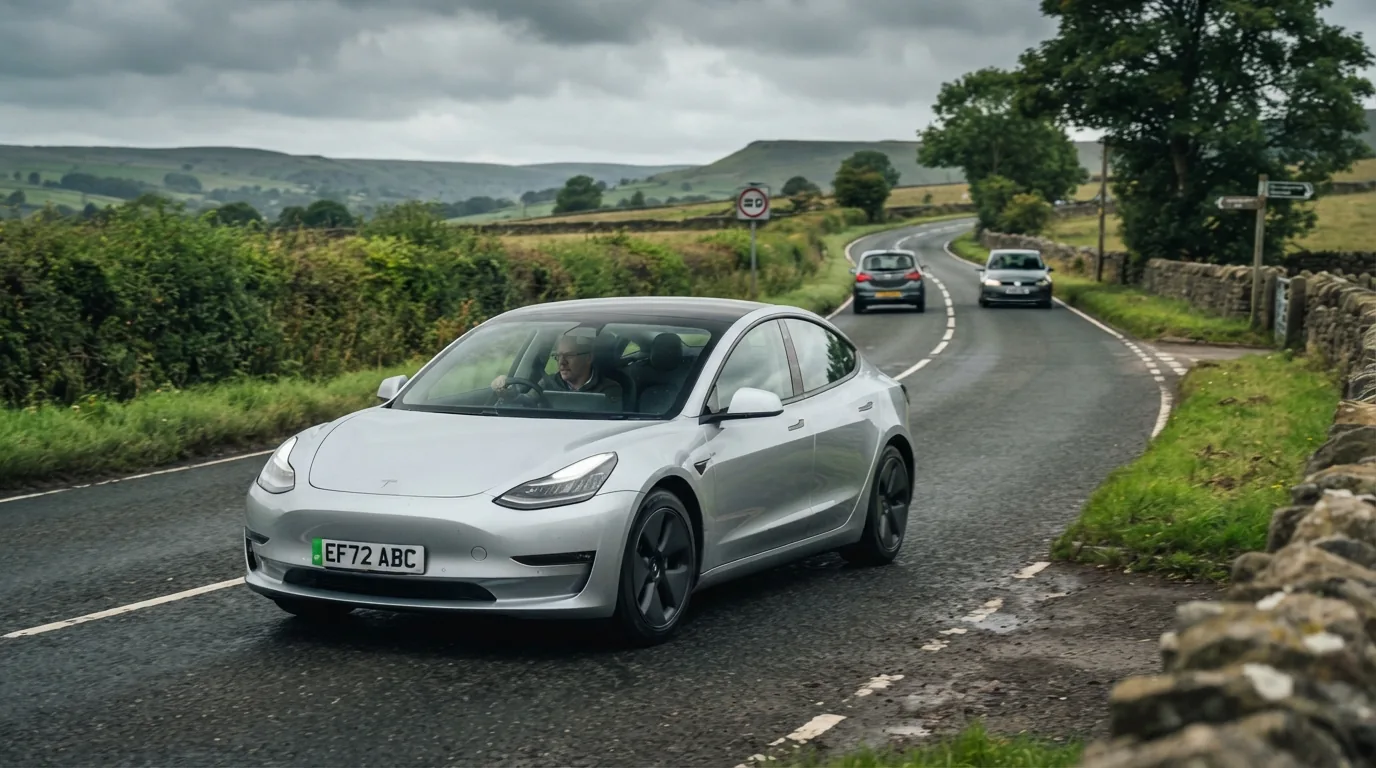
- Tesla is the most searched brand in the UK used EV market, and with good reason. Used Model 3s and Model Ys offer strong battery longevity, market-leading software, access to the Supercharger network, and lower running costs than almost any petrol car equivalent.
- The Model 3 represents the best value proposition in the used Tesla market.
- Tesla batteries are widely regarded as among the most durable in the used EV market.
- Software and over-the-air updates: Tesla's over-the-air update system is one of its most significant advantages.
- Supercharger access: All used Teslas retain access to Tesla's Supercharger network.
- The 2023 Highland refresh brought significant improvements to interior and exterior quality, and 2023-onwards Model 3s have meaningfully fewer reported panel gap complaints.
Tesla is the most searched brand in the UK used EV market, and with good reason. Used Model 3s and Model Ys offer strong battery longevity, market-leading software, access to the Supercharger network, and lower running costs than almost any petrol car equivalent. But buying used Tesla requires some specific knowledge that does not apply to other brands.
Here is what to check, what to avoid, and what the price reality looks like in 2026.
Which used Tesla models are available in the UK?
| Model | Years available used | Typical used price range (2026) | Key notes |
|---|---|---|---|
| Model 3 Standard Range Plus | 2019 to 2021 | £14,000 to £20,000 | LFP battery from late 2021; excellent longevity |
| Model 3 Long Range AWD | 2019 to 2023 | £22,000 to £32,000 | Best range option; 358 miles WLTP |
| Model 3 Performance | 2019 to 2023 | £24,000 to £34,000 | Fastest; 340 miles WLTP |
| Model 3 Highland (2024+) | 2024 onwards | £28,000 to £40,000 | Revised interior; better ride |
| Model Y Long Range | 2021 to 2023 | £28,000 to £38,000 | Best-selling EV in UK; spacious |
| Model Y Performance | 2021 to 2023 | £30,000 to £42,000 | Twin motor; 319 miles WLTP |
| Model S | 2013 to 2022 | £20,000 to £60,000 | Wide variation; early models need care |
| Model X | 2016 to 2022 | £35,000 to £80,000 | Complex falcon-wing doors; high parts cost |
The Model 3 represents the best value proposition in the used Tesla market. It is by far the most common, making it easier to find the specification you want at a competitive price, and its battery longevity track record is among the best of any EV on the market.
Battery health: what to expect from a used Tesla
Tesla batteries are widely regarded as among the most durable in the used EV market. Typical degradation is around 1% to 2% per year, meaning a 2020 Model 3 should still be showing 90% or more state of health (SoH) in 2026.
There is an important distinction to make between battery chemistries. From late 2021, Tesla switched the Model 3 Standard Range to lithium iron phosphate (LFP) cells, manufactured by CATL. LFP batteries tolerate 100% charges better than the NCA (nickel cobalt aluminium) chemistry used in earlier models, and Tesla recommends charging LFP cars to 100% regularly to maintain accurate range estimation. If you are buying a late-2021 or newer Standard Range Model 3, be aware of this difference and check which battery chemistry the car uses.
How to check battery health on a Tesla:
- The car’s energy screen shows available battery capacity in kWh and as a percentage
- Third-party apps including TeslaFi, Stats and Tessie display detailed battery data if the seller has an account (ask them to log in)
- A specialist Tesla inspection from a workshop or independent engineer (around £100 to £150) gives a formal written report
There is no OBD2 port in Teslas in the conventional sense. You cannot use generic OBD2 tools. Rely on the car’s own software or a Tesla-specific diagnostic service.
Software and over-the-air updates
Tesla’s over-the-air update system is one of its most significant advantages. The car you buy today may receive features and improvements that did not exist when it was manufactured. This includes updates to charging speed management, range estimation, autopilot behaviour and safety systems.
Check that the car is running the latest software version before you buy. An outdated software version can indicate a car that has not been connected to WiFi for a long time, which occasionally points to other neglect.
Confirm that the car’s software version is compatible with the current Autopilot or Full Self-Driving features you are paying for. Tesla periodically changes which hardware revisions are capable of receiving certain software features.
Supercharger access
All used Teslas retain access to Tesla’s Supercharger network. This is a major practical advantage over most other used EVs and is worth quantifying. With over 1,800 Supercharger stalls at more than 170 locations across the UK, Superchargers offer reliable rapid charging at 150 kW to 250 kW, with simple plug-and-charge authentication through the car’s software. No cards, no apps, no uncertainty.
One change from 2024: access to Superchargers is no longer free for new purchases on most models. Some early Model S and X examples were sold with lifetime free Supercharging, which transfers to subsequent owners. Check the service history screen in the Tesla app or ask the seller to confirm.
What are the common issues with used Teslas?
Tesla’s reliability track record is broadly positive, but there are known areas to check:
Panel gaps and paint quality (pre-2023 models)
This is the most frequently reported issue with early Model 3s and older Model Ys. Panel alignment on pre-2022 cars can be inconsistent: gaps between body panels may not match from side to side, and door seals may not compress evenly. Walk around the car carefully and open every door, boot and bonnet. This is cosmetic rather than mechanical but indicates quality control levels.
The 2023 Highland refresh brought significant improvements to interior and exterior quality, and 2023-onwards Model 3s have meaningfully fewer reported panel gap complaints.
Screen and centre console creaks
The large central touchscreen and its mounting can develop creaks over time, particularly in the earlier Model 3 without the Highland interior revision. Sit in the car and test the screen area while driving over uneven roads or during the test drive.
Glass roof seals
Some Model 3s and Model Ys have experienced water ingress around the glass roof seals. Check for any signs of damp in the headliner, A-pillar trim or carpet.
Heat pump (Model 3 Long Range and Performance from 2021)
Tesla added a heat pump to the Long Range and Performance Model 3 in 2021, which significantly improves cold-weather range efficiency. If winter range is a concern, check whether the car you are viewing has this feature. Earlier cars use a resistive heater that draws more energy in cold weather.
12V battery
The 12V auxiliary battery in older Teslas (pre-2021) has a reputation for failing without much warning. A dead 12V battery can prevent the car from unlocking or starting. Replacements are not expensive (around £100 to £200 including labour from an independent Tesla specialist), but it is worth knowing about.
History check: what to look for
Run a full HPI or CAP check (around £20) to confirm:
- No outstanding finance (Tesla financial services or third-party lenders)
- No accident or write-off markers
- Mileage consistency with MOT records
- Number of previous keepers
Also check the car’s service record within the Tesla app. Tesla logs all service visits, remote diagnostics and over-the-air updates. Ask the seller to show you the service history page in the app. If they cannot or will not, treat that as a warning sign.
Should you buy from Tesla directly?
Tesla operates a Certified Pre-Owned programme in the UK. Cars sold through this route come with a limited warranty (typically 12 months on the drivetrain) and have been inspected by Tesla technicians. The price premium over an equivalent private sale is usually £1,000 to £3,000.
For most buyers, the premium is worth it for the peace of mind, particularly if this is your first used EV purchase. For experienced buyers confident in their ability to inspect independently, the private or dealer market can offer better value, especially if you negotiate on the basis of a battery health report.
The single most important question to ask
“What is the battery’s current usable capacity in kWh, and what was the original specification?”
If the seller cannot answer this, obtain the answer yourself before agreeing any price. A used Tesla with 85% SoH at a price negotiated to reflect that is a good deal. A used Tesla with 82% SoH at a price as if it were 95% is not.
Where to next?
Return to the used EVs guide for the full used EV buying framework, or browse our best used electric cars page for recommendations across every budget and model type.
How we test and where our numbers come from
Range figures are official WLTP combined values taken from manufacturer UK specification pages, with real-world estimates drawn from independent comparative testing. Prices are UK list prices at the time of the latest update. Tax, grant and charging-scheme figures come from GOV.UK and HMRC publications. We re-check every guide when pricing, specification or policy changes. Last checked 11 August 2026.
Frequently asked questions
Which used Tesla models are available in the UK?
The Model 3 represents the best value proposition in the used Tesla market. It is by far the most common, making it easier to find the specification you want at a competitive price, and its battery longevity track record is among the best of any EV on the market.
What are the common issues with used Teslas?
The 2023 Highland refresh brought significant improvements to interior and exterior quality, and 2023-onwards Model 3s have meaningfully fewer reported panel gap complaints.
Should you buy from Tesla directly?
Tesla operates a Certified Pre-Owned programme in the UK. Cars sold through this route come with a limited warranty (typically 12 months on the drivetrain) and have been inspected by Tesla technicians.

EV Compared
The EV Compared editorial team tracks the UK electric vehicle market full time: new model launches, list prices, WLTP and real-world range, public charging tariffs and the tax rules that decide what an EV actually costs to run. Every guide is checked against manufacturer specifications and official GOV.UK figures, and updated whenever the numbers move.
Related reading
View all
What Are the Biggest Myths About Switching to an EV?
The claims that put UK drivers off going electric, and what the evidence actually says
Should You Buy an EV in 2026 or Wait for Cheaper Models?
An honest look at where EV prices are heading and whether the wait is worth it for UK buyers
Buying and Owning an Electric Car in the UK: The Complete 2026 Guide
Everything you need to know about costs, charging, depreciation and day-to-day life with an EV