How Much Cheaper Is an EV to Run Than Petrol in the UK?
Real UK numbers for 2026 -- fuel, tax, insurance and maintenance compared side by side
Quick answers
- For a UK driver who charges at home, an electric car typically costs £600 to £1,500 less per year in fuel alone compared with a petrol equivalent. Add lower maintenance bills and reduced road tax in the early years, and the full annual saving is often £800 to £2,000 depending on mileage.
- What is the actual per-mile difference: Petrol in the UK averages around £1.57 per litre in May 2026.
- How much can you save on fuel per year: For a driver doing 10,000 miles a year on a home EV tariff, the fuel saving over petrol is around £1,200 to £1,500 per year.
- How much less does EV maintenance cost: Electric cars have no oil changes, no cambelt, no exhaust system, and regenerative braking reduces brake pad wear.
- The numbers shift materially for public-charging-only drivers.
- What is the common mistake people make: The maths improves significantly on a lease or salary sacrifice scheme, where the upfront premium is absorbed into a monthly payment and BIK tax savings for company-car drivers bring the effective monthly cost closer to (or below) petrol equivalents.
For a UK driver who charges at home, an electric car typically costs £600 to £1,500 less per year in fuel alone compared with a petrol equivalent. Add lower maintenance bills and reduced road tax in the early years, and the full annual saving is often £800 to £2,000 depending on mileage. Public-only charging closes the gap significantly — in some cases eliminating it entirely.
What is the actual per-mile difference?
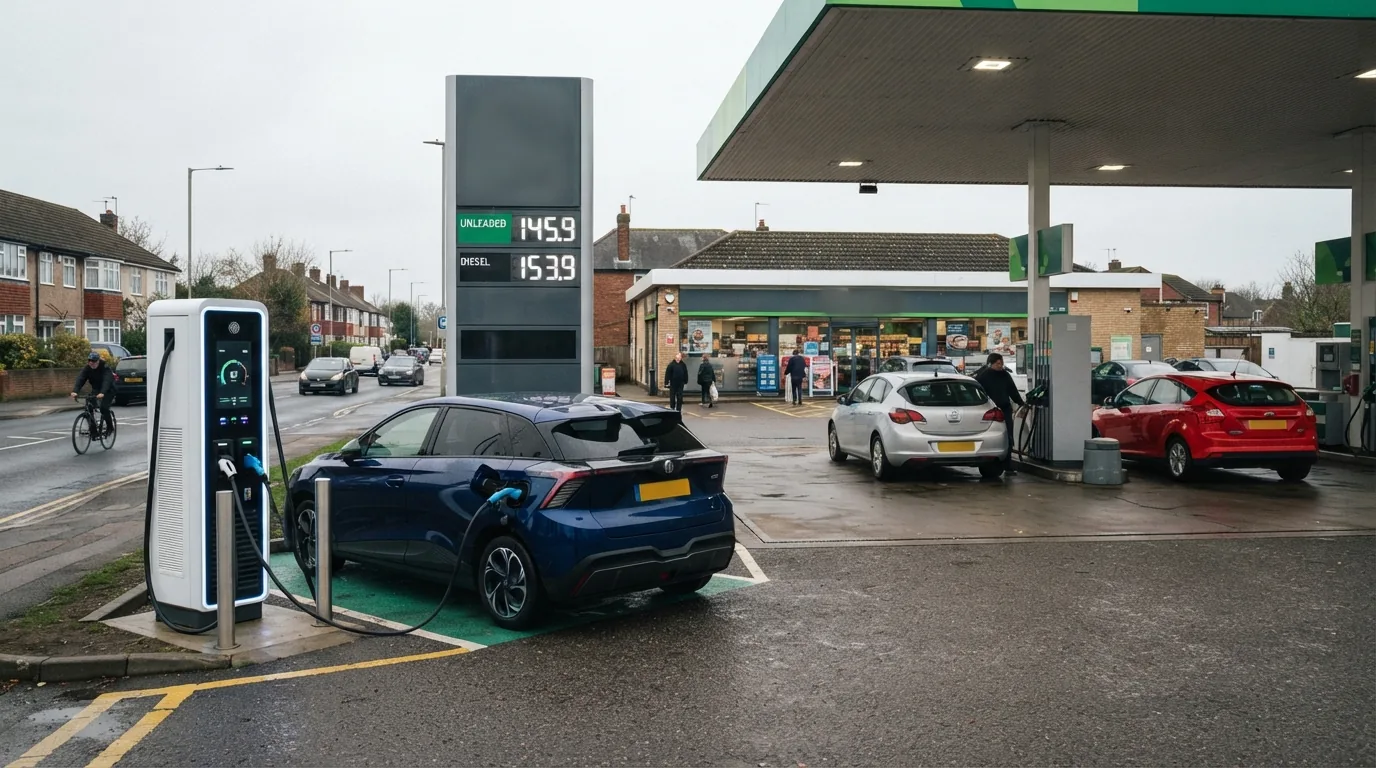
Petrol in the UK averages around £1.57 per litre in May 2026. A typical family car achieving 40 mpg in real-world driving costs roughly 17 to 18p per mile in fuel.
An EV charging at home on the standard Ofgem rate of around 24.67p per kWh, and covering four miles per kWh, costs about 6p per mile. On a dedicated off-peak EV tariff at around 8.7p per kWh, that falls to roughly 2 to 2.5p per mile.
| Scenario | Cost per mile | Annual fuel cost (10,000 miles) |
|---|---|---|
| Petrol, 40 mpg, £1.57/litre | ~17.8p | £1,780 |
| Petrol, 50 mpg, £1.57/litre | ~14.2p | £1,420 |
| EV, home standard tariff (24.67p/kWh, 4 mi/kWh) | ~6.2p | £620 |
| EV, off-peak EV tariff (8.7p/kWh, 4 mi/kWh) | ~2.2p | £220 |
| EV, public slow charger (54p/kWh, 4 mi/kWh) | ~13.5p | £1,350 |
| EV, public rapid charger (79p/kWh, 4 mi/kWh) | ~19.8p | £1,980 |
The table tells an important story: home charging makes EVs dramatically cheaper; rapid public charging can actually be more expensive than petrol.
How much can you save on fuel per year?
For a driver doing 10,000 miles a year on a home EV tariff, the fuel saving over petrol is around £1,200 to £1,500 per year. On a standard home tariff, it is closer to £800 to £1,100. High-mileage drivers compound these savings quickly. Someone covering 20,000 miles a year on an off-peak tariff could save £3,000 or more annually on energy alone compared to driving a 40-mpg petrol car.
A specific example: a driver doing 8,500 miles per year and charging at home at the standard Ofgem rate pays around £525 in electricity. Fuelling a VW Golf 1.5 TSI at current pump prices to cover the same distance costs roughly £850 to £900. The EV saves over £300 on fuel alone, before any other costs.
What about road tax?
From April 2025, EVs pay VED for the first time. The standard rate for 2026/27 is £200 per year. New petrol cars registered after April 2017 also typically pay around £190 to £200 depending on emissions, so the VED advantage that EVs previously held has largely evaporated.
The one remaining VED difference is the first-year rate. New EVs registered from April 2026 pay just £10 in year one, versus potentially £100 to £600 for a new petrol car depending on CO2 output. After that first year, the rates converge at £200 for most cars.
Is EV insurance cheaper?
No — not yet. Average EV insurance in the UK runs around £560 to £650 per year versus roughly £487 for a comparable petrol car, a premium of around 15%. Higher repair costs, specialist battery assessment requirements, and parts availability drive this gap. The gap is narrowing but remains real.
How much less does EV maintenance cost?
Electric cars have no oil changes, no cambelt, no exhaust system, and regenerative braking reduces brake pad wear. Average annual servicing is around £165 for an EV compared with roughly £205 for a petrol car. That is a saving of £40 per year in direct servicing, which compounds to £200 over five years.
Tyres are the one maintenance area where EVs can cost more. The extra weight and instant torque delivery increases wear, and some EV-specific tyres carry a premium. Budget an extra £50 to £100 per year compared with a lighter petrol car.
Putting it all together: annual cost comparison
| Cost | EV (home tariff) | Petrol equivalent |
|---|---|---|
| Fuel/charging (10,000 miles) | £620 | £1,780 |
| VED | £200 | £200 |
| Insurance | £600 | £487 |
| Servicing | £165 | £205 |
| Tyres (uplift) | +£75 | — |
| Total | £1,660 | £2,672 |
| Annual saving | £1,012 | — |
The numbers shift materially for public-charging-only drivers. Replace the £620 home charging cost with £1,350 to £1,980 in public charging and the EV advantage disappears or reverses.
What is the common mistake people make?
Assuming fuel savings directly equal overall cost savings. They do — but only if you are comparing like for like on purchase price. EVs still carry a higher upfront cost in most segments. A Volkswagen ID.3 costs roughly £5,000 to £10,000 more than a VW Golf 1.5 TSI of comparable specification. At £1,000 in annual running-cost savings, you break even in five to ten years.
The maths improves significantly on a lease or salary sacrifice scheme, where the upfront premium is absorbed into a monthly payment and BIK tax savings for company-car drivers bring the effective monthly cost closer to (or below) petrol equivalents.
Does mileage change the answer?
Strongly. The higher your annual mileage, the faster the fuel savings accumulate and the sooner the break-even point arrives. At 20,000 miles per year on a home tariff, the annual fuel saving over a 40-mpg petrol car is roughly £2,360. At 8,000 miles per year on a standard tariff, the saving is closer to £480. Mileage is the single biggest variable in the EV economics equation.
What changes are coming that affect the comparison?
From April 2028, the government plans to introduce a pay-per-mile element to EV road taxation at around 3p per mile. For a 10,000-mile-per-year driver, that adds £300 to the annual EV bill, narrowing the advantage slightly. Petrol car taxation is not expected to see equivalent increases, so the saving does shrink — but not disappear — under this scenario.
Electricity prices remain subject to the Ofgem cap review process. If the cap rises materially, home charging costs increase proportionally. Petrol prices remain volatile too, tracking global oil markets.
Should you factor in depreciation?
Residual values for EVs have been volatile in 2024 and 2025, with some models depreciating faster than expected as the market absorbed a surge in new supply. That picture is stabilising, and mainstream EVs from Volkswagen, Kia and Hyundai are now holding value more predictably. However, depreciation is a real cost, and for outright buyers it belongs in any honest comparison. On a three-year personal contract purchase, depreciation is largely absorbed into the monthly payment and less of an individual concern.
Where to go next
See our full breakdown of EV running costs and tax for every cost category explained in detail.
If you want to see which specific models offer the lowest annual running costs, visit our ranked list of the cheapest electric cars to run in the UK.
How we test and where our numbers come from
Range figures are official WLTP combined values taken from manufacturer UK specification pages, with real-world estimates drawn from independent comparative testing. Prices are UK list prices at the time of the latest update. Tax, grant and charging-scheme figures come from GOV.UK and HMRC publications. We re-check every guide when pricing, specification or policy changes. Last checked 11 August 2026.
Frequently asked questions
What is the actual per-mile difference?
Petrol in the UK averages around £1.57 per litre in May 2026. A typical family car achieving 40 mpg in real-world driving costs roughly 17 to 18p per mile in fuel.
How much can you save on fuel per year?
For a driver doing 10,000 miles a year on a home EV tariff, the fuel saving over petrol is around £1,200 to £1,500 per year. On a standard home tariff, it is closer to £800 to £1,100.
What about road tax?
From April 2025, EVs pay VED for the first time. The standard rate for 2026/27 is £200 per year.
Is EV insurance cheaper?
No -- not yet. Average EV insurance in the UK runs around £560 to £650 per year versus roughly £487 for a comparable petrol car, a premium of around 15%.
How much less does EV maintenance cost?
Electric cars have no oil changes, no cambelt, no exhaust system, and regenerative braking reduces brake pad wear. Average annual servicing is around £165 for an EV compared with roughly £205 for a petrol car.

EV Compared
The EV Compared editorial team tracks the UK electric vehicle market full time: new model launches, list prices, WLTP and real-world range, public charging tariffs and the tax rules that decide what an EV actually costs to run. Every guide is checked against manufacturer specifications and official GOV.UK figures, and updated whenever the numbers move.
Related reading
View all
What Are the Biggest Myths About Switching to an EV?
The claims that put UK drivers off going electric, and what the evidence actually says

Should You Buy an EV in 2026 or Wait for Cheaper Models?
An honest look at where EV prices are heading and whether the wait is worth it for UK buyers
Buying and Owning an Electric Car in the UK: The Complete 2026 Guide
Everything you need to know about costs, charging, depreciation and day-to-day life with an EV