How Long Do Electric Car Batteries Last? A UK Owner's Guide
Real-world degradation data, warranty terms and what to expect over 10-plus years of ownership
Quick answers
- Electric car batteries are designed to last between 10 and 20 years, or 100,000 to 200,000 miles, retaining the majority of their original capacity throughout. For most UK owners, battery replacement within a normal ownership period is unlikely.
- How long does an EV battery actually last: The industry standard expectation is 8 to 15 years for EV batteries to reach the point where capacity drops noticeably.
- What does the warranty actually guarantee: UK law requires all new EV manufacturers to provide a battery warranty lasting a minimum of 8 years or 100,000 miles, whichever comes first.
- Battery warranties of 8 years and 70% capacity retention imply manufacturers expect cells to stay above 70% for at least 8 years under normal use.
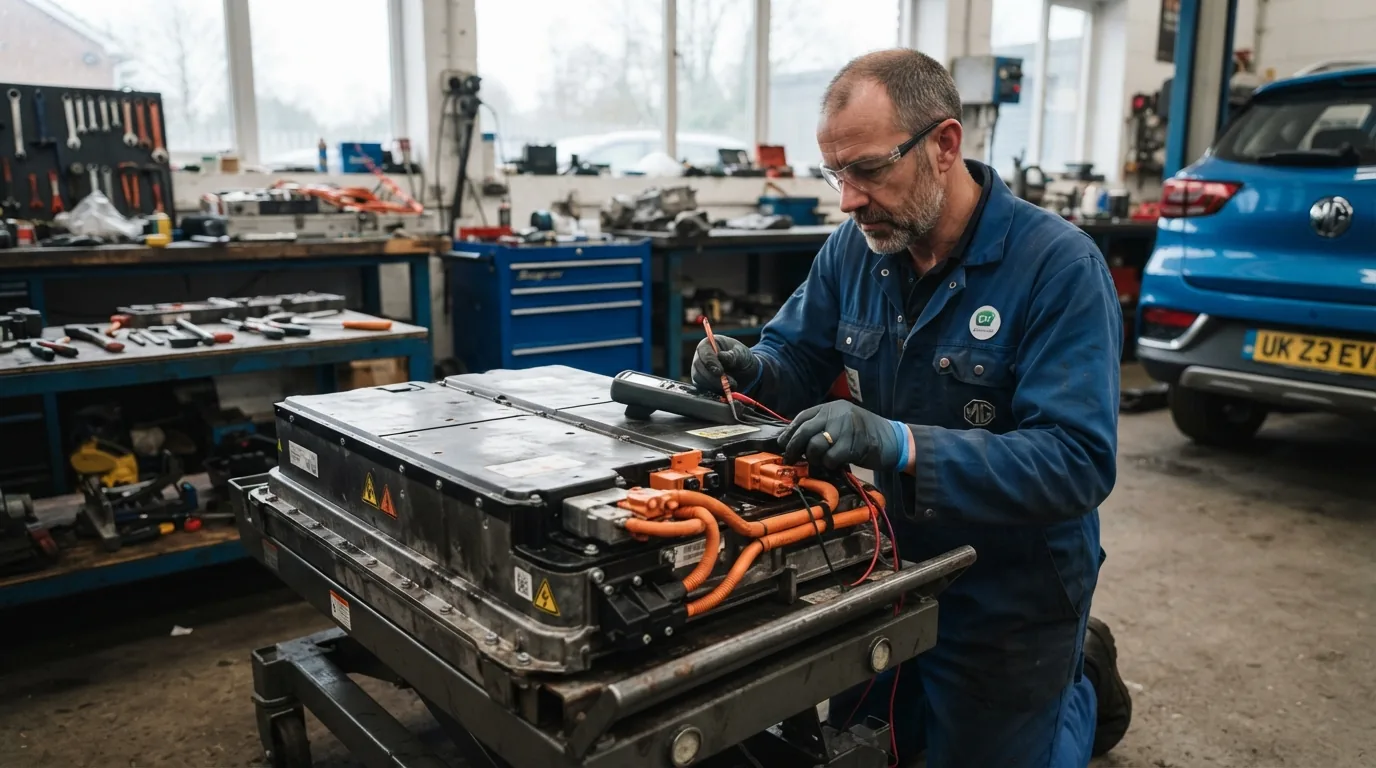
- In practice, most battery replacements involve individual modules rather than the full pack, which is considerably cheaper.
- The caveat is used EVs with high mileage and no documented battery health record.
Electric car batteries are designed to last between 10 and 20 years, or 100,000 to 200,000 miles, retaining the majority of their original capacity throughout. For most UK owners, battery replacement within a normal ownership period is unlikely. The data backs this up.
A large 2026 study covering more than 22,000 vehicles found average battery degradation of just 2.3% per year. A car that is six years old typically retains 87 to 90% of its original battery capacity. Cars aged seven to eight years still retain around 94% on average. These are not theoretical figures from laboratory conditions; they reflect real-world UK and European driving patterns.
How long does an EV battery actually last?
The industry standard expectation is 8 to 15 years for EV batteries to reach the point where capacity drops noticeably. “Noticeably” is a key qualifier. Most owners do not experience a sudden drop, but a gradual reduction in range over time.
At 2.3% annual degradation, a battery that starts with 250 miles of real-world range might deliver:
- After 3 years: approximately 233 miles
- After 6 years: approximately 217 miles
- After 10 years: approximately 195 miles
For daily drivers covering 30 to 40 miles, none of these scenarios creates a practical problem. The car remains fully usable throughout a normal ownership period.
What does the warranty actually guarantee?
UK law requires all new EV manufacturers to provide a battery warranty lasting a minimum of 8 years or 100,000 miles, whichever comes first. This warranty must guarantee that the battery retains at least 70% of its original capacity during that period.
If the battery drops below 70% capacity within the warranty window, the manufacturer must either repair or replace the pack.
| Manufacturer | Battery warranty (2026) | Capacity threshold |
|---|---|---|
| Tesla | 8 years / 100,000–150,000 miles (varies by model) | 70% |
| Kia | 7 years / 100,000 miles (vehicle); battery on some models for vehicle life | 70% |
| Hyundai | 8 years / 125,000 miles | 70% |
| BMW | 8 years / 100,000 miles | 70% |
| Volkswagen Group (VW, Audi, Skoda, Seat/Cupra) | 8 years / 100,000 miles | 70% |
| Renault | 8 years / 100,000 miles | 70% |
| Nissan | 8 years / 100,000 miles | 75% (stricter than most) |
| Lexus | 10 years / 100,000 miles | 70% |
| BYD | Lifetime battery warranty (original owner, UK market) | 70% |
Importantly, most EV battery warranties are transferable to subsequent owners, meaning the remaining coverage follows the vehicle, not the original buyer. This is worth confirming in the paperwork before buying used.
What causes battery degradation?
Four factors drive most real-world degradation:
1. Frequent DC rapid charging. Charging at 100 kW or above repeatedly does put more thermal stress on the battery than slow overnight charging. Most modern EVs manage this with sophisticated thermal management systems, but avoiding rapid charging as your primary method extends battery life.
2. Regularly charging to 100% and depleting to 0%. Most manufacturers recommend charging to 80% for daily use and only going to 100% before long trips. Similarly, avoiding regularly dropping below 10% helps. Most modern EVs have software defaults that cap charging at 80% unless you override them.
3. Extreme temperatures. High ambient temperatures degrade battery cells faster than moderate UK temperatures. Cold weather temporarily reduces range but does not cause the same permanent damage as sustained heat.
4. Age more than mileage. Batteries age even when not in use, though slowly. Calendar ageing, driven by chemistry rather than charge cycles, contributes alongside cycling degradation.
How does this compare to what manufacturers claim?
Battery warranties of 8 years and 70% capacity retention imply manufacturers expect cells to stay above 70% for at least 8 years under normal use. The real-world data suggests most batteries significantly exceed this. Reaching 70% capacity typically takes closer to 12 to 15 years under average UK driving conditions.
The practical implication: if you are buying an EV to keep for 5 or 6 years, battery degradation should not be a primary concern. If you are planning to keep the car for 12 or more years, choose a model with an established track record of low degradation, such as the Tesla Model 3 or Kia EV6, both of which show measured degradation consistently below 2% per year in long-term owner datasets.
What happens if the battery does need replacing?
Full battery replacement outside warranty is expensive. As of 2026, average costs for a new replacement battery pack are roughly £8,000 to £15,000 fitted, depending on the model and battery size. This makes large-battery premium EVs genuinely difficult to value economically if the battery fails outside warranty.
In practice, most battery replacements involve individual modules rather than the full pack, which is considerably cheaper. The cost of replacing a small number of degraded cells in a Nissan Leaf, for example, might run to £1,500 to £3,000 rather than the cost of a full pack replacement.
A growing used parts market and an expanding number of independent EV specialists are bringing replacement costs down. By 2026, the UK has several companies offering refurbished battery packs at roughly 50 to 60% of new OEM prices.
Should battery degradation put you off buying an EV?
No, for the vast majority of buyers. The evidence from real-world data is clear: battery degradation is slower than most people assume, warranties provide meaningful protection during normal ownership periods, and total battery failure during ownership is extremely rare.
The caveat is used EVs with high mileage and no documented battery health record. Before buying any second-hand EV, ask for a battery state of health diagnostic printout showing current capacity as a percentage of original. Above 85% is healthy. Below 75% on a car under six years old warrants scrutiny.
What is the common myth?
The most persistent myth is that EV batteries degrade like smartphone batteries and will leave you stranded within a few years. This confuses the different chemistry and engineering of automotive batteries with consumer electronics batteries. An iPhone battery cycling multiple times per day under no thermal management is a completely different system from a carefully managed 60 to 100 kWh automotive pack. The comparison does not hold.
What should you read next?
For more on what happens to batteries at the end of their useful automotive life, see our explainer on EV battery end of life. For model-specific battery warranty comparisons, our buying and owning guide has the full picture alongside our best electric cars to buy in 2026.
How we test and where our numbers come from
Range figures are official WLTP combined values taken from manufacturer UK specification pages, with real-world estimates drawn from independent comparative testing. Prices are UK list prices at the time of the latest update. Tax, grant and charging-scheme figures come from GOV.UK and HMRC publications. We re-check every guide when pricing, specification or policy changes. Last checked 11 August 2026.
Frequently asked questions
How long does an EV battery actually last?
The industry standard expectation is 8 to 15 years for EV batteries to reach the point where capacity drops noticeably. "Noticeably" is a key qualifier.
What does the warranty actually guarantee?
UK law requires all new EV manufacturers to provide a battery warranty lasting a minimum of 8 years or 100,000 miles, whichever comes first. This warranty must guarantee that the battery retains at least 70% of its original capacity during that period.
How does this compare to what manufacturers claim?
Battery warranties of 8 years and 70% capacity retention imply manufacturers expect cells to stay above 70% for at least 8 years under normal use. The real-world data suggests most batteries significantly exceed this.
What happens if the battery does need replacing?
Full battery replacement outside warranty is expensive. As of 2026, average costs for a new replacement battery pack are roughly £8,000 to £15,000 fitted, depending on the model and battery size.
Should battery degradation put you off buying an EV?
No, for the vast majority of buyers. The evidence from real-world data is clear: battery degradation is slower than most people assume, warranties provide meaningful protection during normal ownership periods, and total battery failure during ownership is extremely rare.

EV Compared
The EV Compared editorial team tracks the UK electric vehicle market full time: new model launches, list prices, WLTP and real-world range, public charging tariffs and the tax rules that decide what an EV actually costs to run. Every guide is checked against manufacturer specifications and official GOV.UK figures, and updated whenever the numbers move.
Related reading
View all
What Are the Biggest Myths About Switching to an EV?
The claims that put UK drivers off going electric, and what the evidence actually says
Should You Buy an EV in 2026 or Wait for Cheaper Models?
An honest look at where EV prices are heading and whether the wait is worth it for UK buyers
Buying and Owning an Electric Car in the UK: The Complete 2026 Guide
Everything you need to know about costs, charging, depreciation and day-to-day life with an EV