Best EVs for Cheap Home Charging in the UK
The cheapest car to charge at home is not simply the one with the biggest battery. Efficiency is the real measure. Here are the EVs that go furthest on the fewest pence.
Quick answers
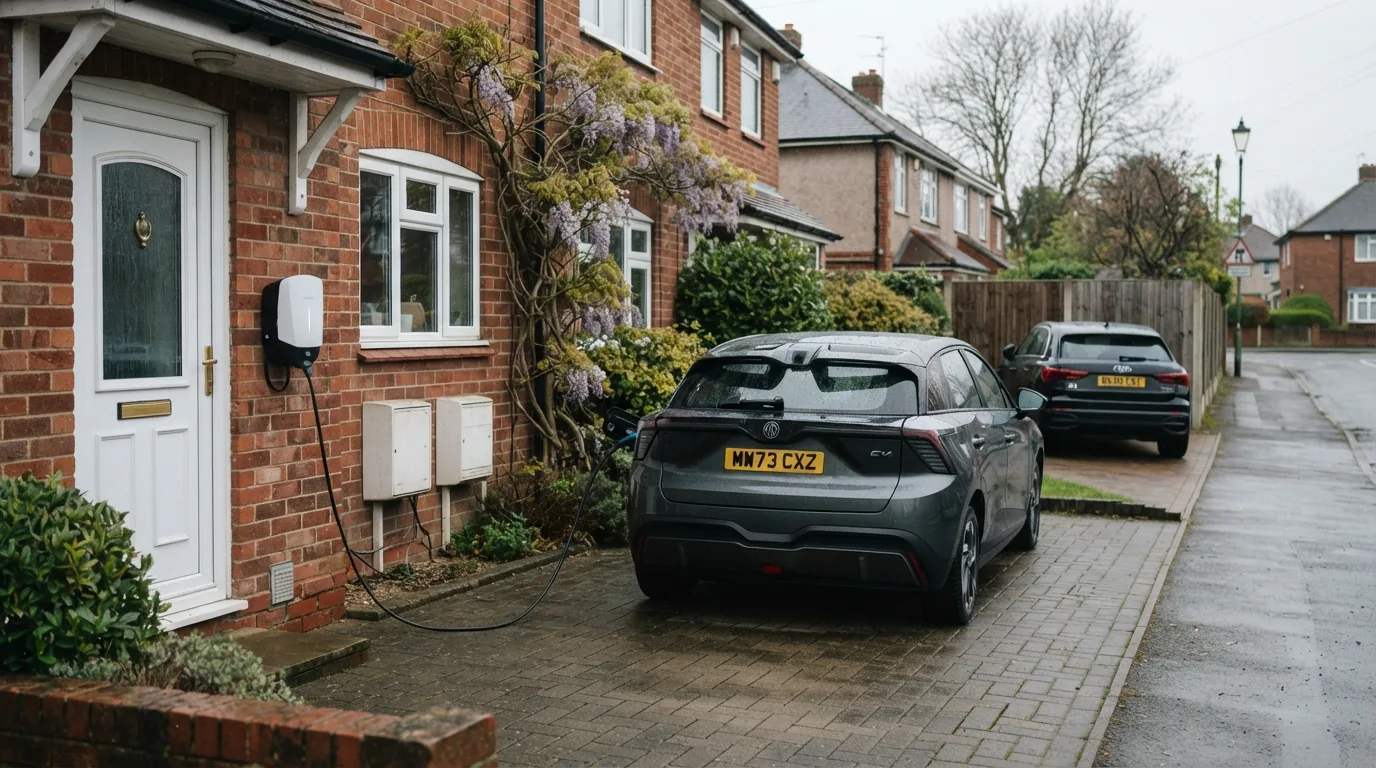
- Cheap home charging is one of the biggest financial advantages of going electric. On a dedicated EV tariff such as Intelligent Octopus Go (available from April 2026 at around 8p per kWh overnight), the cost of running an electric car falls to genuinely remarkable levels.
- What makes an EV cheap to charge at home: The most efficient EVs in real-world UK conditions currently return between 3.8 and 5.5 miles per kWh.
- For the sheer overnight charge cost, the winner is the Renault 5 E-Tech 40 kWh, which costs around £3.20 to fill from empty at 8p per kWh.
- Which tariff matters most: The biggest variable in home charging cost is not the car you choose; it is the electricity tariff.
- Wallbox vs three-pin plug: A dedicated home wallbox (7 kW, Type 2) is worth the £500 to £1,000 installation cost if you plan to keep your EV for more than two years.
- The myth to correct: Many people believe the cheapest EV to charge is the one with the smallest battery.
Cheap home charging is one of the biggest financial advantages of going electric. On a dedicated EV tariff such as Intelligent Octopus Go (available from April 2026 at around 8p per kWh overnight), the cost of running an electric car falls to genuinely remarkable levels. But not all EVs are equally efficient, and the cheapest car to charge at home is not simply the one with the smallest battery. It is the one that converts electricity into miles most effectively.
The headline figure: at 8p per kWh and 4 miles per kWh average efficiency, you are paying 2p per mile to drive. A petrol car at 40 mpg and £1.50 per litre costs around 17p per mile. That is an eight-to-one advantage, before you factor in reduced servicing, free road tax in year one and 4% BIK for company car drivers.
What makes an EV cheap to charge at home?
The calculation is straightforward. Divide the cost of electricity by the miles per kWh your car returns. If electricity costs 8p/kWh and your car does 4 mi/kWh, you pay 2p per mile. If your car does 3.5 mi/kWh, you pay 2.3p per mile. Over 10,000 miles per year, that 0.3p difference adds up to around £30 annually. Not enormous, but it compounds across the battery’s life and across different electricity tariffs.
The most efficient EVs in real-world UK conditions currently return between 3.8 and 5.5 miles per kWh. The best performers tend to be smaller, lighter cars with aerodynamic body shapes and smaller but well-optimised battery packs.
The best EVs for home charging efficiency
| Model | Battery (usable) | Real-world efficiency | Full charge cost at 8p/kWh | WLTP range | UK price from |
|---|---|---|---|---|---|
| Tesla Model 3 Long Range | ~75 kWh | ~4.5-4.8 mi/kWh | ~£6.00 | 374 miles | ~£44,990 |
| Renault 5 E-Tech (40 kWh) | 40 kWh | ~4.3-4.6 mi/kWh | ~£3.20 | 196 miles | ~£22,995 |
| MG4 SE Standard Range | 49 kWh | ~3.9-4.2 mi/kWh | ~£3.90 | 218 miles | ~£26,995 |
| Vauxhall Corsa Electric Long Range | 51 kWh | ~3.8-4.0 mi/kWh | ~£4.10 | 252 miles | ~£32,625 |
| Volkswagen ID.3 Pro S | 77 kWh | ~3.7-4.0 mi/kWh | ~£6.15 | 361 miles | ~£40,995 |
| Nissan Leaf e+ (62 kWh) | 59 kWh | ~3.4-3.7 mi/kWh | ~£4.70 | 239 miles | ~£33,495 |
| Fiat 500e (42 kWh) | 42 kWh | ~4.1-4.4 mi/kWh | ~£3.35 | 199 miles | ~£29,995 |
| Kia EV3 Standard Range | ~58 kWh | ~4.0-4.3 mi/kWh | ~£4.65 | 272 miles | ~£32,995 |
The cheapest EVs to charge in pounds per charge
For the sheer overnight charge cost, the winner is the Renault 5 E-Tech 40 kWh, which costs around £3.20 to fill from empty at 8p per kWh. That gives you roughly 170 to 190 usable miles in real conditions. For a typical UK commuter doing 30 to 40 miles per day, a full charge every two to three nights is realistic, meaning the monthly electricity cost for the Renault 5 is in the region of £15 to £25.
The Fiat 500e 42 kWh and the MG4 SE Standard Range are similarly cheap per charge cycle, both costing under £4 to fill.
For the best combination of efficiency and range, the Tesla Model 3 Long Range is the standout pick. It achieves the highest real-world miles per kWh of any mainstream EV in the UK, meaning you get more miles per pound of electricity than almost any rival. The trade-off is a higher purchase price.
Which tariff matters most
The biggest variable in home charging cost is not the car you choose; it is the electricity tariff. On a standard variable tariff (around 24p per kWh in 2026), charging a 50 kWh battery costs around £12. On Intelligent Octopus Go at 8p per kWh, the same charge costs £4. That is a saving of £8 per charge cycle, which compounds quickly.
Intelligent Octopus Go requires a smart meter and an Octopus Energy account. The off-peak window runs from 00:30 to 05:30. The smart “intelligent” version negotiates automatically with your car and charger to ensure charging completes before you need the car, without you having to set a schedule manually. It is compatible with most EV models that support smart charging APIs.
Octopus Agile is an alternative for technically confident users who monitor half-hourly rates. Agile can occasionally drop to 1p or even negative per kWh during grid surplus periods, but it requires active management and is less suitable for set-and-forget charging.
If you are not on Octopus, other EV-friendly tariffs exist from British Gas, EDF and OVO. Always compare the overnight rate, not the headline unit rate, when evaluating tariffs for EV charging.
Wallbox vs three-pin plug
A dedicated home wallbox (7 kW, Type 2) is worth the £500 to £1,000 installation cost if you plan to keep your EV for more than two years. A 7 kW wallbox will charge a 50 kWh battery in around seven hours, which comfortably fits within an overnight off-peak window. A standard three-pin plug delivers 2.3 kW, which takes roughly 22 hours for the same battery. That means a three-pin plug may not complete a full charge within a single off-peak window, reducing your ability to take advantage of the cheapest rates.
All wallboxes sold in the UK must now include a built-in smart meter and scheduling capability under OZEV regulations. The OZEV grant provides up to £350 off the cost of a wallbox for eligible homeowners and renters (subject to conditions and ongoing funding availability).
The myth to correct
Many people believe the cheapest EV to charge is the one with the smallest battery. This is not accurate. A small, inefficient battery will cost less per charge cycle but cost more per mile because it delivers fewer miles per kWh. Efficiency (miles per kWh) is the correct metric for running costs, not battery size alone.
Similarly, some buyers focus on the headline kWh cost at public chargers, which can be 60 to 89p per kWh at UK rapid chargers. These prices are incomparable to home charging rates. If you are buying an EV primarily to charge on the public network, the economics look very different from home charging.
Our pick for cheapest home charging overall
For pure cost per mile at home, the Renault 5 E-Tech and the Tesla Model 3 Long Range sit at opposite ends of the price scale but are both class leaders on efficiency. If you drive under 150 miles per day and want the lowest possible overnight running cost with a competitive purchase price, the Renault 5 is hard to beat. If you want maximum range, technology and the best long-term cost per mile on a larger car, the Model 3 is the standout pick.
What to read next
For a full breakdown of running costs including road tax, insurance and servicing, visit our Running Costs & Tax guide. For the full shortlist of the most affordable EVs to own, see our cheapest electric cars to run page.
How we test and where our numbers come from
Range figures are official WLTP combined values taken from manufacturer UK specification pages, with real-world estimates drawn from independent comparative testing. Prices are UK list prices at the time of the latest update. Tax, grant and charging-scheme figures come from GOV.UK and HMRC publications. We re-check every guide when pricing, specification or policy changes. Last checked 11 August 2026.
Frequently asked questions
What makes an EV cheap to charge at home?
The calculation is straightforward. Divide the cost of electricity by the miles per kWh your car returns.

EV Compared
The EV Compared editorial team tracks the UK electric vehicle market full time: new model launches, list prices, WLTP and real-world range, public charging tariffs and the tax rules that decide what an EV actually costs to run. Every guide is checked against manufacturer specifications and official GOV.UK figures, and updated whenever the numbers move.
Related reading
View all
What Are the Biggest Myths About Switching to an EV?
The claims that put UK drivers off going electric, and what the evidence actually says
Should You Buy an EV in 2026 or Wait for Cheaper Models?
An honest look at where EV prices are heading and whether the wait is worth it for UK buyers
Buying and Owning an Electric Car in the UK: The Complete 2026 Guide
Everything you need to know about costs, charging, depreciation and day-to-day life with an EV