Electric vs Petrol: Five Year Cost of Ownership in the UK
Which is actually cheaper over five years: an electric car or a petrol equivalent? We run the real UK numbers on fuel, tax, servicing, insurance and depreciation.
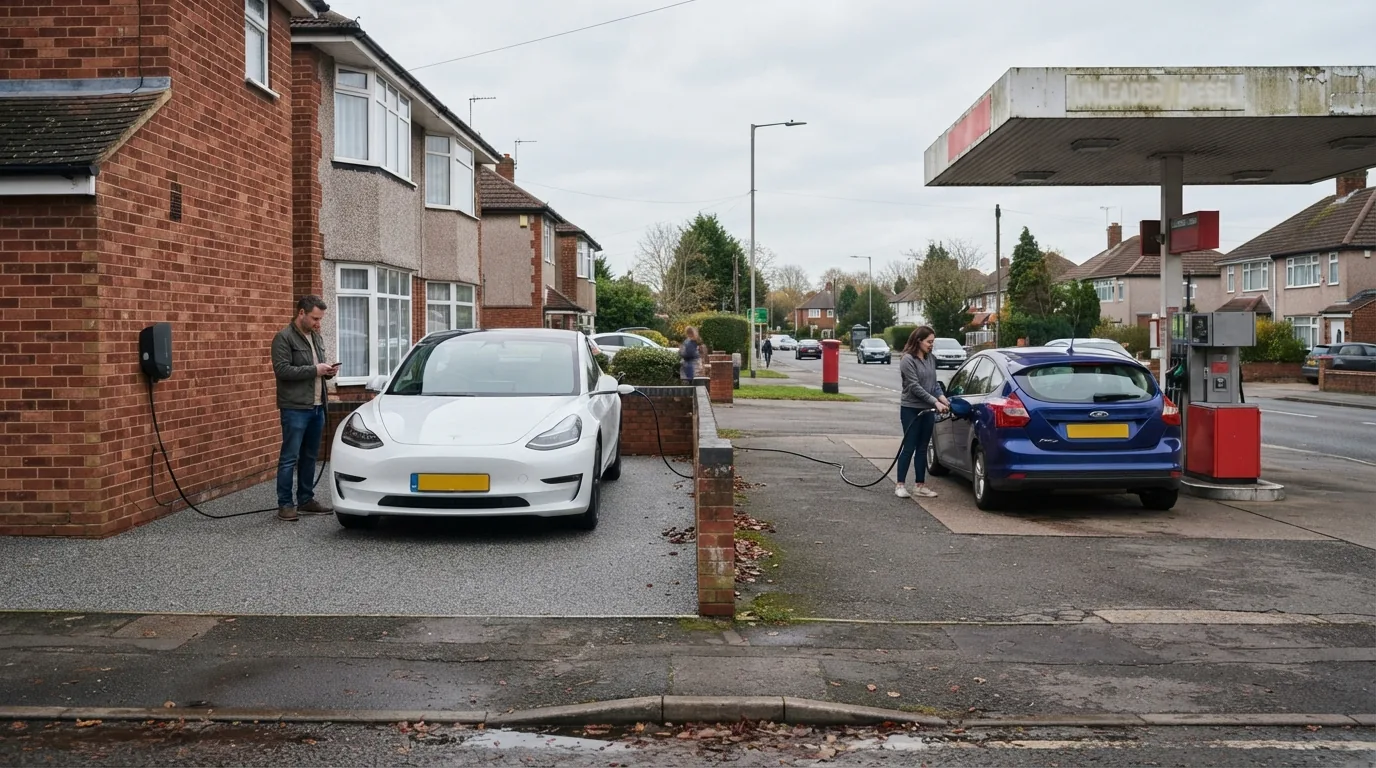
Quick answers
- The question most UK buyers actually want answered is simple: over five years, does an electric car save me money or cost me more? The honest answer depends on three variables: whether you can charge at home, how many miles you drive each year, and which specific models you compare.
- The five-year cost breakdown: To make this concrete, we compare two real-world examples: a Volkswagen Golf 1.5 TSI Life (petrol, ~£31,000 OTR) against a Volkswagen ID.3 Pro (electric, ~£37,995 OTR).
- At home on a cheap overnight tariff, electricity costs around 8p per kWh.
- Road tax: a new picture from 2025: From April 2025, EVs moved onto standard Vehicle Excise Duty (VED).
- Servicing costs: The servicing advantage for EVs is real but not as large as often claimed.
- Insurance: still an EV disadvantage: Insurance remains the one category where EVs typically cost more.
The question most UK buyers actually want answered is simple: over five years, does an electric car save me money or cost me more? The honest answer depends on three variables: whether you can charge at home, how many miles you drive each year, and which specific models you compare. But the broad direction of travel is clear.
For most UK drivers who charge primarily at home, an electric car is cheaper to own over five years than a petrol equivalent, despite typically higher purchase prices. The crossover point is typically around year three or four for drivers covering 10,000 miles or more annually.
The five-year cost breakdown
To make this concrete, we compare two real-world examples: a Volkswagen Golf 1.5 TSI Life (petrol, ~£31,000 OTR) against a Volkswagen ID.3 Pro (electric, ~£37,995 OTR). Both are practical family hatchbacks from the same manufacturer, which makes the comparison as clean as possible.
| Cost category | VW Golf 1.5 TSI (petrol) | VW ID.3 Pro (electric) |
|---|---|---|
| Purchase price (OTR) | ~£31,000 | ~£37,995 |
| Fuel / charging (10,000 mi/yr, 5 yrs) | ~£5,750 | ~£800 (home, 8p/kWh) |
| Road tax (VED, 5 yrs) | ~£1,425 | ~£790 |
| Servicing (5 yrs) | ~£1,025 | ~£825 |
| Insurance (5 yrs, est.) | ~£4,500 | ~£4,750 |
| Depreciation (5 yrs, est. 50%) | ~£15,500 | ~£19,000 |
| Total 5-year cost | ~£28,200 | ~£28,160 |
Assumptions: 10,000 miles per year, home charging at 8p/kWh (Intelligent Octopus Go from April 2026), petrol at £1.50/litre and 40 mpg average, standard VED rates from April 2025, depreciation estimated at 50% for petrol and approximately 50% for EV (improving residuals vs 2023-24). Insurance assumes comparable annual premium. Depreciation is the single biggest variable and will differ by model.
Fuel and charging savings: where the EV wins most
At home on a cheap overnight tariff, electricity costs around 8p per kWh. A typical EV consuming 3.5 miles per kWh costs roughly 2.3p per mile. A petrol car at 40 mpg with fuel at £1.50/litre costs approximately 17p per mile.
Over 10,000 miles per year, that is:
- Petrol: approximately £1,700 per year in fuel
- Electric (home charging at 8p/kWh): approximately £160 per year in electricity
That is a saving of around £1,540 per year, or £7,700 over five years. That saving alone covers most of the EV’s higher purchase price premium in many comparisons.
The caveat: if you charge predominantly on the public network (where rapid charging averages 52p to 89p per kWh in 2026), the economics change dramatically. At 52p/kWh, the same 10,000 miles costs around £1,050 in electricity per year, which is broadly comparable to petrol. The fuel saving disappears. Public-charging-only EV ownership does not make financial sense for most drivers.
Road tax: a new picture from 2025
From April 2025, EVs moved onto standard Vehicle Excise Duty (VED). The first-year rate for a new EV is £10, then £195 per year from year two. The expensive car supplement (£620/year) applies to EVs priced above £50,000, but the threshold was raised to £50,000 from April 2026, exempting many mainstream EVs that previously fell under it.
A petrol car emitting 130g/km CO2 (typical mid-sized family car) currently pays around £195 per year in VED. The difference in annual road tax between an electric and petrol family car is now very small, unlike the zero-versus-hundreds situation that existed before 2025.
Servicing costs
The servicing advantage for EVs is real but not as large as often claimed. A 2026 RAC breakdown of costs suggests:
- Average EV annual service: approximately £165
- Average petrol car annual service: approximately £205
EVs have no oil changes, no spark plugs, no timing belt and less brake wear (due to regenerative braking). The saving over five years is around £200, meaningful but not transformative.
Battery replacement is the feared wildcard. In practice, battery degradation on modern EVs is much slower than early fears suggested. Most EV batteries retain 80 per cent or more of their original capacity after eight to ten years of typical use. Major replacements within the first ten years, under warranty, are rare.
Insurance: still an EV disadvantage
Insurance remains the one category where EVs typically cost more. Premiums for electric cars run approximately 5 to 15 per cent higher than equivalent petrol models in 2026, primarily because repair costs for EV bodies (particularly those integrating sensors and battery management systems) remain higher than for petrol cars.
This gap is narrowing as repair infrastructure improves and insurers become more experienced with EVs, but it has not disappeared. Expect to pay roughly £50 more per year on insurance for an equivalent EV versus petrol, all other factors being equal.
Depreciation: the biggest variable
Depreciation is the single largest cost of owning any new car, electric or petrol, and it is where the comparison is most uncertain. Early EVs (2020 to 2023 vintage) depreciated significantly faster than petrol equivalents, losing on average around 61 per cent of their value over three years versus 47 per cent for petrol cars.
The picture in 2026 is more complicated. Premium EV brands (Tesla, Porsche Taycan) show residual values broadly comparable to equivalent petrol models. Mainstream EVs (MG, Vauxhall, Peugeot) are still losing value faster than petrol equivalents. Mid-market EVs from established brands (Volkswagen, Kia, Hyundai) sit somewhere in between.
The practical implication: buying an EV new and selling privately in three years may result in a larger financial loss than a petrol equivalent. Leasing an EV avoids this risk entirely, since the depreciation risk sits with the finance house rather than the driver.
Company car drivers: the clearest win
For company car drivers, the five-year comparison is even more compelling. The BIK rate for electric cars is 4% in 2026/27, rising to 5% in 2027/28 and 7% by 2029/30. Compare that to petrol cars, which attract BIK rates of 20 to 37 per cent based on CO2 emissions.
A higher-rate taxpayer in a petrol car at 30% BIK with a £31,000 list price pays around £3,720 per year in benefit-in-kind tax. The same taxpayer in an electric car at the same list price at 4% BIK pays £496 per year. That is a saving of over £3,200 per year, or £16,000 over five years. No other element of the comparison comes close to this in magnitude for company car drivers.
The common myth: EVs always cost more to buy, so they always cost more to own
Higher purchase prices are real but not the final word. For private buyers who charge at home, the fuel savings are large enough that the total cost of ownership is broadly comparable within four to five years, and potentially cheaper thereafter. For company car drivers, the BIK advantage means the EV is substantially cheaper from day one on a monthly cost basis.
The myth worth correcting on the other side: some EV advocates claim that EVs are already cheaper across the board, including depreciation. They are not, at least not for private buyers of mainstream models in 2026. The maths favours EVs on fuel and tax; it does not yet favour them on depreciation for most models.
Our verdict by use case
EVs win clearly for:
- Company car drivers at any mileage level
- Private drivers doing 10,000 or more miles per year with home charging
- Any buyer comparing the five-year cost rather than sticker price alone
Petrol still makes sense for:
- Drivers who cannot charge at home and rely on public charging
- Buyers with unpredictable annual mileage (risk of penalty for excess miles on a lease)
- Those who drive fewer than 6,000 miles per year and value flexibility
What to read next
For the full picture on what EVs cost to buy, finance and own, visit our Running Costs & Tax guide. If you are specifically comparing on running costs, see our cheapest electric cars to run page for the ranked shortlist.
How we test and where our numbers come from
Range figures are official WLTP combined values taken from manufacturer UK specification pages, with real-world estimates drawn from independent comparative testing. Prices are UK list prices at the time of the latest update. Tax, grant and charging-scheme figures come from GOV.UK and HMRC publications. We re-check every guide when pricing, specification or policy changes. Last checked 11 August 2026.

EV Compared
The EV Compared editorial team tracks the UK electric vehicle market full time: new model launches, list prices, WLTP and real-world range, public charging tariffs and the tax rules that decide what an EV actually costs to run. Every guide is checked against manufacturer specifications and official GOV.UK figures, and updated whenever the numbers move.
Related reading
View all
What Are the Biggest Myths About Switching to an EV?
The claims that put UK drivers off going electric, and what the evidence actually says
Should You Buy an EV in 2026 or Wait for Cheaper Models?
An honest look at where EV prices are heading and whether the wait is worth it for UK buyers
Buying and Owning an Electric Car in the UK: The Complete 2026 Guide
Everything you need to know about costs, charging, depreciation and day-to-day life with an EV