Best Electric Cars for High Mileage Drivers in the UK
Long range, fast charging and low per-mile cost -- the EVs that make economic sense at 15,000 miles per year and above
Quick answers
- High-mileage driving is where the EV economics case becomes most compelling -- and where the choice of car matters most.
- What makes an EV suitable for high mileage: Budget EVs with 150-mile real-world range and 50 kW maximum charging are not suitable for high-mileage motorway driving.
- The Ioniq 6 LR RWD is the standout choice for high-mileage drivers who prioritise per-mile cost.
- The EV6 LR shares the E-GMP 800V platform with the Ioniq 6 and offers 233 kW peak charging -- slightly less than the Ioniq 6's 350 kW but still delivering 10 to 80% in around 18 minutes at most ultra-rapid points.
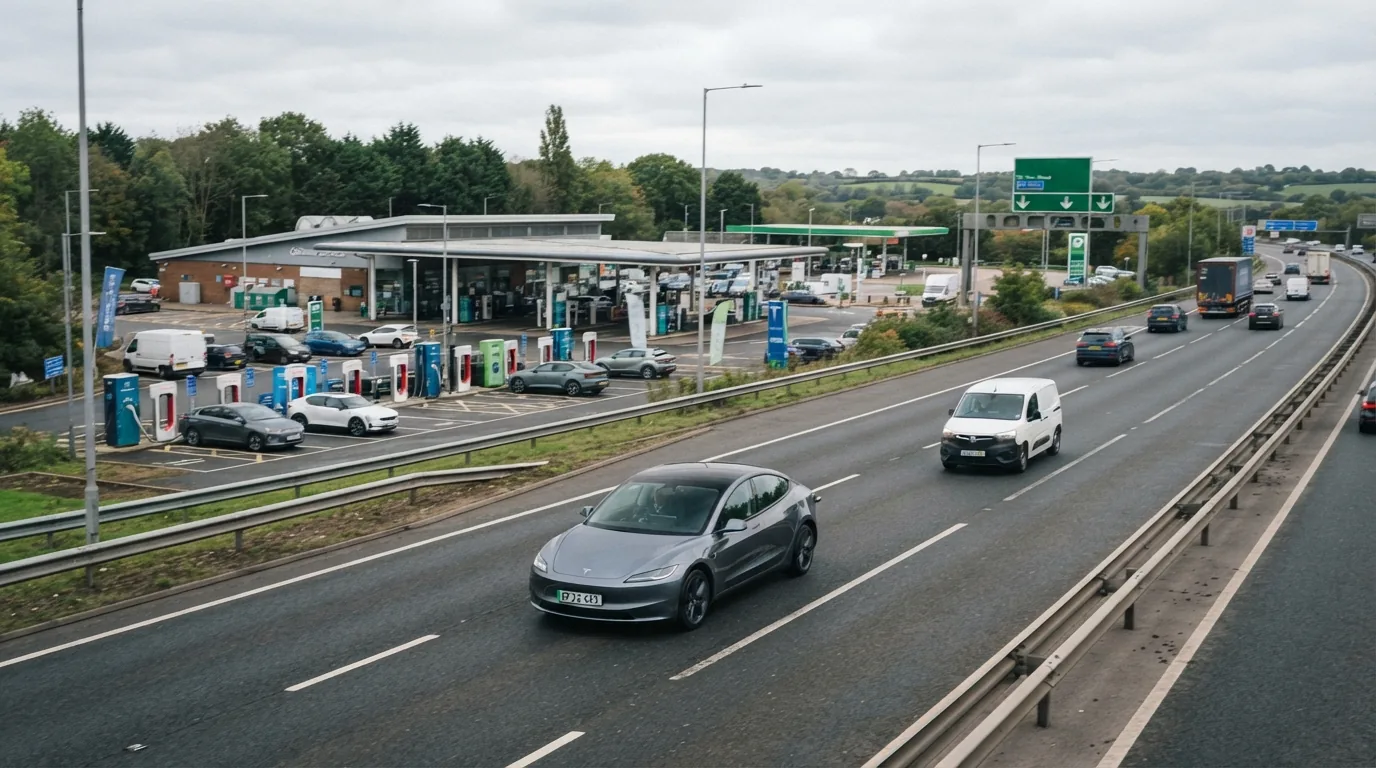
- The Tesla Model 3 Long Range (from £52,000) offers real-world range of 340 to 380 miles -- the longest of any mainstream saloon-sized EV in 2026.
- The 2026 Mercedes CLA Electric achieves a measured real-world range of 303 miles and a charging speed of 2.9 kWh per minute in independent testing, placing it alongside the Ioniq 6 for efficiency at 5.0 mi/kWh.
High-mileage driving is where the EV economics case becomes most compelling — and where the choice of car matters most. For a driver covering 20,000 miles per year, the difference between charging at 2p per mile (home off-peak tariff) and 20p per mile (public rapid charger) is worth £3,600 per year. Combine that with the need for genuinely long real-world range, fast DC charging to minimise stop time, and low per-mile fuel costs, and the shortlist of suitable EVs narrows considerably.
The best electric cars for high-mileage UK drivers in 2026 are: the Hyundai Ioniq 6, Kia EV6, Tesla Model 3 Long Range, BMW iX3 (from late 2025), and Audi A6 e-tron. Each combines genuine long-range capability with rapid charging speeds and high efficiency.
What makes an EV suitable for high mileage?
Four criteria matter most:
- Real-world range: Long enough to minimise public charging stops on typical journeys
- DC charging speed: Fast enough to make motorway-stop charging practical
- Efficiency: Low per-mile fuel cost, which compounds significantly at high mileage
- Reliability and warranty: A car that needs fewer dealer visits and offers strong warranty protection
Budget EVs with 150-mile real-world range and 50 kW maximum charging are not suitable for high-mileage motorway driving. They work well as urban second cars or short-commute vehicles — not for the driver covering 25,000 miles per year.
Best EVs for high mileage: comparison table
| Model | Real-world range | Peak DC charge | 10-80% time | Efficiency | Battery warranty | Price from |
|---|---|---|---|---|---|---|
| Hyundai Ioniq 6 (LR, RWD) | ~310 — 340 miles | 350 kW | ~18 min | 4.5 mi/kWh | 8yr / 125,000 miles | £42,000 |
| Kia EV6 (LR, RWD) | ~280 — 310 miles | 233 kW | ~18 min | 3.9 mi/kWh | 8yr / 100,000 miles | £42,000 |
| Tesla Model 3 LR (RWD) | ~340 — 380 miles | ~250 kW (Supercharger) | ~25 min | 4.5 mi/kWh | 8yr / 150,000 miles | £52,000 |
| BMW iX3 (2026) | ~375 miles (est.) | 400 kW | ~20 min | 3.8 mi/kWh | 8yr / 100,000 miles | ~£65,000 |
| Audi A6 e-tron Sportback | ~300 — 330 miles | 270 kW | ~22 min | 4.0 mi/kWh | 8yr / 160,000 km | ~£60,000 |
| Mercedes CLA Electric | ~303 miles (real-world) | 320 kW | ~20 min | 5.0 mi/kWh | 8yr / 100,000 miles | ~£45,000 |
| Tesla Model Y LR (AWD) | ~280 miles | ~250 kW | ~25 min | 3.8 mi/kWh | 8yr / 120,000 miles | £55,000 |
1. Hyundai Ioniq 6 Long Range: best efficiency and value at this range
The Ioniq 6 LR RWD is the standout choice for high-mileage drivers who prioritise per-mile cost. Its Cd of 0.21 — matching the Mercedes CLA for the best aerodynamic coefficient in production — delivers 4.5 mi/kWh or better in mixed UK driving. On a home off-peak tariff at 5.49p/kWh, that is 1.22p per mile. For 20,000 miles per year, the annual fuel cost is around £244 — truly exceptional at this class.
800V architecture enables 350 kW peak DC charging, delivering 10 to 80% in around 18 minutes at a compatible Ionity or Gridserve ultra-rapid point. Real-world range of 310 to 340 miles makes non-stop UK intercity journeys possible, and the charging speed makes planned stops painless.
Hyundai’s 5-year unlimited-mileage vehicle warranty and 8-year/125,000-mile battery warranty are particularly well-suited to high mileage: no annual mileage cap means you will not void coverage by driving 30,000 miles per year.
At around £42,000, it sits below the £50,000 expensive car supplement threshold. Combined annual running costs for a 20,000-mile driver: around £1,900 (fuel £244, VED £200, insurance £650, servicing £165).
2. Kia EV6 Long Range: strong charging, seven-year warranty
The EV6 LR shares the E-GMP 800V platform with the Ioniq 6 and offers 233 kW peak charging — slightly less than the Ioniq 6’s 350 kW but still delivering 10 to 80% in around 18 minutes at most ultra-rapid points. Real-world range of 280 to 310 miles and 3.9 mi/kWh efficiency are strong but not class-leading.
The EV6’s advantage over the Ioniq 6 is the seven-year or 100,000-mile vehicle warranty — the strongest in the segment. For a high-mileage driver covering 20,000 miles per year, the 100,000-mile cap means you exhaust the vehicle warranty in five years. Hyundai’s unlimited-mileage warranty is marginally more appropriate for very high annual mileage.
Kia’s e-Care service plan covers all routine EV servicing and provides cost transparency for fleets and salary sacrifice schemes.
3. Tesla Model 3 Long Range: best range, Supercharger advantage
The Tesla Model 3 Long Range (from £52,000) offers real-world range of 340 to 380 miles — the longest of any mainstream saloon-sized EV in 2026. For drivers who regularly make 200 to 300-mile single journeys, this range advantage means fewer charging stops.
Tesla’s Supercharger network remains the most consistent rapid charging experience in the UK, with the highest reliability and coverage at UK motorway services. While other manufacturers’ EVs can use Superchargers (Tesla opened the network to non-Tesla vehicles in 2023), Tesla drivers have priority access to V3 (250 kW) and V4 (up to 250 kW in UK) stalls.
At £52,000, the Model 3 LR sits above the £50,000 expensive car supplement threshold in some configurations — worth checking the specific trim’s OTR price. VED would be £640 per year for models that exceed the threshold.
4. Mercedes CLA Electric: efficiency leader
The 2026 Mercedes CLA Electric achieves a measured real-world range of 303 miles and a charging speed of 2.9 kWh per minute in independent testing, placing it alongside the Ioniq 6 for efficiency at 5.0 mi/kWh. This is the most aerodynamically efficient saloon available in 2026 (Cd 0.21 shared with the Ioniq 6).
At around £45,000 from, it is competitive in value terms. The Mercedes dealer network is extensive across the UK, making service access straightforward for high mileage drivers across different regions.
What about the company car angle?
For employed drivers, high-mileage EVs make an even stronger case via salary sacrifice. BIK at 4% in 2026/27 means a 40% taxpayer driving an Ioniq 6 at £42,000 P11D pays:
£42,000 x 4% x 40% = £672 per year in company car tax
Compare to a BMW 5 Series 520d at £55,000 and 28% BIK:
£55,000 x 28% x 40% = £6,160 per year in company car tax
The tax saving alone — £5,488 per year — massively outweighs any additional EV purchase cost, particularly on a salary sacrifice scheme where the employer absorbs NI savings and the driver pays from gross income.
For fleets and HR teams setting up salary sacrifice schemes, the Ioniq 6 and EV6 have become benchmark choices in 2026 precisely because of this combination of range, efficiency and favourable BIK economics.
How to minimise public charging costs at high mileage
Even with long-range EVs, high-mileage motorway driving will require some public rapid charging. Strategies to control this cost:
-
Buy a subscription: BP Pulse, Gridserve and Osprey all offer monthly subscriptions reducing the per-kWh rapid charge cost from 79p+ to 50 to 60p. For a regular motorway user, a subscription typically pays back within two to three motorway trips per month.
-
Plan charging at slower, cheaper points: Many motorway services now offer both rapid (79p+) and fast AC (25 to 40p) chargers. A stop at a McDonald’s or Moto services for 45 minutes on an AC charger is cheaper than 20 minutes on a rapid.
-
Use the most efficient car: The Ioniq 6 at 4.5 mi/kWh uses 22% less electricity per mile than a 3.5 mi/kWh SUV. On 5,000 miles of annual public charging at 79p/kWh, that saves around £140 per year just from efficiency.
-
Pre-condition the battery: Heating or cooling the battery to optimal charge temperature while connected reduces charging time at rapid chargers, minimising the duration of exposure to premium pricing.
Where to go next
For a full breakdown of all EV running costs including tax, insurance and maintenance, visit the EV running costs and tax hub.
For the broadest ranking of EVs by total annual cost, see our cheapest electric cars to run guide.
How we test and where our numbers come from
Range figures are official WLTP combined values taken from manufacturer UK specification pages, with real-world estimates drawn from independent comparative testing. Prices are UK list prices at the time of the latest update. Tax, grant and charging-scheme figures come from GOV.UK and HMRC publications. We re-check every guide when pricing, specification or policy changes. Last checked 11 August 2026.
Frequently asked questions
What makes an EV suitable for high mileage?
Budget EVs with 150-mile real-world range and 50 kW maximum charging are not suitable for high-mileage motorway driving. They work well as urban second cars or short-commute vehicles -- not for the driver covering 25,000 miles per year.
What about the company car angle?
The tax saving alone -- £5,488 per year -- massively outweighs any additional EV purchase cost, particularly on a salary sacrifice scheme where the employer absorbs NI savings and the driver pays from gross income.

EV Compared
The EV Compared editorial team tracks the UK electric vehicle market full time: new model launches, list prices, WLTP and real-world range, public charging tariffs and the tax rules that decide what an EV actually costs to run. Every guide is checked against manufacturer specifications and official GOV.UK figures, and updated whenever the numbers move.
Related reading
View all
What Are the Biggest Myths About Switching to an EV?
The claims that put UK drivers off going electric, and what the evidence actually says

Should You Buy an EV in 2026 or Wait for Cheaper Models?
An honest look at where EV prices are heading and whether the wait is worth it for UK buyers
Buying and Owning an Electric Car in the UK: The Complete 2026 Guide
Everything you need to know about costs, charging, depreciation and day-to-day life with an EV