How Much Does It Cost to Replace an EV Battery in the UK?
From £600 to £22,000 depending on the car -- plus what your warranty covers and when to worry
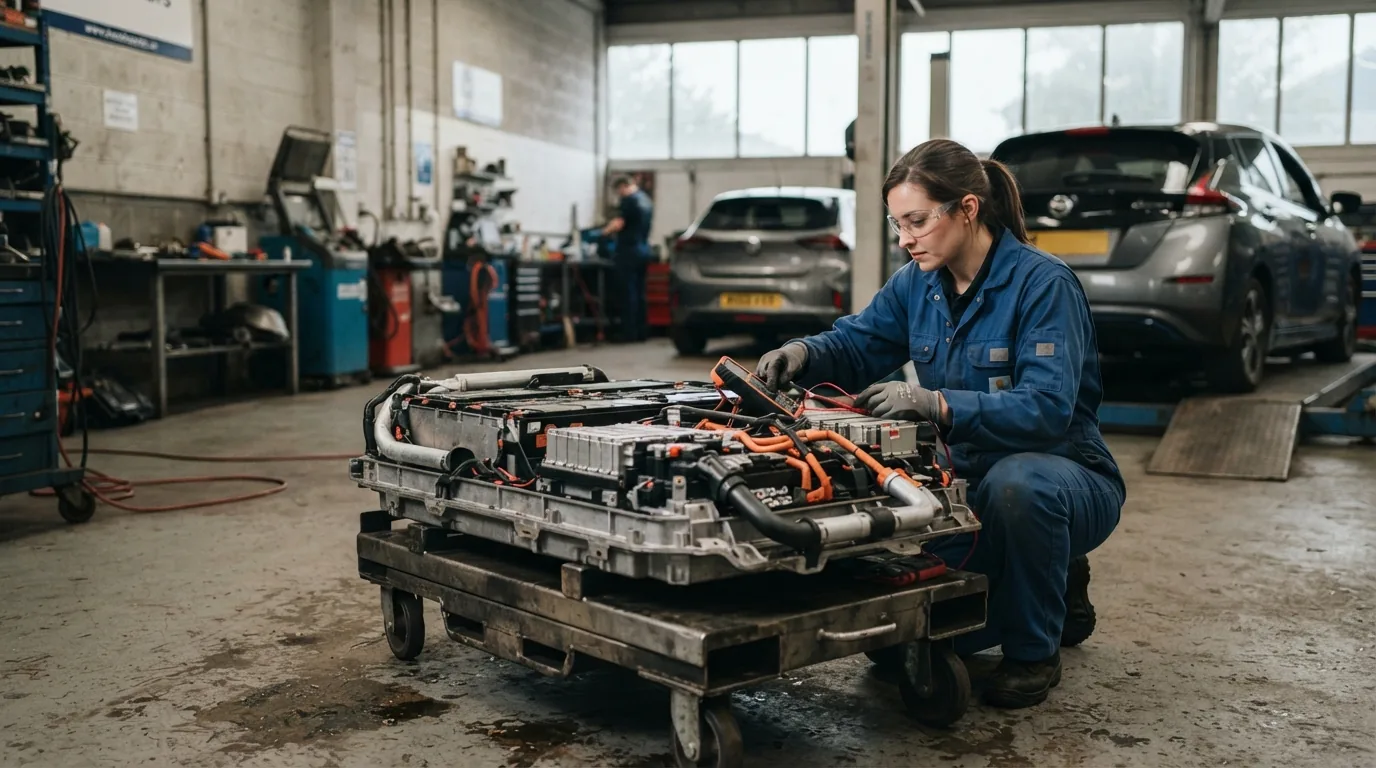
Quick answers
- Replacing an electric car battery in the UK typically costs between £5,000 and £10,000 for a mainstream family EV, and up to £18,000 to £22,000 for large premium models.
- Costs vary widely by model, pack size and whether you use a main dealer or independent specialist.
- How long do EV batteries actually last: The factors that accelerate degradation are: - Frequent use of DC rapid chargers (above 80% state of charge) - Regularly charging to 100% and leaving the battery at full charge for extended periods - Exposure to sustained extreme temperatures - Very deep discharge cycles (below 10%)
- What does the battery warranty cover: All major manufacturers warrant their EV batteries separately from the main vehicle warranty.
- For a car within warranty and driven under normal conditions, the probability of battery failure requiring replacement is very low.
- What about out-of-warranty battery failure: For high-value, low-mileage cars, a main dealer replacement may preserve resale value.
Replacing an electric car battery in the UK typically costs between £5,000 and £10,000 for a mainstream family EV, and up to £18,000 to £22,000 for large premium models. The good news: most manufacturers warrant their batteries for eight years or 100,000 miles, and modern packs degrade slowly enough that most owners never need a replacement. Understanding when replacement is and is not covered by warranty is the most important part of this picture.
What does an EV battery replacement cost in the UK?
Costs vary widely by model, pack size and whether you use a main dealer or independent specialist.
| Vehicle | Approximate battery replacement cost (dealer) |
|---|---|
| Citroen Ami (5.5 kWh) | ~£600 |
| Honda e (35.5 kWh) | ~£3,000 |
| Nissan Leaf (40 kWh) | ~£8,500 — £12,000 |
| Nissan Leaf (62 kWh, e+) | ~£14,000 — £16,500 |
| Renault Zoe (50 kWh) | ~£7,000 — £9,000 |
| Volkswagen ID.3 (58 kWh) | ~£8,000 — £11,000 |
| Hyundai Ioniq 5 (77 kWh) | ~£10,000 — £14,000 |
| Tesla Model 3 (Long Range) | ~£18,000 — £22,000 |
| BMW iX (111 kWh) | ~£18,000 — £25,000 |
Figures are estimates based on dealer pricing and industry data for 2025/26. Independent EV specialists, particularly those using refurbished or remanufactured packs, can offer savings of 30 to 40% over main dealer rates. The market for third-party EV battery services is growing as the UK parc ages, with companies such as Greentec Auto offering alternatives to main-dealer replacements.
How long do EV batteries actually last?
Longer than most people expect. Lithium-ion battery technology has matured considerably since the early Nissan Leaf days, and most modern packs degrade slowly under typical use. Real-world data from Tesla and Hyundai suggests battery capacity retention of around 85 to 90% after 100,000 miles, and 80% or above after 150,000 to 200,000 miles in well-maintained vehicles.
The factors that accelerate degradation are:
- Frequent use of DC rapid chargers (above 80% state of charge)
- Regularly charging to 100% and leaving the battery at full charge for extended periods
- Exposure to sustained extreme temperatures
- Very deep discharge cycles (below 10%)
Most OEM guidance recommends keeping battery charge between 20% and 80% for daily use, reserving 100% charges for long journeys. Following this reduces long-term degradation and extends the period before a replacement becomes necessary.
What does the battery warranty cover?
All major manufacturers warrant their EV batteries separately from the main vehicle warranty. The standard in 2026 is:
| Manufacturer | Battery warranty |
|---|---|
| Hyundai / Kia | 8 years / 160,000 km (100,000 miles), 70% capacity guarantee |
| Volkswagen Group (VW, Audi, Skoda, SEAT) | 8 years / 160,000 km, 70% capacity |
| Tesla | 8 years / 150,000 miles (LR models), 70% capacity |
| Nissan | 8 years / 100,000 miles, capacity floor varies by model |
| BMW | 8 years / 100,000 miles (varies by model) |
| Renault | 8 years / 100,000 miles |
| Mercedes | 10 years / 250,000 km on some models |
The warranty covers you if the battery fails outright or if capacity drops below the guaranteed floor (usually 70%) during the warranty period. If either happens, the manufacturer replaces or repairs the pack at no cost to you, and the warranty transfers to subsequent owners.
The 70% capacity threshold is important: if your battery retains 72% of original capacity after six years, you are not entitled to a warranty replacement even though the car’s range is notably diminished. The threshold triggers coverage; degradation alone above the floor does not.
What are the realistic chances of needing a replacement?
For a car within warranty and driven under normal conditions, the probability of battery failure requiring replacement is very low. Industry data suggests that fewer than 2% of EV batteries fail outright during the warranty period. Degradation below the 70% capacity floor is more common but still uncommon in the five-to-eight-year timeframe most UK owners keep a car.
The genuine risk is for buyers of older, high-mileage used EVs — particularly first-generation Nissan Leafs — where both the battery technology and the warranty coverage may be less robust. Pre-purchase battery health checks (available from independent specialists for around £100 to £200) are advisable for any used EV with an expired warranty.
What about out-of-warranty battery failure?
If your battery fails outside warranty — whether from age, high mileage, or genuinely bad luck — you have three options:
- Main dealer replacement: Most expensive but uses new, OEM-spec parts with a fresh warranty
- Independent EV specialist: Typically 30 to 40% cheaper than dealer, often using quality refurbished packs
- Battery reconditioning: For some older models (particularly Nissan Leaf), individual cells within the pack can be replaced rather than the whole unit, reducing cost significantly
For high-value, low-mileage cars, a main dealer replacement may preserve resale value. For older, higher-mileage cars, the economics of a full replacement rarely stack up — an £8,000 battery in a car worth £10,000 is not sensible unless you plan to keep it for a very long time.
Are battery costs falling?
Yes, over the medium term. The cost of lithium-ion battery cells has fallen sharply from roughly $1,200 per kWh in 2010 to around $100 to $115 per kWh in 2025 (BloombergNEF data). This trajectory means future replacement costs for current cars will likely be lower than they are today. A Tesla Model 3 battery that costs £20,000 to replace at a dealer in 2026 may cost substantially less in 2030 as cell prices continue to fall and the third-party replacement market matures.
Is battery anxiety still rational?
For buyers of a new or near-new EV from a mainstream manufacturer, battery anxiety is not justified by the data. The combination of robust warranties, slow real-world degradation and falling replacement costs means the battery is not the financial risk it was perceived to be in the early EV era.
For used EV buyers looking at high-mileage, older models without warranty coverage, a pre-purchase health check is prudent and inexpensive. For the mainstream buyer in 2026, battery replacement should be understood but not feared.
Where to go next
For a full picture of what owning an EV costs in the UK — including charging, insurance, tax and maintenance — visit the EV running costs and tax hub.
To find EVs with the best warranty coverage and lowest overall running costs, see our cheapest electric cars to run guide.
How we test and where our numbers come from
Range figures are official WLTP combined values taken from manufacturer UK specification pages, with real-world estimates drawn from independent comparative testing. Prices are UK list prices at the time of the latest update. Tax, grant and charging-scheme figures come from GOV.UK and HMRC publications. We re-check every guide when pricing, specification or policy changes. Last checked 11 August 2026.
Frequently asked questions
What does an EV battery replacement cost in the UK?
Costs vary widely by model, pack size and whether you use a main dealer or independent specialist.
How long do EV batteries actually last?
Longer than most people expect. Lithium-ion battery technology has matured considerably since the early Nissan Leaf days, and most modern packs degrade slowly under typical use.
What does the battery warranty cover?
The warranty covers you if the battery fails outright or if capacity drops below the guaranteed floor (usually 70%) during the warranty period. If either happens, the manufacturer replaces or repairs the pack at no cost to you, and the warranty transfers to subsequent owners.
What are the realistic chances of needing a replacement?
For a car within warranty and driven under normal conditions, the probability of battery failure requiring replacement is very low. Industry data suggests that fewer than 2% of EV batteries fail outright during the warranty period.
What about out-of-warranty battery failure?
For high-value, low-mileage cars, a main dealer replacement may preserve resale value. For older, higher-mileage cars, the economics of a full replacement rarely stack up -- an £8,000 battery in a car worth £10,000 is not sensible unless you plan to keep it for a very long time.

EV Compared
The EV Compared editorial team tracks the UK electric vehicle market full time: new model launches, list prices, WLTP and real-world range, public charging tariffs and the tax rules that decide what an EV actually costs to run. Every guide is checked against manufacturer specifications and official GOV.UK figures, and updated whenever the numbers move.
Related reading
View all
What Are the Biggest Myths About Switching to an EV?
The claims that put UK drivers off going electric, and what the evidence actually says
Should You Buy an EV in 2026 or Wait for Cheaper Models?
An honest look at where EV prices are heading and whether the wait is worth it for UK buyers
Buying and Owning an Electric Car in the UK: The Complete 2026 Guide
Everything you need to know about costs, charging, depreciation and day-to-day life with an EV