What Is Plug and Charge and Where Can You Use It in the UK?
Plug and Charge lets your EV authenticate and pay automatically at compatible chargers. Here is how it works, which cars support it and where you can use it in the UK today
Quick answers
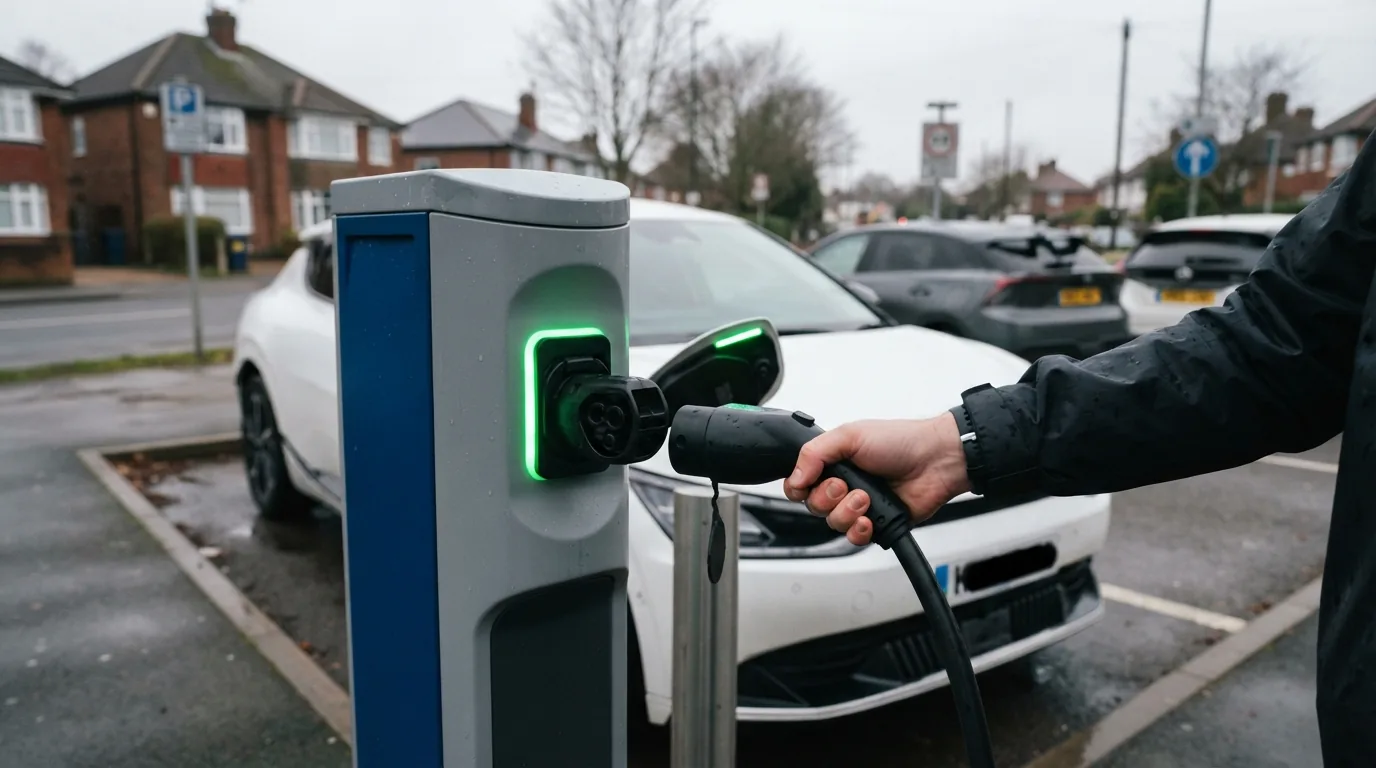
- Plug and Charge is a feature defined in the ISO 15118 international standard that allows your electric car to identify itself to a compatible charger, authenticate your payment account and start a charging session automatically, simply by plugging in. No app, no RFID card, no QR code.
- How does Plug and Charge work technically: The underlying standard is ISO 15118, specifically the -2 and -20 versions, which define how an EV and a charger communicate over the Combined Charging System (CCS) connector.
- Autocharge is a simpler (and technically less secure) system offered by some networks.
- The main mistake is assuming Plug and Charge works everywhere.
- In most cases, the price you pay is the same whether you authenticate via Plug and Charge, an RFID card or an app, for a given network.
- For non-Tesla cars using the Tesla Supercharger CCS posts, you need to open the Tesla app and select your car to start the session; automatic authentication does not apply to non-Tesla vehicles at Superchargers.
Plug and Charge is a feature defined in the ISO 15118 international standard that allows your electric car to identify itself to a compatible charger, authenticate your payment account and start a charging session automatically, simply by plugging in. No app, no RFID card, no QR code. The car and charger communicate directly using digital certificates, and the session begins within seconds.
In the UK in 2026, Plug and Charge is live at IONITY’s rapid charging network and expanding across other operators, but it is not yet universal. You still need a backup app or card for most public charging.
How does Plug and Charge work technically?
The underlying standard is ISO 15118, specifically the -2 and -20 versions, which define how an EV and a charger communicate over the Combined Charging System (CCS) connector. The process works as follows:
- You plug the CCS cable into your car.
- The car and charger establish a communication link over the control pilot wire (a low-voltage signal line inside the CCS connector).
- The charger requests the car’s identity. The car responds with a digital certificate stored securely in its onboard systems.
- The certificate is validated by the Mobility Operator’s backend (the charging network or a third-party eMobility Service Provider).
- If valid, the session starts automatically. Billing is handled via the payment account linked to your car’s Plug and Charge certificate.
The whole handshake takes a few seconds and is fully encrypted. The contract certificate in the car is issued by the manufacturer or an authorised eMobility Service Provider (eMSP) and typically needs to be renewed periodically (often annually), though this happens in the background without user action on most implementations.
Which cars support Plug and Charge in the UK?
| Manufacturer | Models with Plug and Charge | Notes |
|---|---|---|
| BMW | i4, i5, i7, iX, X1 xDrive30e | Supported across current i-range; activated via iDrive settings |
| Hyundai | IONIQ 5, IONIQ 6 | Enabled via OTA update on 2022+ models |
| Kia | EV6, EV9 | Supported; uses same E-GMP platform as Hyundai |
| Porsche | Taycan, Macan EV | Porsche was an early adopter; IONITY works well |
| Audi | e-tron GT, Q8 e-tron | Supported on all-electric range |
| Mercedes-Benz | EQS, EQE, EQB | Supported on main EQ range |
| Volkswagen | ID.3, ID.4, ID.7 | Rolled out via software update on newer production |
| Ford | Mustang Mach-E (newer build dates) | Some builds support it; check your car’s spec |
| Volvo | EX30, EX40, EX90 | Supported |
| Polestar | Polestar 2, 3 | Supported |
| Tesla | Model 3, Y, S, X | Tesla has its own proprietary equivalent via the Tesla account; CCS Plug and Charge on Superchargers in UK |
Where can you use Plug and Charge in the UK?
| Charging network | Plug and Charge status (2026) | Notes |
|---|---|---|
| IONITY | Live | Most consistent UK Plug and Charge experience; 350 kW chargers on major motorway routes |
| Tesla Supercharger | Tesla account-based (not ISO 15118) | Works automatically for Tesla owners; CCS users need app |
| Osprey | Rolling out | Osprey has been active in implementing ISO 15118 |
| Octopus Electroverse | Expanding | Rolling out across aggregated network |
| bp pulse | Partial | Available on newer rapid chargers |
| Pod Point | Limited | Newer deployments include the capability |
| Osprey | Live on selected sites | |
| Gridserve | In progress | Highway chargers being upgraded |
Important caveat: availability varies by specific charger location even within the same network, as older hardware may not support ISO 15118. Always have a backup app or payment card for any public charging trip.
What is Autocharge and how is it different from Plug and Charge?
Autocharge is a simpler (and technically less secure) system offered by some networks. It identifies the car by its MAC address or a unique charge-point identifier rather than a certificate. There is no encrypted certificate handshake, which makes it easier to implement but less secure.
Autocharge works on some networks in the UK (Osprey and Mer are among those that have used this approach) and does deliver the “just plug in” experience. However, it is not part of the ISO 15118 standard, is less secure and does not support the more advanced bidirectional (V2G) features that ISO 15118-20 enables.
For most drivers, the practical experience of Autocharge and Plug and Charge is similar: plug in and charging starts. The difference matters more to security researchers and to those planning to use V2H or V2G functionality in future.
Do you need to set anything up for Plug and Charge?
Setup requirements vary by manufacturer and network, but generally:
- BMW: Navigate to the Charging menu in iDrive, find the Plug and Charge option and enable it. You may need to link a BMW Charging account or a supported third-party account.
- Hyundai / Kia: In the EV app (BlueLink or Kia Connect), find the Plug and Charge setting and enable it. The car needs to be connected to the internet for certificate provisioning.
- Porsche: Set up in the Porsche Connect app, linked to your IONITY account.
- VW: In the ID. software menu under Charging. Requires a linked Volkswagen WeCharge account.
Once set up, no further action is needed at the charger. The certificate renews automatically.
What is the common mistake with Plug and Charge?
The main mistake is assuming Plug and Charge works everywhere. If you drive up to a charger, plug in and it does not start automatically, the most common reasons are:
- The charger does not support ISO 15118 (older hardware or budget equipment).
- Your car supports Plug and Charge but you have not enabled or set it up in the settings.
- Your Plug and Charge certificate has expired and not yet renewed.
- The network’s backend system has a fault.
In all these cases, your RFID card or the network’s app will start the session instead. Plug and Charge is a convenience enhancement, not a replacement for your backup payment method.
Does Plug and Charge affect the cost of charging?
In most cases, the price you pay is the same whether you authenticate via Plug and Charge, an RFID card or an app, for a given network. However, some networks charge a transaction fee for app-based sessions that is waived for Plug and Charge, as the process is cheaper for the operator to manage. IONITY charges a per-session fee when using some cards and apps that is not applied when using Plug and Charge with a directly linked account.
Is Plug and Charge the same as Tesla’s automatic charging?
No, though the outcome is similar. Tesla’s Supercharger network uses a proprietary authentication system where the car’s VIN is linked to your Tesla account, and the charger authenticates automatically when you plug in. This predates ISO 15118 and uses a different technical approach.
For non-Tesla cars using the Tesla Supercharger CCS posts, you need to open the Tesla app and select your car to start the session; automatic authentication does not apply to non-Tesla vehicles at Superchargers.
Will Plug and Charge become the standard?
The trajectory is clearly toward wider adoption. UK Government regulations require new rapid chargers to support contactless payment, which has driven hardware upgrades that also make ISO 15118 implementation more practical. As the charger estate turns over to newer hardware, Plug and Charge availability will increase.
For 2026 and near-term travel, the practical answer is: enable Plug and Charge on your car if it supports it, use it where it works (primarily IONITY) and carry your backup card.
For more on EV technology, see our EV tech and apps hub. For the best charging apps and payment options, see our best EV charging apps guide.
How we test and where our numbers come from
Range figures are official WLTP combined values taken from manufacturer UK specification pages, with real-world estimates drawn from independent comparative testing. Prices are UK list prices at the time of the latest update. Tax, grant and charging-scheme figures come from GOV.UK and HMRC publications. We re-check every guide when pricing, specification or policy changes. Last checked 11 August 2026.
Frequently asked questions
How does Plug and Charge work technically?
The whole handshake takes a few seconds and is fully encrypted. The contract certificate in the car is issued by the manufacturer or an authorised eMobility Service Provider (eMSP) and typically needs to be renewed periodically (often annually), though this happens in the background without user action on most implementations.
What is Autocharge and how is it different from Plug and Charge?
Autocharge is a simpler (and technically less secure) system offered by some networks. It identifies the car by its MAC address or a unique charge-point identifier rather than a certificate.
Do you need to set anything up for Plug and Charge?
Once set up, no further action is needed at the charger. The certificate renews automatically.
What is the common mistake with Plug and Charge?
In all these cases, your RFID card or the network's app will start the session instead. Plug and Charge is a convenience enhancement, not a replacement for your backup payment method.
Does Plug and Charge affect the cost of charging?
In most cases, the price you pay is the same whether you authenticate via Plug and Charge, an RFID card or an app, for a given network. However, some networks charge a transaction fee for app-based sessions that is waived for Plug and Charge, as the process is cheaper for the operator to manage.

EV Compared
The EV Compared editorial team tracks the UK electric vehicle market full time: new model launches, list prices, WLTP and real-world range, public charging tariffs and the tax rules that decide what an EV actually costs to run. Every guide is checked against manufacturer specifications and official GOV.UK figures, and updated whenever the numbers move.
Related reading
View all
Apple CarPlay vs Built In EV Software: Which Is Better?
Apple CarPlay is familiar and loved, but built-in EV software controls your battery, charging and range. We explain when each wins and which cars get the balance right.
Best Apps to Find EV Chargers in the UK
With over 120,000 public charge points in the UK, the right app makes the difference between a smooth charging stop and a wasted detour. Here are the options ranked
What Is Bidirectional Charging and Can It Power Your Home?
Bidirectional charging lets your electric car act as a home battery or feed the national grid. Here is how it works, what it costs and which UK cars support it in 2026