Octopus Electroverse vs Bonnet: Best Charging App Compared
Octopus Electroverse and Bonnet (now OVO Charge) are the two leading multi-network EV charging apps in the UK. We compare coverage, price and who each one suits.
Quick answers
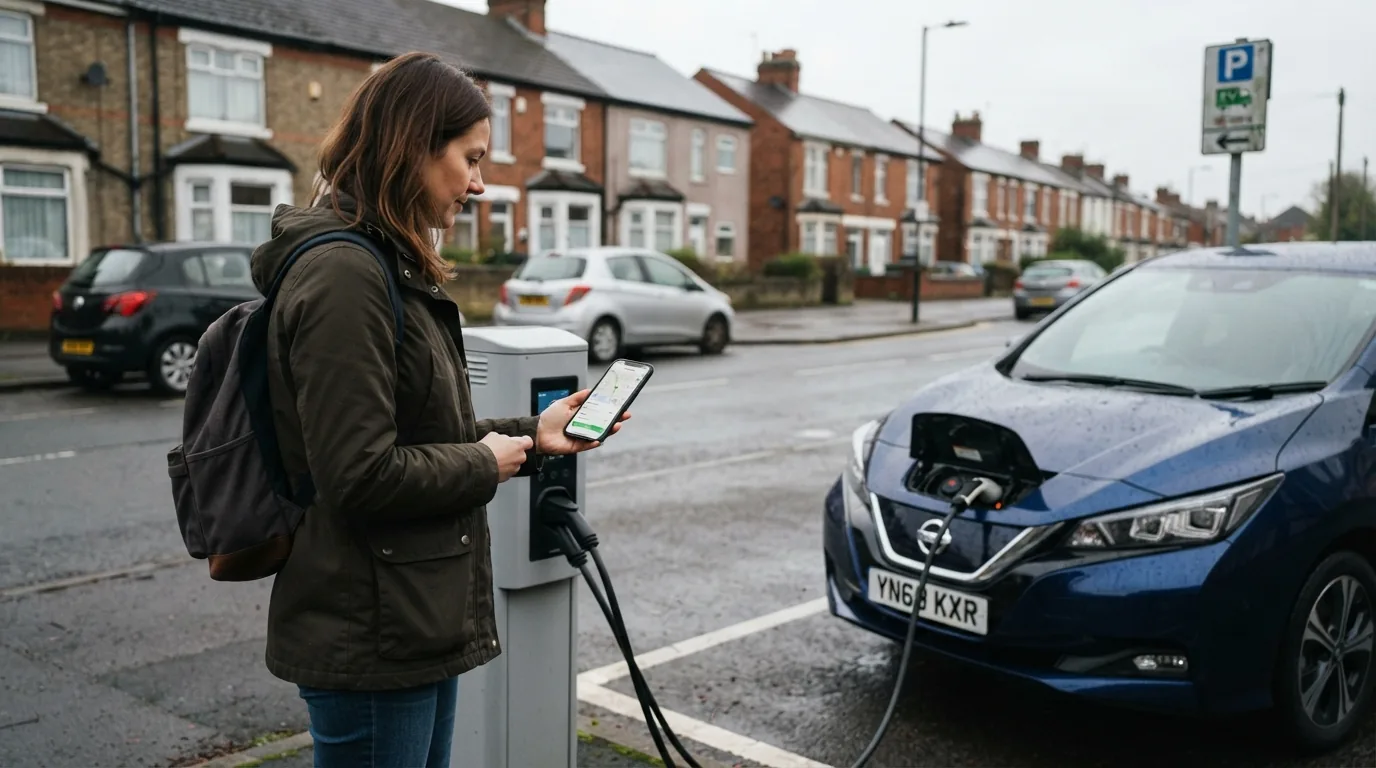
- Octopus Electroverse and Bonnet (rebranded as OVO Charge in 2025) are the UK's two main "roaming" EV charging apps: services that consolidate access to multiple public charging networks behind a single account and payment method.
- What they both do: The commercial model for both apps is similar: they negotiate wholesale rates with charging networks, pass some savings to users and earn a margin.
- Electroverse is Octopus Energy's multi-network public charging service.
- OVO Charge is built on the infrastructure Bonnet developed before OVO Energy acquired it.
- Price comparison in practice: At a 50 kW rapid charger priced at 70p per kWh: - Paying directly (contactless): 70p/kWh = £28 for a 40 kWh charge - Via Electroverse (Octopus customer with 8% discount): ~64.4p/kWh = £25.76 - Via OVO Charge Boost (15% discount): ~59.5p/kWh = £23.80
- The practical approach for most UK drivers: For the majority of UK EV drivers who charge primarily at home and use public chargers occasionally, the free tier of either app is sufficient.
Octopus Electroverse and Bonnet (rebranded as OVO Charge in 2025) are the UK’s two main “roaming” EV charging apps: services that consolidate access to multiple public charging networks behind a single account and payment method. Instead of downloading a separate app for every charging network, you use one app for everything.
The direct answer: Octopus Electroverse has broader coverage and better integration for Octopus Energy customers. OVO Charge (built on Bonnet’s technology) offers larger discounts for everyone, regardless of who supplies their home energy. For most UK drivers, both are worth having. For Octopus Energy customers, Electroverse is the clear first choice.
What they both do
Both apps are “roaming” services. They provide access to multiple charging networks through a single account, so you do not need separate accounts with BP Pulse, Osprey, GeniePoint, Pod Point and others. You sign up once, link a payment method, and use either app (or the associated RFID card) at any compatible charger.
The commercial model for both apps is similar: they negotiate wholesale rates with charging networks, pass some savings to users and earn a margin. The key differentiators are coverage breadth, discount structure and energy company integration.
| Feature | Octopus Electroverse | OVO Charge (Bonnet) |
|---|---|---|
| UK charge points accessible | 650,000+ (including Europe) | 200,000+ across Europe |
| Global coverage | 1 million+ across 40 countries | Europe-focused |
| Pricing model | Network rates + potential Octopus discount | Pay-as-you-go or subscription “Boost” |
| Discount for home energy customers | 5-8% off for Octopus Go/Intelligent Go customers | Available to all customers (not energy-linked) |
| Subscription option | No (pay-as-you-go with energy discount) | “Boost” monthly add-on for up to 15% off |
| RFID card available | Yes | Yes |
| Non-energy-customer access | Yes (standard rates) | Yes (full discount available) |
| App quality (user ratings) | High | High |
Octopus Electroverse: the Octopus ecosystem advantage
Electroverse is Octopus Energy’s multi-network public charging service. At its broadest, it claims access to over 650,000 charge points across the UK and Europe, rising to over 1 million across 40 countries.
The key advantage for Octopus customers is the energy integration. If you are on Octopus Go or Intelligent Octopus Go for home charging, you receive a 5 to 8 per cent discount on all Electroverse sessions once you link your accounts. This discount is applied automatically and requires no action at the charger: you simply tap and charge.
For drivers who are not Octopus Energy customers, Electroverse is still available and useful, but the discount does not apply. You pay the standard network rate as aggregated through Electroverse, which may or may not be cheaper than paying the network directly.
The Electroverse RFID card works at all compatible chargers, and no monthly fee applies to the service. You pay for what you use.
OVO Charge (Bonnet): the open discount model
OVO Charge is built on the infrastructure Bonnet developed before OVO Energy acquired it. The key difference from Electroverse is that OVO’s discount scheme is available to any driver, regardless of who supplies their home energy. You do not need to be an OVO customer.
The “Boost” subscription is a monthly add-on that provides up to 15 per cent off charging sessions across compatible networks. This is a larger headline discount than Electroverse’s 5 to 8 per cent. However, it applies to fewer networks (OVO Charge covers around 200,000 chargers versus Electroverse’s 650,000), and it comes with a monthly fee.
The practical question: is the 15 per cent discount, applied to a smaller network coverage, worth more than the 5 to 8 per cent discount on the larger Electroverse footprint? The answer depends on which chargers you actually use. If you primarily charge at networks covered by OVO Charge, the larger discount may win. If you regularly use chargers that are in Electroverse’s network but not OVO Charge’s, coverage matters more than headline discount percentage.
Price comparison in practice
At a 50 kW rapid charger priced at 70p per kWh:
- Paying directly (contactless): 70p/kWh = £28 for a 40 kWh charge
- Via Electroverse (Octopus customer with 8% discount): ~64.4p/kWh = £25.76
- Via OVO Charge Boost (15% discount): ~59.5p/kWh = £23.80
The OVO Charge Boost discount is larger per session, but the Boost subscription has a monthly fee that needs to be offset by sufficient charging sessions. If you do fewer than two or three public charging sessions per month, the subscription cost may outweigh the saving.
Which one should you use?
Choose Octopus Electroverse if:
- You are already an Octopus Energy customer (the integration is seamless and the discount is automatic)
- You travel widely in Europe and want the broadest possible coverage
- You want a pay-as-you-go service with no monthly commitment
- You want the largest single-app network footprint in the UK
Choose OVO Charge (Bonnet) if:
- You are not an Octopus customer and want the best available discount regardless of energy supplier
- You charge publicly several times per month (enough to justify the Boost subscription)
- Your regular chargers are on networks supported by OVO Charge
Use both if:
- You want maximum flexibility: use whichever app has the better rate at each specific charger
- You travel regularly across the UK and across Europe
The practical approach for most UK drivers
For the majority of UK EV drivers who charge primarily at home and use public chargers occasionally, the free tier of either app is sufficient. The discounts become most valuable for drivers who regularly cover long distances and rely on public rapid charging.
The simplest recommendation: if you are an Octopus Energy customer, use Electroverse and enable the discount. If you are not, OVO Charge’s no-energy-supplier-required discount scheme is the better starting point. In either case, also download Zapmap for charger reliability checks and Zap-Pay for networks that neither Electroverse nor OVO Charge covers.
What to read next
For a guide to all the EV apps, tools and services worth knowing about, visit our EV Tech & Apps guide. For a full comparison of EV charging apps including route planners and network-specific apps, see our best EV charging apps page.
How we test and where our numbers come from
Range figures are official WLTP combined values taken from manufacturer UK specification pages, with real-world estimates drawn from independent comparative testing. Prices are UK list prices at the time of the latest update. Tax, grant and charging-scheme figures come from GOV.UK and HMRC publications. We re-check every guide when pricing, specification or policy changes. Last checked 11 August 2026.

EV Compared
The EV Compared editorial team tracks the UK electric vehicle market full time: new model launches, list prices, WLTP and real-world range, public charging tariffs and the tax rules that decide what an EV actually costs to run. Every guide is checked against manufacturer specifications and official GOV.UK figures, and updated whenever the numbers move.
Related reading
View all
Apple CarPlay vs Built In EV Software: Which Is Better?
Apple CarPlay is familiar and loved, but built-in EV software controls your battery, charging and range. We explain when each wins and which cars get the balance right.

Best Apps to Find EV Chargers in the UK
With over 120,000 public charge points in the UK, the right app makes the difference between a smooth charging stop and a wasted detour. Here are the options ranked
What Is Bidirectional Charging and Can It Power Your Home?
Bidirectional charging lets your electric car act as a home battery or feed the national grid. Here is how it works, what it costs and which UK cars support it in 2026