What to Check Before Buying Your First Electric Car in the UK
Ten questions every first-time EV buyer should answer before signing anything
Quick answers
- Buying your first electric car is different from buying a petrol or diesel car in a handful of important ways, and most of the things that catch buyers out are entirely avoidable if you ask the right questions first. This checklist covers the ten areas that matter most.
- 1. Can you charge at home: This is the most important question, and it splits buyers into two very different ownership experiences.
- 2. What is your real daily mileage: For regular motorway journeys, look for a car with at least 200 miles of WLTP range.
- 3. What charging standard does the car use: All new EVs sold in the UK since 2022 use the CCS (Combined Charging System) standard for DC rapid charging.
- If you plan to do regular long trips, a car with at least 100 kW DC charging capability is worth the premium.
- By law, all new EVs sold in the UK must carry a minimum 8-year, 100,000-mile battery warranty guaranteeing at least 70% of original capacity.
Buying your first electric car is different from buying a petrol or diesel car in a handful of important ways, and most of the things that catch buyers out are entirely avoidable if you ask the right questions first. This checklist covers the ten areas that matter most.
The direct answer: before you buy your first EV, confirm that you can charge at home or near home, that the car’s real-world range covers your typical daily driving with headroom, and that you understand the charging standards it supports. Everything else is detail.
1. Can you charge at home?
This is the most important question, and it splits buyers into two very different ownership experiences.
If you have off-street parking (a driveway, garage, or private car park), a dedicated 7 kW wallbox typically costs £800 to £1,200 installed and transforms EV ownership. You wake up to a full battery every morning. Charging costs drop to 7p to 12p per kWh on an off-peak EV tariff, making the running cost roughly 1.5p to 2.5p per mile.
If you do not have off-street parking, you will depend on public charging. The UK now has over 92,000 public charge points, and lamp post charger schemes are expanding in most cities. This is workable, but it requires planning. Understand where your nearest reliable 7 kW or rapid charger is, and what your routine will look like before you commit.
2. What is your real daily mileage?
Most UK drivers cover between 20 and 40 miles per day. Even the most affordable EVs with 150 miles of WLTP range are sufficient for this. The issue arises when buyers conflate “range” with “how far I occasionally drive on holiday” rather than how far they drive day to day.
For regular motorway journeys, look for a car with at least 200 miles of WLTP range. Apply a 20 to 25% discount for motorway driving at 70 mph in mixed UK weather, which gives a real-world figure closer to 150 to 165 miles. For primarily urban or short-distance driving, 150 to 200 miles WLTP is ample.
3. What charging standard does the car use?
All new EVs sold in the UK since 2022 use the CCS (Combined Charging System) standard for DC rapid charging. If you are buying a pre-2022 used car, some models, particularly early Nissan Leafs, use CHAdeMO instead, which is supported by fewer public charge points. Check the connector type before buying any used EV.
For home AC charging, all current EVs use a Type 2 connector (the seven-pin socket). This is standard and universal.
4. What is the car’s maximum charging speed?
WLTP range tells you how far the car can go. The maximum charging rate tells you how quickly you can add range at a rapid charger.
| Charging speed | Typical charge time (10% to 80%) | Practical implication |
|---|---|---|
| 50 kW DC | 45–65 minutes | Older or budget EVs; slower stops |
| 100–150 kW DC | 25–35 minutes | Most current mid-range EVs |
| 200–350 kW DC | 12–20 minutes | Premium EVs and 800V architecture cars |
| 7.4 kW AC (home) | 6–9 hours | Overnight charging |
If you plan to do regular long trips, a car with at least 100 kW DC charging capability is worth the premium. For city-only driving, the home charging speed matters more than the rapid charge speed.
5. Is the warranty clear on battery coverage?
By law, all new EVs sold in the UK must carry a minimum 8-year, 100,000-mile battery warranty guaranteeing at least 70% of original capacity. Most manufacturers meet exactly this minimum. Some, including Kia and Hyundai on certain models, extend to the life of the vehicle for the original owner.
Before buying, confirm:
- Duration and mileage limit of the battery warranty
- What percentage capacity drop triggers a warranty claim (usually 70% of original)
- Whether the warranty is transferable if you sell the car
6. What is the total cost of ownership for your situation?
Do not just look at the monthly lease payment or the headline price. Factor in:
- Home charger installation cost (if applicable)
- Electricity tariff (switching to an EV tariff can save £400 to £500 per year)
- Road tax: £200 per year from year two; add £425 Expensive Car Supplement if list price exceeds £50,000
- Insurance: expect to pay roughly 15% more than for a petrol equivalent initially
- Servicing: roughly £140 to £175 per year, less than petrol
For most drivers who can charge at home, the total cost of ownership over four to five years is comparable to or cheaper than an equivalent petrol car.
7. Which finance structure is right for you?
Lease (PCH): Lowest monthly payments, no depreciation risk, but no ownership and mileage limits apply. Good for drivers who want a new car every two to three years without commitment.
PCP: Deposit plus monthly payments, with the option to buy at the end. Mileage limits apply but you can build equity. Good if you might want to own the car.
Outright purchase: No monthly payments, no mileage limits. Best for buyers who will keep the car five or more years.
Check whether the model qualifies for the Electric Car Grant (up to £3,750 off for eligible cars priced at or below £37,000). This can significantly reduce the outright cost or the PCP deposit.
8. What is the software and update situation?
Modern EVs receive over-the-air software updates that can improve range, charging behaviour, and features. Tesla pioneered this and still does it most comprehensively, but Hyundai, Kia, Polestar and Volkswagen Group brands all offer meaningful OTA updates.
Some manufacturers still require dealer visits for software changes. If you are buying used, check whether the car’s software is current and whether key charging improvements have been applied.
9. For used EVs: what is the battery health?
If you are buying a second-hand EV, ask for a battery health diagnostic printout from the dealer, showing state of health (SOH) as a percentage of original capacity. Above 85% is healthy. Below 75% for a car under six years old warrants negotiation or avoidance.
Some third-party services, including ClearWatt in the UK, offer independent battery health checks for around £50 to £100. For any used EV above £15,000, this is money well spent.
10. Is the model you want likely to be discontinued or heavily revised?
Battery technology is moving quickly. Before committing to a model, check when it was last refreshed and what the manufacturer’s public roadmap looks like. A car launched in 2020 that has not been updated may have charging speeds, software and efficiency that feel dated against 2024 and 2025 launches. This matters less for short-term leases and more for outright purchases where you plan to keep the car for five or more years.
Common mistake to avoid
The biggest first-timer mistake is buying based on maximum range rather than real-world usability. A car with 300 miles of WLTP range sounds far more impressive than one with 200 miles, but if you charge at home nightly and drive 35 miles a day, the extra range costs money you will never use. Match the car’s real-world range and charging speed to your actual patterns, not your theoretical worst-case ones.
What to do next
If you have confirmed home charging access and shortlisted two or three models, our best electric cars to buy in 2026 ranks them on real-world criteria. For a full breakdown of what EV ownership costs, see our electric car cost to own guide.
The complete picture of everything involved in buying and owning an electric car in the UK is in our pillar guide.
How we test and where our numbers come from
Range figures are official WLTP combined values taken from manufacturer UK specification pages, with real-world estimates drawn from independent comparative testing. Prices are UK list prices at the time of the latest update. Tax, grant and charging-scheme figures come from GOV.UK and HMRC publications. We re-check every guide when pricing, specification or policy changes. Last checked 11 August 2026.
Frequently asked questions
1. Can you charge at home?
This is the most important question, and it splits buyers into two very different ownership experiences.
2. What is your real daily mileage?
Most UK drivers cover between 20 and 40 miles per day. Even the most affordable EVs with 150 miles of WLTP range are sufficient for this.
3. What charging standard does the car use?
All new EVs sold in the UK since 2022 use the CCS (Combined Charging System) standard for DC rapid charging. If you are buying a pre-2022 used car, some models, particularly early Nissan Leafs, use CHAdeMO instead, which is supported by fewer public charge points.
4. What is the car's maximum charging speed?
WLTP range tells you how far the car can go. The maximum charging rate tells you how quickly you can add range at a rapid charger.
5. Is the warranty clear on battery coverage?
By law, all new EVs sold in the UK must carry a minimum 8-year, 100,000-mile battery warranty guaranteeing at least 70% of original capacity. Most manufacturers meet exactly this minimum.

EV Compared
The EV Compared editorial team tracks the UK electric vehicle market full time: new model launches, list prices, WLTP and real-world range, public charging tariffs and the tax rules that decide what an EV actually costs to run. Every guide is checked against manufacturer specifications and official GOV.UK figures, and updated whenever the numbers move.
Related reading
View all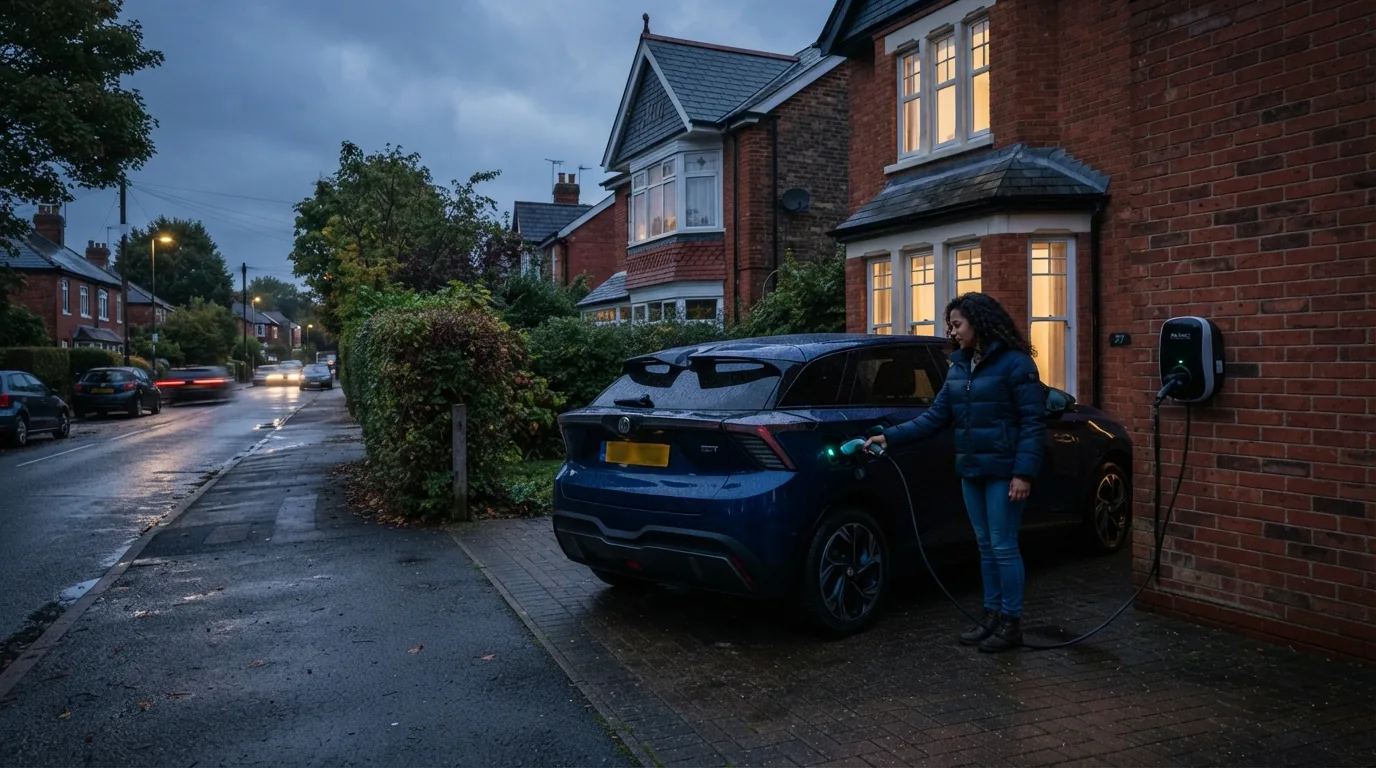
What Are the Biggest Myths About Switching to an EV?
The claims that put UK drivers off going electric, and what the evidence actually says
Should You Buy an EV in 2026 or Wait for Cheaper Models?
An honest look at where EV prices are heading and whether the wait is worth it for UK buyers
Buying and Owning an Electric Car in the UK: The Complete 2026 Guide
Everything you need to know about costs, charging, depreciation and day-to-day life with an EV