Electric Company Cars and Salary Sacrifice in the UK Explained
Your complete guide to BIK tax, salary sacrifice schemes and fleet EVs in 2026
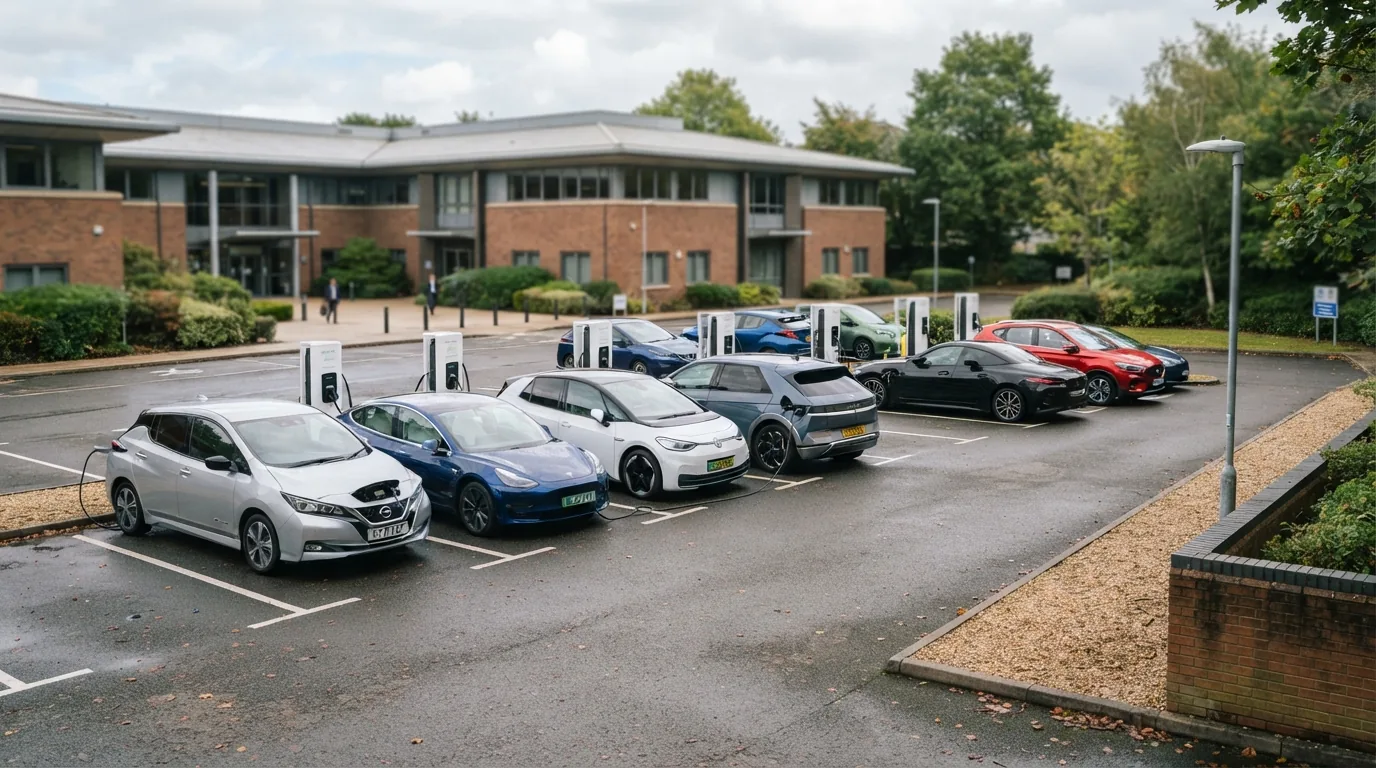
Quick answers
- Electric company cars and salary sacrifice schemes have transformed how UK employees and businesses think about motoring.
- A company car is a vehicle your employer provides for your personal use, funded directly by the business.
- What is a salary sacrifice car scheme: The scheme must be set up through your employer, who partners with a scheme provider.
- BIK rates for electric cars: 2026 to 2030: The rates have been confirmed by HMRC and legislated through to 2030.
- Most salary sacrifice schemes are fully managed and inclusive.
- Fleet operators can also claim a 100% First Year Allowance on the purchase of new zero-emission cars until April 2027 (extended at the 2025 Autumn Budget), meaning the full capital cost is deductible against corporation tax in the first year.
Electric company cars and salary sacrifice schemes have transformed how UK employees and businesses think about motoring. With Benefit-in-Kind (BIK) tax for fully electric vehicles sitting at just 4% in the 2026/27 tax year, compared with 25–37% for petrol and diesel cars, there has never been a more tax-efficient time to drive an EV through work. This guide covers everything you need to know, from how BIK is calculated to the difference between a company car and a salary sacrifice arrangement.
What is a company car and how does tax work?
A company car is a vehicle your employer provides for your personal use, funded directly by the business. You do not own the car and you do not lease it personally. In return, HMRC treats the car as a benefit in kind, which means you pay income tax on its taxable value. That taxable value is calculated by multiplying the car’s P11D value (its list price including options, but excluding the first-year registration fee and annual road tax) by the BIK percentage for that car’s CO2 band.
For a fully electric car in 2026/27, the BIK rate is 4%. On a £40,000 electric car, the annual BIK value is £1,600. A basic-rate taxpayer (20%) pays £320 per year, or around £27 per month, in income tax on that benefit. A higher-rate taxpayer (40%) pays £640 per year, roughly £53 per month. Compare that with a £40,000 petrol car at a 31% BIK rate: the same higher-rate taxpayer would pay £4,960 per year, over £400 per month.
Your employer also pays Class 1A National Insurance on the BIK value, at 15% from April 2025.
What is a salary sacrifice car scheme?
Salary sacrifice is a different arrangement. Your employer leases the car and you agree to give up a portion of your gross salary in exchange for use of the vehicle. Because the sacrifice comes out of your pre-tax pay, you save income tax and National Insurance on the amount sacrificed. HMRC still treats the car as a benefit in kind, so you pay BIK tax on top, but that rate is 4% for an EV in 2026/27, which is negligible against the savings on salary.
The result is significant. A basic-rate taxpayer sacrificing £500 per month (£6,000 per year) saves around £1,680 in income tax and National Insurance annually. After adding BIK tax of approximately £180 per year on a mid-range EV, the net benefit is around £1,500 saved compared with funding the same car from net pay. Higher-rate taxpayers save proportionally more, sometimes 40–50% of the gross lease cost.
The scheme must be set up through your employer, who partners with a scheme provider. The car appears on your payslip as a salary reduction. Salary sacrifice cannot reduce your cash pay below the National Minimum Wage, and a formal contract variation is required.
BIK rates for electric cars: 2026 to 2030
The table below shows the confirmed BIK rates for zero-emission electric cars through to 2029/30.
| Tax year | BIK rate for fully electric cars |
|---|---|
| 2025/26 | 3% |
| 2026/27 | 4% |
| 2027/28 | 5% |
| 2028/29 | 7% |
| 2029/30 | 9% |
The rates have been confirmed by HMRC and legislated through to 2030. Even at 9%, a fully electric company car remains far cheaper to run in tax terms than any petrol or diesel equivalent. The government’s Spring Statement in 2026 confirmed no changes to these scheduled increases.
Summary: company car vs salary sacrifice
| Factor | Company car | Salary sacrifice |
|---|---|---|
| Who leases the car | Employer | Employer |
| How you pay | Via BIK tax on payslip | Salary reduction, plus BIK tax |
| Income tax saving | No | Yes (on sacrificed amount) |
| NI saving (employee) | No | Yes (on sacrificed amount) |
| BIK rate (EV, 2026/27) | 4% | 4% |
| Minimum wage risk | No | Yes, if salary falls below NMW |
| Car ownership | Employer | Employer |
| Typical saving vs private lease | High | Very high (20–50%) |
What is included in a salary sacrifice package?
Most salary sacrifice schemes are fully managed and inclusive. A standard package typically covers:
- The vehicle lease
- Road tax (VED)
- Insurance (sometimes, check your scheme)
- Maintenance and tyres
- Breakdown cover
- Home charger installation (with some providers)
The all-inclusive nature makes budgeting straightforward. You know exactly what your motoring costs each month from the day you sign.
Fleet schemes: what businesses need to know
For businesses running multiple vehicles, a fleet arrangement usually takes one of three forms:
Business Contract Hire (BCH): The company leases vehicles directly and provides them to employees. The business claims the lease rentals as a deductible business expense (subject to CO2 restrictions) and, for electric cars, can reclaim 50% of the VAT on the rental. If the car is used exclusively for business, 100% of VAT can be reclaimed.
Salary sacrifice fleet: The employer leases vehicles and employees fund them via gross salary reduction. The employer benefits from reduced employer National Insurance, which often means the scheme runs at net zero cost to the business. As of 2026, BVRLA data shows salary sacrifice arrangements grew 118% year on year, driven by EV uptake.
Employee car ownership (ECO): Less common, but some businesses support employees purchasing their own electric cars with favourable loan or grant arrangements.
Fleet operators can also claim a 100% First Year Allowance on the purchase of new zero-emission cars until April 2027 (extended at the 2025 Autumn Budget), meaning the full capital cost is deductible against corporation tax in the first year.
What is the electric car grant?
From 2026, a new Electric Car Grant offers up to £3,750 off qualifying new EVs priced under £37,000, applied automatically at the point of purchase. For salary sacrifice schemes, this grant reduces the vehicle’s cost from day one, lowering the monthly lease payment. For mid-range models, providers report the grant translates to roughly £80–£110 less per month on a 36-month term.
Common mistakes to avoid
Assuming you need to own the car. You never own the car in either a company car or salary sacrifice arrangement. Ownership stays with the employer or leasing company throughout.
Ignoring BIK when comparing salary sacrifice quotes. Some providers quote the gross sacrifice only. The BIK charge is real and must be factored in. For a £40,000 EV at 4% BIK, a 40% taxpayer pays roughly £640 per year in tax on the benefit, on top of the sacrifice.
Assuming EV BIK rates will stay low forever. They will not. Rates rise each year to 2030. The earlier you enter a scheme, the longer you lock in today’s rate.
Thinking salary sacrifice only works for high earners. Basic-rate taxpayers save meaningfully. The proportional benefit is highest for 40% and 45% taxpayers, but anyone paying tax and National Insurance gains something.
Where to go next
For a detailed breakdown of how the numbers work and which models offer the best value, see our best electric cars for salary sacrifice page. If you are deciding between routes to access an EV through work, our guide to company cars, salary sacrifice and fleet covers every arrangement side by side.
The short version: if your employer offers a salary sacrifice scheme and you pay any amount of income tax, sign up. For most UK employees, it is the cheapest way to drive a new electric car.
How we test and where our numbers come from
Range figures are official WLTP combined values taken from manufacturer UK specification pages, with real-world estimates drawn from independent comparative testing. Prices are UK list prices at the time of the latest update. Tax, grant and charging-scheme figures come from GOV.UK and HMRC publications. We re-check every guide when pricing, specification or policy changes. Last checked 11 August 2026.
Frequently asked questions
What is a company car and how does tax work?
A company car is a vehicle your employer provides for your personal use, funded directly by the business. You do not own the car and you do not lease it personally.
What is a salary sacrifice car scheme?
Salary sacrifice is a different arrangement. Your employer leases the car and you agree to give up a portion of your gross salary in exchange for use of the vehicle.
What is included in a salary sacrifice package?
The all-inclusive nature makes budgeting straightforward. You know exactly what your motoring costs each month from the day you sign.
What is the electric car grant?
From 2026, a new Electric Car Grant offers up to £3,750 off qualifying new EVs priced under £37,000, applied automatically at the point of purchase. For salary sacrifice schemes, this grant reduces the vehicle's cost from day one, lowering the monthly lease payment.
Sources and further reading
- gov.ukHMRCPrimary source referenced in this article.

EV Compared
The EV Compared editorial team tracks the UK electric vehicle market full time: new model launches, list prices, WLTP and real-world range, public charging tariffs and the tax rules that decide what an EV actually costs to run. Every guide is checked against manufacturer specifications and official GOV.UK figures, and updated whenever the numbers move.
Related reading
View all
What Does the 2030 Petrol and Diesel Ban Actually Mean?
Separating the facts from the myths: what changes in 2030, what does not, and what it means for your next car

Best Affordable EVs Under the Electric Car Grant
The electric cars that combine a government grant with the lowest purchase prices in the UK market right now

What Is the Benefit in Kind Rate for Electric Cars?
The electric car BiK rate is 4% for 2026/27, rising to 9% by 2029/30 on a confirmed schedule. Here is what that means for your tax bill, with worked examples and a full multi-year projection.