Why public charging prices are finally starting to fall, and where
Competition between rapid-charging networks is heating up. We break down the new per-kWh tariffs, which networks have cut prices most, and the cheapest places to plug in right now.
Quick answers
- Off-peak ultra-rapid charging fell around 10% in December 2025, reaching approximately 45p/kWh, cheaper than the PAYG slow/fast average for the first time
- The Zapmap PAYG average for rapid/ultra-rapid charging in April 2026 is 79p/kWh, up 4% year-on-year, so drivers on flat-rate PAYG are not yet seeing lower bills
- A February 2026 tax tribunal ruled that public EV charging qualifies for 5% VAT rather than 20%, but HMRC is appealing and no operator can pass on savings yet
- The cheapest ultra-rapid charging currently available: AE Renewables Checkley Wood at 39p/kWh using on-site wind generation (single site); Believ at 66p/kWh nationally without a subscription
- Tesla Superchargers remain among the best-value nationwide rapid options for non-Tesla drivers at 54-71p/kWh PAYG, with off-peak rates in the mid-30s p/kWh
- Infrastructure growth is the long-term price driver: 87,796 public devices by end-2025, up 19%, with ultra-rapid capacity up 41%; more supply creates more competition
Why public charging prices are finally starting to fall, and where to find the cheapest rates now
Public EV charging is getting cheaper, but only if you know where to look. Off-peak and subscription rates have fallen sharply over the past six months, yet the headline PAYG average for rapid charging actually crept up 4% year-on-year to April 2026, according to the Zapmap Price Index. The story is not a simple one of prices falling across the board; it is a market splitting into two very different experiences depending on how and when you charge.
The weighted average PAYG rapid and ultra-rapid rate in April 2026 stands at 79p/kWh, with slow and fast charging averaging 54p/kWh (Zapmap). Meanwhile, off-peak ultra-rapid rates dropped around 10% in December 2025 alone, reaching approximately 45p/kWh on the networks that offer time-of-use pricing. ChargeUK, the industry body representing major charging operators, has pushed hard for the structural reforms that could lock in further reductions, and a February 2026 tribunal ruling on VAT represents the most significant potential catalyst yet. For a full breakdown of UK public charging networks and how to use them, see our charging network guide.
This article explains why prices are falling in parts of the market, maps where rates are lowest right now, covers the VAT ruling that could cut costs further, and gives you concrete steps to pay less today.
The two-speed market: why averages mask the real story
The number that tends to make headlines, the average PAYG rate, is not the number that tells you whether your charging bills are going up or down. It tells you what you pay if you pull up at a rapid charger, tap your card, and accept whatever rate is on the screen. For most drivers, that figure is still rising.
The Zapmap Price Index shows the weighted average PAYG rapid/ultra-rapid rate at 79p/kWh in April 2026, up roughly 4% year-on-year. For slow and fast charging, the PAYG average sits at 54p/kWh. Neither figure has moved in drivers’ favour over the past year.
The more interesting movement is in the off-peak and subscription segment. Based on the AA Recharge Report for December 2025, cited in Auto Express, off-peak ultra-rapid rates dropped approximately 10% month-on-month in December 2025, bringing them to around 45p/kWh on the networks that operate time-of-use pricing. That is cheaper than the average PAYG slow/fast rate, a meaningful reversal. Jack Cousens, the AA’s head of roads policy, put it clearly in Auto Express in January 2026: “Operators offering peak and off-peak rates are the most competitive, whereas flat-rate providers have seen steady increases.”
| Charger tier | PAYG average | Best off-peak/subscription rate |
|---|---|---|
| Rapid/ultra-rapid | 79p/kWh | ~45p/kWh (off-peak) |
| Slow/fast | 54p/kWh | ~39p/kWh (subscription) |
The disparity exists because flat-rate operators are still pricing to recover high fixed costs: installation, standing charges, and the 20% VAT on electricity they cannot currently escape. Off-peak-enabled networks are competing on efficiency, passing through the lower wholesale cost of electricity at night when grid demand is lower. Asif Ghafoor, CEO of Be.EV, told Auto Express in January 2026: “If you rely on public chargers, your EV is simply more expensive to run than it should be.” That observation applies most directly to drivers who have no choice but to use flat-rate PAYG.
The core message is straightforward: whether public charging is getting cheaper for you depends almost entirely on how you charge.
What is driving prices down: competition, infrastructure, and pricing innovation
Three structural forces are pushing prices lower in the competitive segment of the market. None of them appeared overnight, but all three have accelerated over the past 18 months.
Supply growth is creating genuine competition for the first time
The UK had 86,021 public charging devices as of 1 October 2025, up 23% year-on-year, according to the Department for Transport’s quarterly statistics. By the end of 2025, the Zapmap annual report puts the total at 87,796 devices. Within that headline figure, charging hubs, locations with six or more rapid or ultra-rapid devices, grew 39% in 2025 to 748 locations. Ultra-rapid chargers running at 150kW or above grew 41% in 2025, reaching 9,893 devices. There are now 6,000 new rapid chargers planned for the motorway network by 2027, which will add further competitive pressure.
More chargers in more places means that where drivers once had no alternative to a single operator, they increasingly have a choice. That choice is beginning to show in pricing.
New entrants are pricing aggressively to win customers
Some newer or smaller networks are undercutting the weighted average without needing a subscription. Believ charges 66p/kWh for ultra-rapid PAYG, well below the 79p weighted average. AE Renewables’ Checkley Wood site uses on-site wind generation to offer 39p/kWh for ultra-rapid (figures vary, verify current data, as this is a single site rather than a network tariff, and the renewable advantage is site-specific).
Wholesale costs fell during the second half of 2025
As global gas prices eased and renewable output was strong during H2 2025, marginal generation costs fell for operators on flexible electricity contracts, according to the House of Commons Library and Ofgem’s State of Market report from January 2026. Operators who pass wholesale cost changes through to drivers, rather than fixing their prices quarterly or annually, were able to reduce rates. The networks that have moved fastest to time-of-use models are largely those with the most flexible procurement.
The combined effect: where supply is dense, competition is real, and operators have embraced time-of-use pricing, rates have fallen meaningfully. Where none of those conditions apply, particularly at motorway service stations where a driver’s options are limited, PAYG rates have continued to rise.
Network by network: who has cut prices and who has not
Price movements are not uniform across the market. The table below gives the current PAYG and best available off-peak or subscription rate for the major UK networks, sourced from the Zapmap Price Index, Auto Express (March 2026), EVA England (May 2025), and Carwow (February 2026). All rates change monthly, always check the Zapmap Price Index before making decisions based on these figures.
| Network | PAYG rate | Off-peak/subscription rate | Notes |
|---|---|---|---|
| Tesla Supercharger | 54-71p/kWh | Mid-30s p/kWh (10pm-8am) | Open to all drivers; Tesla account ~44p/kWh |
| IONITY | 74p/kWh | 43p/kWh | Passport Power: £10.50/month |
| Be.EV | ~65p/kWh | 39p/kWh | Mega plan: £9.99/month |
| Believ | 66p/kWh | No subscription needed | Ultra-rapid; below 79p average PAYG |
| Fastned | 74p/kWh | 52p/kWh | Gold membership: £9.98/month |
| Shell Ubitricity (bollard) | Standard rate | 49p/kWh (7pm-4am) | On-street lamp-post chargers |
| InstaVolt | 87-89p/kWh | 54p/kWh (10pm-6am) | App-based night rate |
| GRIDSERVE | 82-89p/kWh DC | 25% discount | GRIDSERVE Plus: £7.99/month |
| BP Pulse | 89p/kWh rapid | 69p/kWh | Subscription: £7.85/month |
| Osprey | 87p/kWh | 74p (weekends, app) | App gives 82p standard |
| Shell Recharge | Up to 93p/kWh | , | Among UK’s most expensive per Zapmap |
A few observations. Tesla Superchargers, now open to all EV drivers, remain the strongest combination of network coverage and competitive PAYG pricing. Off-peak rates in the mid-30s p/kWh represent some of the lowest ultra-rapid pricing available to non-subscribers anywhere in the UK.
IONITY and Be.EV offer the most compelling subscription value for drivers who use those networks regularly. For IONITY, the break-even point on the £10.50/month Passport Power plan is approximately 30kWh charged per month at IONITY, achievable for anyone making a couple of long motorway journeys monthly.
At the other end, Shell Recharge at up to 93p/kWh and BP Pulse at 89p/kWh PAYG represent the continued ceiling of the market. Neither has introduced off-peak pricing as of the research date. For drivers who use these networks without a subscription, bills have not fallen.
Shell Ubitricity’s bollard chargers deserve a mention on their own terms: they are slow chargers aimed at residential on-street parking, not rapid top-ups, but the 49p/kWh off-peak rate (7pm to 4am) makes them genuinely useful for overnight top-ups in areas without driveways.
Where the cheapest charging tends to be, and where to avoid
The network you use matters, but so does where you plug in. Location type has a significant effect on what you pay, and the regional picture adds another layer of inequality that rarely features in national price coverage.
Destination chargers at supermarkets and retail parks are typically cheaper than motorway rapid charging. Sainsbury’s Smart Charge rapid chargers run at 72p/kWh. Lidl and some Tesco sites still offer free slow charging, though Pod Point raised the Tesco rate to 62p/kWh (figures vary, verify current data). At the motorway end, ultra-rapid PAYG rates typically exceed 85p/kWh at peak times, according to Auto Express (March 2026). The structural reason is straightforward: a driver waiting for a rapid charge on a motorway junction has fewer alternatives than one at a retail park, and operators price accordingly.
On-street lamp-post chargers occupy a different market position. Char.gy offers a night rate of 39p/kWh, and Shell Ubitricity bollards sit at 49p/kWh off-peak (7pm to 4am). These are slow chargers by necessity, 3-7kW, but for drivers who park on-street overnight, they represent some of the cheapest per-kWh rates available on the public network.
Regional disparity is the part of this story that does not feature enough. The DfT’s October 2025 statistics show London with 301 public charge points per 100,000 population. Northern Ireland has 39 per 100,000. For rapid chargers specifically, Scotland leads the UK nations at 37.0 per 100,000 population; Northern Ireland is lowest at 10.8 per 100,000. When charger density is low, competition between operators is also low, and prices tend to stay high. Drivers in Northern Ireland, rural Wales, and rural England face a double disadvantage: fewer chargers and less competitive pricing from the operators that are present.
There is some improvement to note. North West England saw rapid and ultra-rapid charger growth exceed 35% year-on-year in 2025 (Zapmap annual report), beginning to close the gap with the south. That rate of growth, if sustained across underserved regions, is the most reliable path to structural price competition outside major cities.
The VAT ruling that could change everything, but has not yet
On 27 February 2026, the First-tier Tax Tribunal ruled that public EV charging should attract the reduced 5% VAT rate, not the standard 20%. The case was brought by Charge My Street, a community benefit society. If the ruling is ultimately upheld, it would be the single largest structural price reduction the public charging market has seen.
The ruling applies where monthly consumption at a single location falls below 1,000kWh per customer, which invokes the domestic de minimis rule under the VAT Act 1994. That threshold covers the overwhelming majority of individual EV drivers using public chargers.
The arithmetic is stark. The current VAT disparity adds approximately 9.5p/kWh to rapid and ultra-rapid prices, according to ChargeUK, and it falls hardest on the roughly one-third of UK households without off-street parking, those who cannot charge cheaply at home and rely most heavily on public infrastructure. If the VAT cut were applied to current pricing, ultra-rapid rates would fall from around 79p to approximately 66p/kWh (Carwow, January 2026). Per full charge on a 60kWh battery, that is a saving of around £7.80 (Auto Express, January 2026). For a driver relying entirely on public charging for 10,000 miles per year, modelled annual savings run to approximately £300, from around £2,400 to £2,100, based on modelled estimates from First Vehicle Leasing at those mileage and charging assumptions.
What this means for you right now: nothing, yet. HMRC is appealing the tribunal’s decision. Operators cannot adjust their billing systems until the appeal is resolved or HMRC declines to pursue it further. There is no confirmed timeline. Vatcalc.com has reported that the cost to HMRC of losing the VAT appeal would be approximately £85 million per annum, plus potential back repayments, which may partly explain the decision to appeal.
The honest framing is this: the VAT ruling is the most credible structural catalyst for lower PAYG prices in the near term, but it remains unresolved. Do not plan your EV finances around a saving that has not been confirmed.
Other forces that could push prices back up
An honest account of where public charging prices are heading has to include the forces running in the other direction. Two stand out.
Business rates on charging bays. The Valuation Office Agency planned to apply business rates to charging bays from April 2026. ChargeUK estimated this would impose £100 million in new annual costs on the sector, the equivalent of 5 to 10.5p/kWh passed on to drivers (figures vary, verify current data, as the implementation status of this change was unconfirmed in sources reviewed to May 2026). If applied in full, it would offset a meaningful portion of any saving from improved competition or the VAT ruling.
Standing charges. ChargeUK data shows that standing charges for rapid and ultra-rapid sites increased up to 462% between 2021 and the date of their policy paper. Those charges currently equate to 20-30p/kWh of the cost that operators must recover before they price a single unit of electricity. This structural cost is largely invisible to drivers but explains a significant portion of why public charging has diverged so far from home charging rates.
Taken together, these factors explain a number that provides important context: according to ChargeUK, cited in BioEnergy Times (April 2026), public charging costs have risen 38% on average since 2021. The Zapmap PAYG average for rapid and ultra-rapid was 4% higher in April 2026 than a year earlier.
The trend is improving in the competitive, off-peak segment of the market. But the structural headwinds mean that the path to PAYG price falls across the whole market is not a straight line, and it is not guaranteed.
What you can do right now to pay less
The gap between the worst and best available public charging rates is wide enough that your behaviour matters more than any policy change in the short term. Here are four concrete strategies ranked by typical saving.
-
Charge off-peak. Off-peak ultra-rapid now sits at around 45p/kWh versus the 79p/kWh PAYG average, based on the AA Recharge Report and Carwow data from January 2026. On a typical 60kWh charge from 20% to 100%, that difference represents a saving of over £20 per session. Networks with clear off-peak windows include Tesla Supercharger (10pm-8am), Shell Ubitricity bollards (7pm-4am), and InstaVolt (10pm-6am via app).
-
Use a subscription plan if you regularly use one network. IONITY Passport Power costs £10.50/month and gives 43p/kWh at all IONITY locations, against a 74p/kWh PAYG rate, a 42% reduction. Be.EV’s Mega plan is £9.99/month for 39p/kWh ultra-rapid. Fastned Gold is £9.98/month for 52p/kWh. GRIDSERVE Plus at £7.99/month gives a 25% discount across the network. These plans only make financial sense if you use that specific network consistently; mixing networks reduces the benefit of any single subscription.
-
Favour destination chargers over motorway service stations. The slow and fast destination charger average of 54p/kWh (Zapmap) compares well against motorway ultra-rapid rates that typically exceed 85p/kWh at peak times (Auto Express, March 2026). If your trip allows it, planning a stop at a retail park or supermarket rather than a motorway hub cuts costs and often comes with free parking time.
-
Use apps and price trackers before you plug in. Zapmap Premium offers 5% discounts across networks for £2.49/year (figures vary, verify current Zapmap pricing and benefits before subscribing, as this figure was sourced from EVA England’s May 2025 article). InstaVolt’s app gives a 54p/kWh night rate against 87-89p/kWh PAYG. Apps also let you compare live prices at nearby chargers rather than committing to the first one you find.
-
If you do not have a home charger, that is the most impactful change you could make. Home charging on a standard tariff runs around 25-27p/kWh, and as low as 7-10p/kWh on a dedicated overnight EV tariff. It is not an option for everyone, but if you are a flat owner or renter, there may be funding available. Our guide to home charger grants for flat owners and renters covers what is currently accessible.
Choosing the right network for your driving habits can make a bigger difference than you might expect. Our charging hub covers every major UK network, what to look for in a home charger, and how to plan long journeys around the best-value stops.
How we test and where our numbers come from
Range figures are official WLTP combined values taken from manufacturer UK specification pages, with real-world estimates drawn from independent comparative testing. Prices are UK list prices at the time of the latest update. Tax, grant and charging-scheme figures come from GOV.UK and HMRC publications. We re-check every guide when pricing, specification or policy changes. Last checked 11 August 2026.
Frequently asked questions
Why is public EV charging so much more expensive than charging at home?
Public charging operators pay 20% VAT on electricity, compared with 5% for home use. They also carry high standing charges, significant installation costs, and commercial margins. A February 2026 tax tribunal ruled that this VAT gap should be closed, but HMRC is appealing the decision.
Which public EV charging network is cheapest in the UK right now?
For PAYG ultra-rapid charging, Tesla Superchargers (open to all drivers) average 54-71p/kWh, with off-peak rates in the mid-30s p/kWh between 10pm and 8am. Believ charges 66p/kWh nationally. AE Renewables' wind-powered site at Checkley Wood offers 39p/kWh for ultra-rapid, though this is a single site rather than a network rate (figures vary, verify current data).
Is public EV charging cheaper than petrol?
It depends on how you charge. Using a standard public rapid charger at the 79p/kWh PAYG average equates to roughly 23p per mile for a typical EV, which is more expensive than driving a petrol car. However, off-peak public rapid charging at around 45p/kWh brings EV costs to approximately 13p per mile, which is cheaper than petrol.
When will VAT on public EV charging be cut to 5%?
A First-tier Tax Tribunal ruled on 27 February 2026 that public EV charging qualifies for the reduced 5% VAT rate. However, HMRC is appealing the decision, and operators cannot adjust their billing systems until the appeal process concludes. There is no confirmed timeline for resolution.
Are public EV charging prices going to keep falling?
The trajectory is mixed. Off-peak and subscription rates have fallen sharply over the past six months, driven by network competition and growth in ultra-rapid capacity, which increased 41% in 2025. The VAT ruling, if upheld on appeal, would reduce PAYG rates by around 13p/kWh.
Sources and further reading
- zapmap.comZapmap Price IndexReal-time monthly UK average EV charging prices by charger type; the authoritative industry benchmark referenced in all major coverage
- gov.ukDfT Electric Vehicle Public Charging Infrastructure Statistics (October 2025)Official quarterly government statistics on charge point numbers, regional distribution, and charger types
- chargeuk.orgChargeUK open letter on EV charging affordabilityThe industry body's official position on VAT, standing charges, and business rates; a primary source for the structural cost arguments in this article

EV Compared
The EV Compared editorial team tracks the UK electric vehicle market full time: new model launches, list prices, WLTP and real-world range, public charging tariffs and the tax rules that decide what an EV actually costs to run. Every guide is checked against manufacturer specifications and official GOV.UK figures, and updated whenever the numbers move.
Related reading
View all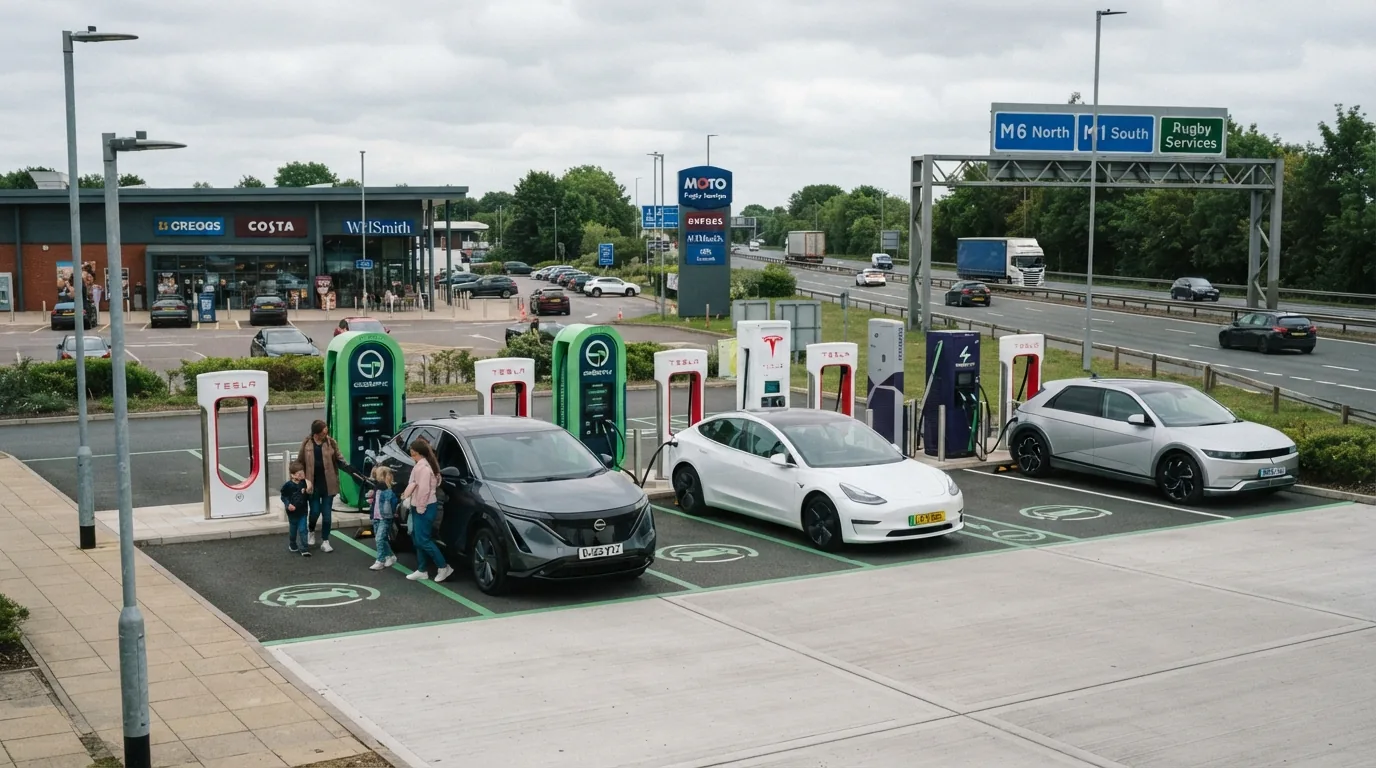
National Grid confirms 6,000 new rapid chargers for motorway network by 2027
A major expansion of high-power charging promises to end the queues at motorway services. We break down where the new units are going, which networks are involved, and what it means for long trips.
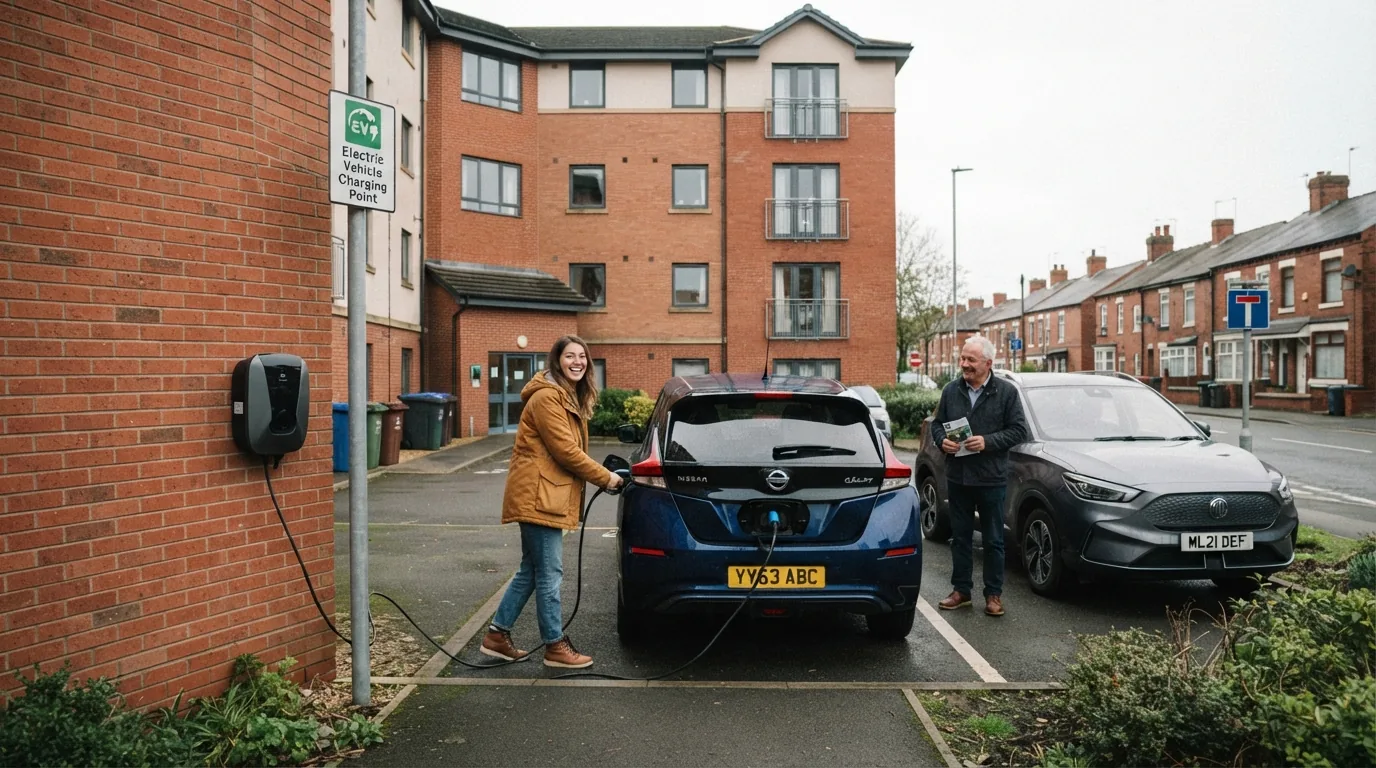
Home charger grants return for flat owners and renters
The reinstated EV chargepoint grant covers up to £350 of installation costs. We explain who qualifies, how to apply, and which chargers are eligible under the updated rules.
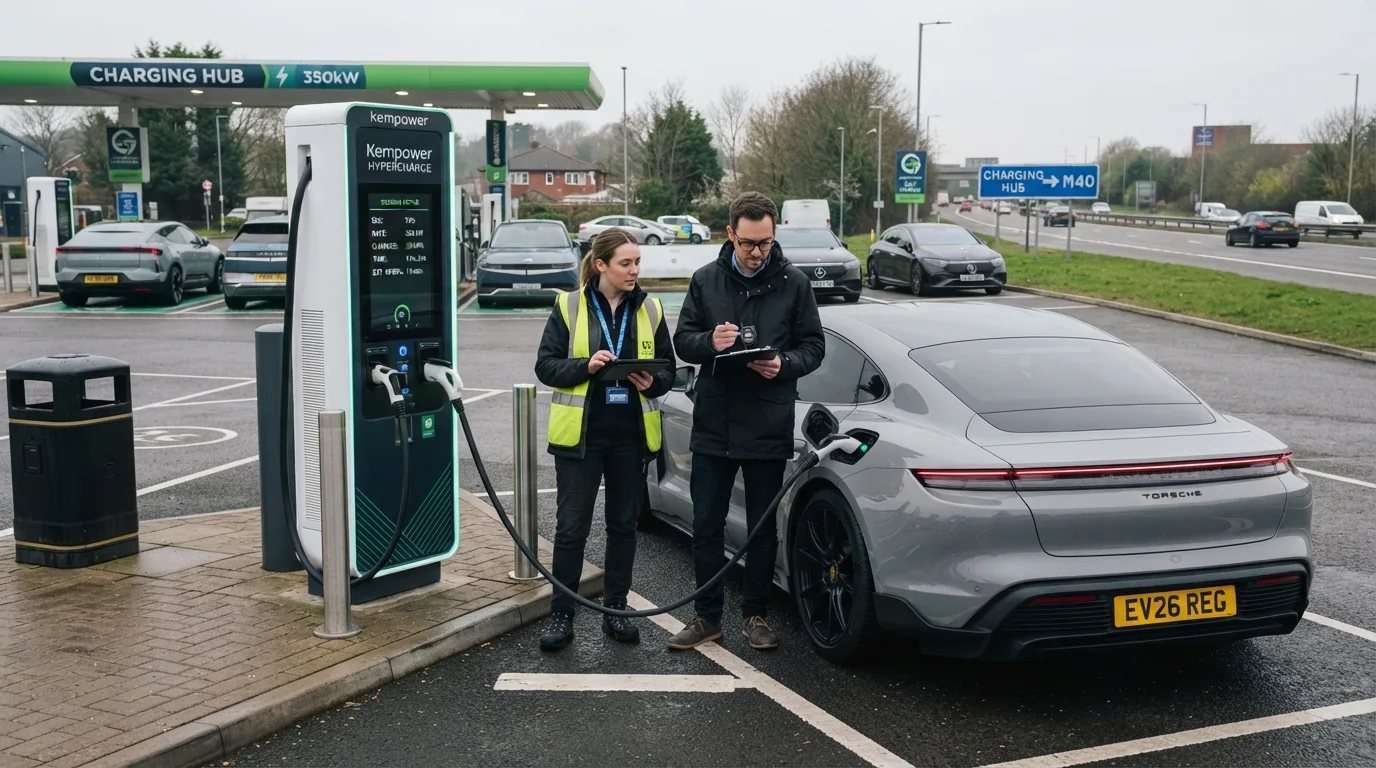
Tested: the fastest 10-80% rapid charge of any car on sale in 2026
We took five flagship EVs to the same 350kW charger to see which really delivers on its headline figures. The results reveal big gaps between claimed and real-world charging speeds.