Battery prices fall below $100/kWh: the tipping point for cheaper EVs
Cell costs have crossed a long-anticipated threshold. We look at which models could see price cuts first, what it means for buyers, and how soon cheaper EVs will actually arrive in UK showrooms.
Quick answers
- The average BEV pack price hit $99/kWh in 2025, the second consecutive year below $100, according to BloombergNEF's December 2025 survey.
- Cell-only prices are already lower at $79/kWh; the pack premium reflects thermal management, casing, and battery management systems.
- European pack prices run 56% above Chinese equivalents, so the $99/kWh global figure does not directly translate to UK showroom prices.
- LFP chemistry ($81/kWh average pack) is 37% cheaper than NMC ($128/kWh) and is set to reach 50% of European EVs by 2030, driving the next wave of affordable entry models.
- The ZEV mandate (33% target in 2026; £15,000 fine per non-compliant car) is forcing manufacturers to discount regardless of battery costs, which helped pull the average new EV price below the average new petrol car for the first time (£42,620 vs £43,405, per AutoTrader April 2026 data).
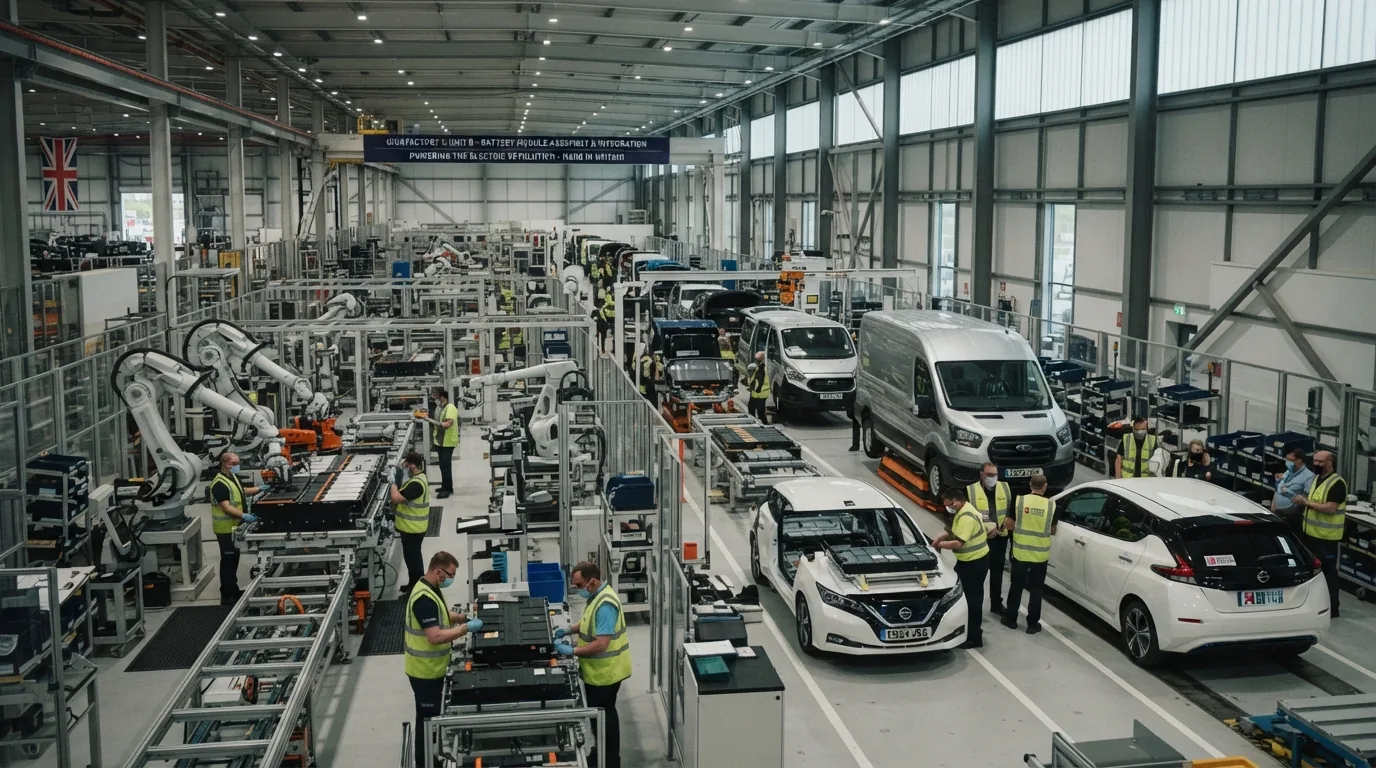
- UK gigafactories (AESC Sunderland live; Tata/Agratas Somerset targeting 2026) are the structural investments that will eventually narrow the European cell cost premium.
Battery prices have crossed $100/kWh: what it actually means for cheaper electric cars in the UK
BloombergNEF’s December 2025 survey put the average BEV pack price at $99/kWh, the second consecutive year below the $100 mark. That is a genuine milestone: the threshold analysts have cited since at least 2016 as the point at which manufacturing a battery-electric car becomes broadly cost-comparable with a petrol equivalent. But the global average masks a 56% premium for European-made packs, so the gains are real and the direction of travel is clear, yet UK buyers are not yet receiving the full benefit. This article explains which models will feel it first, why European prices lag, and what the policy backdrop means for what you pay in a UK showroom.
For more on how market forces are reshaping EV pricing, see our EV analysis.
Why $100/kWh is the number the industry has always watched
Battery costs have dominated the EV economics conversation for a decade, and the $100/kWh figure sits at the centre of it for a structural reason. Battery packs represent around 30 to 40% of a new electric car’s total production cost at today’s prices. When pack prices cross that threshold downward, the manufacturing premium versus a petrol equivalent narrows to the point where it can be absorbed within normal model pricing bands, without requiring either a government subsidy or a margin sacrifice from the manufacturer.
The $100/kWh target has been on analysts’ radars since at least 2016, when it still felt like a distant ambition. In 2020, average pack prices were $137/kWh. By 2025, the BEV segment had reached $99/kWh for the second year running, according to BloombergNEF. Cell-only prices are already lower still: $79/kWh on average in 2025. The gap between cell and pack price matters. The pack includes thermal management systems, casing, wiring, and battery management electronics, all of which add cost. The headline cell figure does not translate directly to cheaper showroom prices, which is why the pack number is the one that actually governs what carmakers pay.
Looking back further, battery prices have fallen 93% in real terms since 2010, when they averaged $1,474/kWh, per BloombergNEF. Goldman Sachs, in a 2024 forecast, projected global average prices falling from $149/kWh in 2023 to around $80/kWh by 2026, a roughly 46% reduction across the forecasting period. That projection was made before the 2025 actuals were confirmed and should be treated as directional rather than precise (figures vary, verify current data).
The trajectory is not in doubt. But the pace at which it reaches UK buyers is a separate question entirely.
LFP vs NMC: the chemistry change doing most of the work
The single biggest driver of price falls at the entry end of the market is not a manufacturing breakthrough or an economies-of-scale story alone. It is a chemistry switch. The shift from nickel-manganese-cobalt (NMC) batteries to lithium iron phosphate (LFP) batteries is what is pulling entry-level pack prices down fastest.
The numbers are stark. Average LFP pack prices across all segments hit $81/kWh in 2025. Average NMC pack prices sat at $128/kWh. That is a 37% cost advantage for LFP, and it comes from raw materials: iron and phosphate are abundant and relatively stable in price, whereas cobalt and nickel are subject to volatile supply chains that have driven sharp cost spikes in previous years. Both figures are from BloombergNEF’s 2025 survey.
Transport & Environment’s EV Progress Report 2026 confirms LFP is close to 30% cheaper per kWh than NMC at the pack level, and expects LFP to reach 50% of European BEV batteries by 2030, up from a significantly lower share today.
LFP does have a trade-off: energy density is lower, so a larger and heavier pack is needed to match the range of an equivalent NMC battery. For compact city cars and entry-level hatchbacks, where daily range demands are modest, that is a manageable compromise. For long-range SUVs or performance models where weight and packaging are critical, NMC retains a role.
Chinese manufacturers have the most optimised LFP production lines. CATL holds around 37% of global battery supply; BYD around 16%. This production advantage is a significant reason why Chinese pack prices ($84/kWh in 2025) sit 56% below European levels, a gap that will take years to close even as European gigafactories come online.
The European price gap: why UK buyers do not yet see $99/kWh on the sticker
This is the honest caveat that most coverage of the BloombergNEF data skips. The $99/kWh global average for BEV packs in 2025 is a weighted figure that includes a large volume of Chinese production at $84/kWh. European pack prices in 2025 ran 56% above Chinese-made equivalents, and North American prices were 44% above Chinese levels. For a UK manufacturer or a European carmaker supplying UK showrooms, the actual pack cost is materially higher than the headline figure.
European cell manufacturing costs up to 90% more than Chinese cells at present, according to Transport & Environment’s 2026 EV Progress Report. That report estimates the gap could shrink by two-thirds if European cell production scales as planned, but scaling takes time, capital, and a stable regulatory environment.
The upfront cost premium for a new EV versus an equivalent petrol model in the UK dropped from roughly 50% in 2020 to roughly 40% in 2023, per GOV.UK’s own evidence base. It has narrowed further since. AutoTrader data from April 2026 showed the average new EV (£42,620) crossing below the average new petrol car (£43,405) for the first time. That is a real shift, but the context matters: those are average transaction prices across all models and trim levels in each category, not like-for-like comparisons. The figures include the effect of ZEV mandate discounting and should not be read as pure battery-cost-driven parity.
Meanwhile, SMMT’s March 2026 data added another complicating factor: battery costs were “more than 30% higher than expected” at the start of 2026, in part due to industrial energy price inflation running roughly 80% above 2021 levels. The direction of travel on cell costs is downward, but the manufacturing environment in Europe and the UK is not delivering the same tailwind that Chinese producers benefit from.
The honest summary: the $100/kWh threshold has been crossed at a global level. UK buyers will feel the benefit, but through a slower process of European production scaling and model-by-model cost absorption, not as an immediate price cut.
Which cars will feel the benefit first, and which UK models to watch
The models that gain most from falling battery costs are those where the battery is the largest share of total vehicle cost and where LFP chemistry is already deployed. That means entry hatchbacks and compact city EVs with smaller 40 to 60 kWh packs.
A 50 kWh LFP pack at $81/kWh costs roughly $4,050, around £3,200. Even a modest per-kWh saving at that scale flows directly into margin or retail price. The Renault 5 E-Tech, launching at under £23,000 and using LFP chemistry, is already proof of what cheaper cells can unlock; read our pricing breakdown of the Renault 5 E-Tech. The Kia EV3, with a 58 kWh battery and a WLTP range of 436 km (WLTP claims are official; real-world figures are typically 20 to 30% lower on motorway), represents a similar proposition in the compact SUV space. The Volkswagen ID.2, targeting around £22,000, completes the picture at this price point. All three are arriving on the back of improved LFP cost structures.
Volume mid-size models on dedicated EV platforms, the Volkswagen ID.3 and ID.4, Hyundai Ioniq 5 and 6 successors, and equivalents, are the next tier to benefit. Their packs run larger (58 to 84 kWh), so the absolute saving per vehicle is greater, but established tooling and supply chain relationships mean the pace at which savings are passed on varies by manufacturer. Those with the highest volumes and most efficient European supply chains tend to move fastest.
The broader market data supports the shift. Affordable BEVs priced under €25,000 more than doubled their share of European sales between 2024 and 2025, growing from 3% to 6%, according to Transport & Environment’s EV Progress Report 2026. That is not a blip; it is a structural change driven by chemistry economics.
Premium models with NMC packs, luxury SUVs and performance EVs, will see smaller proportional gains. NMC pack prices sat at $128/kWh in 2025, well above the $100 threshold. Progress is happening, but it is incremental at the top end of the market.
The UK policy backdrop: ZEV mandate, the Plug-in Car Grant, and the gigafactory pipeline
Battery cost reductions do not operate in a policy vacuum. Three UK-specific factors are shaping how quickly lower cell costs translate into lower sticker prices and whether you need to wait for the structural shift to complete.
ZEV mandate. The UK’s Zero Emission Vehicle mandate requires 33% of new car sales to be pure electric in 2026, rising to 80% by 2030. Manufacturers face fines of £15,000 per non-compliant vehicle. In March 2026, BEVs reached a record 22.6% share of the UK new car market, representing 86,120 units, up 24.2% year-on-year. That is a strong absolute number, but it remains well short of the 33% target. The gap between actual market share and the mandate threshold is forcing manufacturers to discount aggressively to move volume, which is pulling transaction prices down regardless of where battery costs sit. The mandate is acting as an accelerant for the affordability story, but it is a blunt instrument: discounting driven by compliance pressure is not the same as structural cost reduction, and it cannot continue indefinitely.
Plug-in Car Grant. The UK’s Plug-in Car Grant, rebranded as the Electric Car Grant from 2026, offers up to £3,750 off Band 1 eligible models (those judged most sustainably manufactured) and £1,500 off Band 2 models, for cars priced under £37,000. Band 1 eligible models include the Nissan LEAF, Ford Puma Gen-E, Alpine A290, Renault 4 and Renault 5. The scheme is funded to run until March 2029, with a total budget of £650m. For buyers, this grant sits alongside the underlying cost reduction story. It is a policy bridge while European cell production catches up with Chinese economies of scale.
UK gigafactory pipeline. The structural lever that will eventually narrow the European cell cost premium is domestic battery production. Envision AESC’s Sunderland gigafactory, with 15.8 GWh capacity and production of around 200,000 EVs per year, began production in December 2025, primarily supplying Nissan. Tata’s Agratas plant near Bridgwater in Somerset, a £4bn investment backed by a £380m UK government grant, is targeting 40 GWh capacity and is expected to begin production in 2026, supplying Jaguar Land Rover and others (though some sources note the timeline may slip due to JLR’s postponement of the electric Range Rover programme). Together, these are the direction of travel: the UK building the cell manufacturing base that reduces reliance on imported Asian cells and, over time, narrows the gap with Chinese production costs. The UK’s own battery production ambitions are taking shape; our piece on Britain’s gigafactory investment sets out what is at stake.
What comes next: the path to $80/kWh and beyond
The forecasting consensus points in one direction. Goldman Sachs projected global average battery prices falling to around $80/kWh by 2026, from $149/kWh in 2023, a roughly 46% reduction. BloombergNEF’s longer-range forecast has pack prices reaching $69/kWh by 2030. Transport & Environment expects batteries to fall an additional 30% or more between 2025 and 2030. These are projections, not confirmed data, and the track record of long-range battery forecasts is mixed: past commodity price spikes disrupted earlier timelines.
At $80/kWh, GOV.UK’s own analysis suggests “some EVs could be around the same price to purchase as a petrol or diesel car by the end of the 2020s.” Transport & Environment’s 2026 data shows large BEVs have already reached purchase-price parity in Europe; small and medium segments are expected to follow by 2030 in EU markets. The UK timeline may differ, depending on how ZEV mandate policy evolves and how quickly domestic cell production scales.
Three risks could slow the trajectory. First, raw material price rebounds: cobalt and nickel spikes have disrupted previous cost forecasts, and the shift to LFP reduces but does not eliminate commodity exposure. Second, trade tariffs on Chinese cells: European and UK tariff policy on Chinese battery imports is an active area, and the cost estimates for European production could shift materially if the trade environment changes. Third, industrial energy costs: UK industrial energy prices remain roughly 80% above 2021 levels per SMMT’s March 2026 data, which squeezes European manufacturing margins even as cell chemistry improves.
Solid-state batteries are worth a brief mention. They entered production trials in 2026 and could, in time, cut costs toward $50/kWh, but volume production is still years away and they are not a near-term buyer consideration.
The practical outlook: the $100/kWh BEV threshold has been crossed. The $80/kWh mark is plausibly within reach this decade. UK buyers should expect the benefit to arrive progressively, through named models at the entry end, through the Plug-in Car Grant, and through domestic gigafactory production gradually closing the European cost gap, rather than as a sudden market-wide price reset.
Ready to see which EVs offer the best value at today’s prices? Browse our full EV analysis and compare models that already benefit from the latest battery cost reductions.
How we test and where our numbers come from
Range figures are official WLTP combined values taken from manufacturer UK specification pages, with real-world estimates drawn from independent comparative testing. Prices are UK list prices at the time of the latest update. Tax, grant and charging-scheme figures come from GOV.UK and HMRC publications. We re-check every guide when pricing, specification or policy changes. Last checked 11 August 2026.
Sources and further reading
- about.bnef.comBloombergNEF "New Record Lows for Battery Prices" (December 2025)the primary industry data source for all per-kWh figures cited in this article
- gov.ukGOV.UK "Electric vehicles: costs, charging and infrastructure"UK government evidence base on EV cost trajectories and the purchase price premium versus petrol
- transportenvironment.orgTransport & Environment EV Progress Report 2026the most comprehensive current European dataset on BEV price trends, battery cost trajectories, chemistry adoption rates, and price parity timelines

EV Compared
The EV Compared editorial team tracks the UK electric vehicle market full time: new model launches, list prices, WLTP and real-world range, public charging tariffs and the tax rules that decide what an EV actually costs to run. Every guide is checked against manufacturer specifications and official GOV.UK figures, and updated whenever the numbers move.