Volkswagen ID.2 prototype driven: the £22k people's EV takes shape
Our first time behind the wheel of VW's long-promised affordable electric hatchback ahead of its 2026 showroom debut. Range, pricing, specs and what it is really like to drive.
Quick answers
- The VW ID.Polo starts at around £22,000 and offers up to 283 miles of official WLTP range on the large 52kWh battery, making it one of the most capable affordable EVs heading to UK roads in 2026.
- Two battery chemistries: the 37kWh entry uses LFP (better longevity and cold-weather resilience); the 52kWh uses NMC (more range, higher power output). Only the 52kWh variant is expected at UK launch.
- Boot space of 441 litres beats every rival in the class, including the Renault 5 (326 litres) and Peugeot e-208 (309 litres).
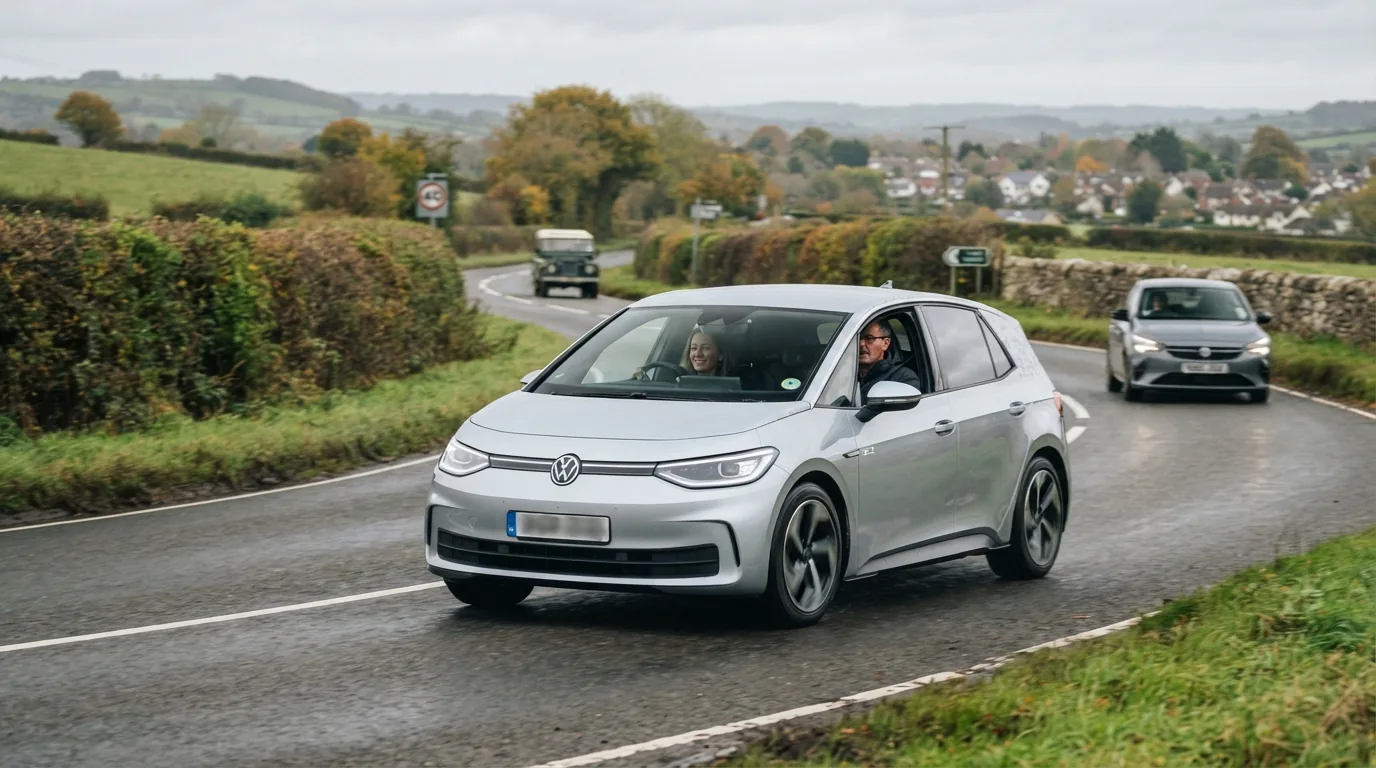
- Prototype driving impressions are positive: the ride is composed, the steering is progressive, and VW has restored physical buttons for heating and audio after criticism of earlier ID models.
- V2L (Vehicle-to-Load) at 3.6kW is standard on all variants (figures vary, verify current data), a practical differentiator at this price point.
- UK BEV market share is running below the 33% ZEV mandate target for 2026; affordable models like the ID.Polo are exactly what the market needs to close the gap.
Volkswagen ID.Polo review: the £22k electric hatchback that could change everything
The Volkswagen ID.Polo arrives in UK showrooms later this year with a starting price of around £22,000 and a claimed range of up to 283 miles on the larger battery. Those are numbers worth sitting with for a moment, because electric hatchbacks at this price point have rarely offered this much capability.
We drove a late prototype ahead of the car’s 2026 on-sale date and came away with a clear picture of what VW has built. This article covers the two battery options and what they mean for daily use, how the car drives in prototype form, what it costs against rivals, and when you can actually buy one. If you have been following this car as the ID.2, you are in the right place. VW confirmed the name change in late 2025, and the ID.Polo GTI adds a performance variant to the range for 2027. It sits at the more affordable end of what we cover across our electric cars section, and the timing matters.
What is the VW ID.Polo, and how does it relate to the ID.2?
The short answer: the ID.Polo is the same car. VW announced in late 2025 that it was returning to heritage model names across its lineup. The car you may have seen as the ID.2 or ID.2all concept is the ID.Polo in production form. If you searched for “VW ID.2 UK”, this is it.
The naming matters less than the positioning. The ID.Polo sits below the ID.3 in VW’s electric lineup and takes direct aim at the supermini class, competing with cars like the Renault 5 E-Tech and Peugeot e-208. It is a front-wheel-drive five-door hatchback built on VW Group’s MEB+ platform, the same architecture that underpins the Cupra Raval. Cupra led development of the platform, which has been optimised for smaller, front-driven EVs rather than the rear-drive MEB used in larger models like the ID.3 and ID.4.
The practical result is a car that should feel at home in the supermini class in terms of footprint, while offering the kind of range and technology more commonly found in larger, more expensive EVs.
Prices and variants: what does the ID.Polo cost in the UK?
Price is the dominant question with this car, so it is worth being direct: all figures are estimates as of May 2026. VW UK has not published confirmed prices. The official site currently offers a “Keep me informed” pre-registration rather than a configurator or pricing page. The figures below are drawn from European pricing, journalist briefings, and dealer previews, and should be treated accordingly.
With that caveat stated, the picture that has emerged is a four-variant range spanning from around £22,000 to around £33,500 for the GTI.
| Variant | Battery | Power | WLTP Range | Est. UK Price |
|---|---|---|---|---|
| Entry (116bhp) | 37kWh LFP | 116bhp | ~204 miles | From ~£22,000 |
| Mid (135bhp) | 37kWh LFP | 135bhp | ~204 miles | ~£24,000 |
| Long-range (211bhp) | 52kWh NMC | 211bhp | ~283 miles | ~£27,000-£29,000 |
| GTI | 52kWh NMC | 226bhp | ~263 miles | ~£33,500 |
There is an important detail on launch availability. Multiple sources indicate that only the 52kWh long-range variant will be available when UK sales open in late 2026. The 37kWh entry-level model is expected to follow in late 2026 or early 2027, though this has not been officially confirmed by VW UK.
The GTI variant deserves a mention of its own. At 226bhp, with a 0-62mph time of 6.8 seconds, a 108mph top speed, an electric front differential lock, and DCC adaptive suspension, it is a serious performance car at this price point. Orders open in October 2026, with first UK deliveries expected early 2027. VW’s ability to price the entry ID.Polo at £22,000 is directly linked to battery costs falling below the $100/kWh threshold that makes small EVs commercially viable at this scale.
How does the ID.Polo drive? Prototype impressions
We drove a late-stage prototype on a controlled test route, so a caveat applies: the production car may differ in feel and refinement. With that said, the prototype left a strong impression across several areas.
The 211bhp long-range variant is the version we spent the most time in. Acceleration is effortless in the way that characterises well-tuned electric powertrains. What Car? noted the prototype “built pace effortlessly”, and that lines up with what we found. It pulls cleanly from low speed and has enough mid-range response to make motorway merging feel natural rather than anxious.
The ride quality stands out more than the acceleration. Over broken surfaces, the ID.Polo absorbs bumps with what What Car? described as “impressive isolation” and “unruffled fluidity.” That is a step above what small EVs in this price class typically offer. It feels, in honest terms, like a Volkswagen should: solid, composed, and easy.
Headline impressions from prototype driving:
- Effortless power delivery in the 211bhp variant; strong and composed at motorway speeds
- Ride quality noticeably better than the class norm
- Steering heavier than the ID.3, with progressive weighting as speed builds
- Braking a clear improvement over previous VW EV models
- B-mode available for one-pedal driving; regen level varies by drive mode
- Wind noise intrudes at motorway speeds on the prototype; this may change on the production car
- Physical buttons for heating and audio restored after justified criticism of touchscreen-only controls in earlier ID models
That last point matters to many buyers. If you found the ID.3 or ID.4 frustrating to operate on the move, the ID.Polo should address your main complaint directly.
Range and charging: what can the ID.Polo actually do?
Two battery options serve two different use cases.
The 37kWh LFP version offers around 204 miles on the official WLTP cycle and charges at up to 90kW DC, taking approximately 27 minutes from 10% to 80%. LFP chemistry brings genuine advantages: it handles repeated fast charging better over time, degrades more slowly at high states of charge, and is more resilient in cold weather. The trade-off is lower energy density, which explains the shorter range. For urban and suburban drivers who charge at home overnight, the 37kWh variant may be all the car they need.
The 52kWh NMC version pushes the WLTP range to 283 miles. On charging speed, there is a discrepancy in published figures worth flagging: Electrifying.com and Honest John cite 130kW peak DC charging with a 10-80% time of around 23-24 minutes, while the VW UK official page currently states up to 105kW. VW’s own specifications carry the caveat that they are “provisional pending final homologation”, so we are using 105kW as the reference point until a confirmed post-homologation spec sheet is available.
NMC chemistry delivers more range per kilogram than LFP, which is why the 52kWh version offers meaningfully more range despite a modest battery size increase. NMC is more sensitive to high states of charge over time, so regular 80% charging rather than 100% is generally recommended for long-term battery health.
V2L (Vehicle-to-Load) comes as standard on all variants, providing up to 3.6kW via a Schuko adapter. That is enough to run a camping setup, power tools on a worksite, or keep smaller devices running during a power cut. It is a practical addition at this price level, though we would recommend confirming with VW UK press materials whether V2L is standard across all trim levels or restricted to higher grades before purchasing (figures vary, verify current data).
For UK rapid charging compatibility, the ID.Polo’s peak rate sits within the operational range of most Osprey, Gridserve, and BP Pulse 150kW units. You should be able to use the major networks without compatibility concerns, though real-world charge rates depend on network conditions and battery temperature at the time.
Is it practical? Boot space, interior and tech
The boot space is the number most buyers will not expect. At 441 litres, the ID.Polo offers 90 litres more than the petrol Polo and 115 litres more than the Renault 5. Fold the rear seats and you get between 1,200 and 1,240 litres of total load space. VW product strategist Tim Bokker told Auto Express: “For a regular compact hatchback, no car has more trunk volume than the ID. Polo.” Based on the available comparison data, that claim holds.
The car’s dimensions are 4,053mm long, 1,816mm wide, and 1,530mm tall, with a 2,600mm wheelbase. It is a fraction larger than the petrol Polo’s footprint, which contributes both to the boot advantage and to the composed ride quality noted during prototype testing.
Inside, the ID.Polo feels considerably more considered than the first generation of ID models. Interior quality on the prototype was described by both Carwow and Electrifying.com as classier than the class suggests, with fabric coverings on the dashboard and solid construction throughout. The switchgear no longer feels like an afterthought.
Key interior and technology features:
- 12.9-inch central touchscreen (13 inches per some sources; a minor discrepancy likely relating to measurement method)
- 10.25-inch digital driver display
- Physical buttons for climate and audio controls restored
- Panoramic roof available as an option
- Harman Kardon audio system available as an option
- Park Assist Pro and Connected Travel Assist available
- Towing capacity up to 1,200kg (provisional pending homologation)
The return to physical controls is worth emphasis. VW took significant criticism for relegating too many functions to touch-only interfaces in the ID.3 and ID.4. The ID.Polo corrects that, and the result is a cabin that is more pleasant to use on the move.
How does the ID.Polo compare to its rivals?
The ID.Polo enters a class that has sharpened considerably in the past 18 months. The Renault 5 E-Tech undercut expectations on launch price, and the ID.Polo will need to hold its ground against it. Here is how the key rivals compare on headline figures. All prices and ranges are estimates; all range figures are WLTP; verify all at time of purchase.
| Model | Entry Price | Max Range (WLTP) | Boot (litres) | Max Charge Rate |
|---|---|---|---|---|
| VW ID.Polo | ~£22,000 | ~283 miles | 441 | 105kW DC |
| Renault 5 E-Tech | ~£21,500 | ~250 miles | 326 | 100kW DC |
| Peugeot e-208 | ~£21,000 | ~250 miles | 309 | 100kW DC |
| MG4 Urban | ~£23,500 | ~218 miles | 363 | 140kW DC |
The ID.Polo leads on range and boot space across this group. Against the Renault 5, that 115-litre boot advantage and up to 33 additional miles of range are clear wins for buyers who prioritise everyday practicality. The Renault 5 starts slightly cheaper and carries stronger styling character; it suits buyers who weight kerb appeal alongside cost.
Against the Peugeot e-208, the ID.Polo’s boot advantage grows further (132 litres more), and the range lead is comparable. The e-208 is lighter and more agile in character and starts from around £21,000, making it the lowest entry point in the group.
The MG4 Urban sits at a slightly higher entry price and offers a smaller battery on its base version. Its 140kW peak charge rate is the fastest in this comparison, a genuine advantage for buyers who frequently use rapid chargers. Chinese brand appeal varies, and that will be a factor for some buyers.
None of the rivals match the ID.Polo’s combination of range, boot space, and established brand backing at this price. The decision comes down to priorities: the ID.Polo wins on practicality and range; the Renault 5 wins on character and entry price; the e-208 wins on lowest cost.
Why the ID.Polo matters for the UK EV market
The ID.Polo is arriving at a significant moment. UK BEV market share was running at 23.1% year-to-date in 2026 against a 33% ZEV mandate target for the year. As of the end of April 2026, over 2 million fully electric cars were on UK roads, representing around 5.8% of the total fleet. The gap between mandate and market share is being felt across the industry.
Affordable models are what close that gap. High-margin premium EVs contribute to manufacturer ZEV compliance, but they do not move overall adoption in the same way that volume-accessible models do. The ID.Polo, starting from around £22,000, is the first VW Group EV designed squarely for the sub-£25,000 market. VW’s previous UK EV range started at around £30,000 with the ID.3; everything above it sat further from mass-market reach.
Auto Express reported that VW’s own product strategy framing positions the ID.Polo as a deliberate pivot back to volume-accessible EVs after a period of premium-skewed pricing. That is a significant shift. A credible, well-specified VW-badged electric hatchback at this price gives buyers a reason to cross the line who previously found EV ownership financially out of reach.
When can you buy the VW ID.Polo in the UK?
The key dates, with appropriate caveats on specifics:
- UK on-sale: late 2026, with deliveries before year-end. The first variant available at launch is expected to be the large-battery 52kWh model.
- 37kWh entry model: expected late 2026 or early 2027; timing is not yet officially confirmed.
- Pre-registration: VW UK’s “Keep me informed” sign-up is live at volkswagen.co.uk/en/new/id-polo.html.
- GTI variant: orders open October 2026; first UK deliveries early 2027.
The absence of confirmed UK pricing and specific launch month dates reflects where the car sits in the homologation and final specification process. VW’s own product page states that range and charging figures are provisional pending final homologation. When confirmed pricing arrives, expect it to align broadly with the estimates in this article, though the precise figures may shift.
If you are considering the ID.Polo, the practical steps are: register interest via VW UK now, keep an eye on the GTI order window in October if performance matters to you, and expect the full picture on pricing and trim levels to clarify in the second half of 2026.
Keeping track of every new EV heading to UK roads is what we do. Browse all upcoming electric cars and compare the options in one place.
How we test and where our numbers come from
Range figures are official WLTP combined values taken from manufacturer UK specification pages, with real-world estimates drawn from independent comparative testing. Prices are UK list prices at the time of the latest update. Tax, grant and charging-scheme figures come from GOV.UK and HMRC publications. We re-check every guide when pricing, specification or policy changes. Last checked 11 August 2026.
Frequently asked questions
What is the Volkswagen ID.Polo and how is it different from the ID.2?
The ID.Polo is the production version of the car long known during development as the ID.2 and ID.2all concept. Volkswagen announced in late 2025 that it was returning to heritage model names, so the ID.2 became the ID.Polo in production form. It is a front-wheel-drive electric supermini built on the MEB+ platform, positioned below the ID.3 in VW's lineup and expected to start from around £22,000 in the UK.
How far can the VW ID.Polo go on a charge?
That depends on which battery you choose. The 37kWh LFP version covers around 204 miles on the official WLTP cycle. The 52kWh NMC version goes up to 283 miles on the same measure.
How long does the VW ID.Polo take to charge?
The 52kWh battery charges from 10% to 80% in around 23-24 minutes on a rapid charger, based on peak rates cited by Electrifying.com and Honest John, though VW UK's own provisional specification currently states up to 105kW rather than 130kW. The 37kWh model charges at up to 90kW and reaches 10-80% in approximately 27 minutes.
How does the VW ID.Polo compare to the Renault 5 E-Tech?
The ID.Polo offers more range (up to 283 miles versus around 250 miles for the Renault 5) and a significantly larger boot (441 litres versus 326 litres). The Renault 5 starts slightly cheaper at around £21,500 and has stronger visual character. If everyday practicality and range confidence are the priority, the ID.Polo has the edge; if character and entry cost matter most, the Renault 5 is worth shortlisting.
Will there be a petrol version of the VW ID.Polo?
No. The ID.Polo is a fully electric-only model. Volkswagen continues to sell the petrol Polo separately, but the ID.Polo is designed purely for electric power.
Sources and further reading
- volkswagen.co.ukVW UK official ID.Polo pagePrimary source for official specs, trim information, and pre-registration; figures are provisional pending homologation
- zapmap.comZapmap UK EV market statisticsAuthoritative and regularly updated source for UK BEV market share, fleet size, and ZEV mandate progress
- honestjohn.co.ukHonest John 2026 VW ID.PoloDetailed breakdown of trim levels, dimensions, and buyer-focused questions for the UK market

EV Compared
The EV Compared editorial team tracks the UK electric vehicle market full time: new model launches, list prices, WLTP and real-world range, public charging tariffs and the tax rules that decide what an EV actually costs to run. Every guide is checked against manufacturer specifications and official GOV.UK figures, and updated whenever the numbers move.
Related reading
View all
Renault 5 E-Tech undercuts rivals with sub-£23,000 UK launch price
Renault's reborn supermini lands in Britain cheaper than expected, putting real pressure on a market crowded with pricier rivals. We break down the trims, range, and who it is really for.
Hyundai Ioniq 9 first drive: the seven-seat electric SUV done properly
Spacious, comfortable and seriously efficient, Hyundai's biggest EV yet aims squarely at the family market. After driving it in the UK, we explain who it suits and where rivals still have an edge.