What EV Grants Are Available in the UK in 2026?
A complete rundown of every active grant, who qualifies and exactly how much you can save
Quick answers
- In 2026 the UK still offers meaningful government grants for buying electric vehicles and installing chargepoints, though the landscape has changed significantly since the original Plug-in Car Grant era.
- What grants are available right now: From 1 April 2026, the chargepoint grant rates increased from £350 to £500 per socket across all schemes.
- This matters because many online guides still refer to the old scheme.
- How does the Electric Car Grant work: The ECG is administered by OZEV (the Office for Zero Emission Vehicles).
- How does the Plug-in Van Grant work: The van must produce fewer than 50g/km of CO2 and be capable of travelling at least 60 miles with zero tailpipe emissions.
- The grant covers 75% of the purchase and installation cost, up to £500 per socket.
In 2026 the UK still offers meaningful government grants for buying electric vehicles and installing chargepoints, though the landscape has changed significantly since the original Plug-in Car Grant era. The headline figures are £3,750 off certain new electric cars, £500 towards a home or workplace chargepoint, and up to £5,000 off a new electric van. Here is every active scheme, who is eligible and how to claim.
What grants are available right now?
| Scheme | What it covers | Maximum grant | Who can apply | Runs until |
|---|---|---|---|---|
| Electric Car Grant (ECG) | New zero-emission cars under £37,000 | £3,750 (Band 1) / £1,500 (Band 2) | Anyone buying an eligible new EV | At least 2028/29 |
| Plug-in Van Grant (PiVG) | New electric vans and small trucks | £2,500 (small) / £5,000 (large) | Businesses and private buyers | Extended to 2027 |
| EV Chargepoint Grant (renters/flats) | Home chargepoint installation | £500 per socket (75% of cost) | Renters and flat owner-occupiers | 31 March 2027 |
| EV Chargepoint Grant (landlords) | Chargepoints for rental properties | £500 per socket (75% of cost) | Residential landlords | 31 March 2027 |
| Workplace Charging Scheme (WCS) | Chargepoints at business premises | £500 per socket, up to 40 sockets | Businesses, charities, public sector | 31 March 2027 |
From 1 April 2026, the chargepoint grant rates increased from £350 to £500 per socket across all schemes. Three older chargepoint schemes closed on 31 March 2026; the remaining five run to March 2027 and the government has described the current portfolio as a “final year” with a simplified structure.
Is the Electric Car Grant the same as the Plug-in Car Grant?
No. The Plug-in Car Grant (PiCG) was discontinued in October 2023. It was replaced by the Electric Car Grant (ECG), which uses a fundamentally different structure. The PiCG was a flat £1,500 discount applied to any eligible zero-emission car under a certain price cap. The ECG introduced a two-band system based on sustainability criteria, with the maximum discount rising to £3,750.
This matters because many online guides still refer to the old scheme. If you read “Plug-in Car Grant” anywhere, check whether the source has been updated.
How does the Electric Car Grant work?
The ECG is administered by OZEV (the Office for Zero Emission Vehicles). Eligible cars are placed in one of two bands:
- Band 1: £3,750 discount. Cars must score well on sustainability criteria including production efficiency, factory environmental standards and price positioning.
- Band 2: £1,500 discount. Cars that meet basic eligibility but score lower on sustainability.
The price cap is £37,000 and the car must be 100% zero-emission (no plug-in hybrids), with at least 100 miles of WLTP range and a minimum top speed of 60mph. Warranty requirements also apply: at least three years general warranty and eight years on the battery and drivetrain.
You do not apply for the grant directly. The dealer claims it on your behalf and deducts it from the invoice price. As of May 2026, nine models sit in Band 1 and 36 in Band 2, making 45 models in total eligible.
Notable Band 1 models include the Renault 5 (52kWh, from around £23,000), the Renault 4, the MINI Countryman Electric, the Nissan Micra 52kWh and the Renault Alpine A290.
One frequent surprise for buyers: Chinese-made cars do not currently meet the government’s sustainability criteria and are therefore excluded regardless of price. Always verify a specific model’s eligibility on the OZEV list before signing anything.
How does the Plug-in Van Grant work?
The Plug-in Van Grant (PiVG) remains active and is available for small vans (under 2,500kg gross vehicle weight) and large vans (between 2,500kg and 4,250kg GVW):
- Small vans: up to £2,500 (35% of the vehicle price)
- Large vans: up to £5,000 (35% of the vehicle price)
The van must produce fewer than 50g/km of CO2 and be capable of travelling at least 60 miles with zero tailpipe emissions. As with the car grant, the dealer deducts the grant at the point of sale; buyers do not claim it separately.
Popular eligible models include the Ford E-Transit Custom, Renault Master E-Tech, Vauxhall Vivaro Electric, Vauxhall Combo-e, Peugeot e-Rifter and Maxus eDeliver 3.
Who qualifies for the home chargepoint grant?
This is where many people are confused. Since April 2026, homeowners who own a house with a driveway are no longer eligible for the home chargepoint grant. The scheme is now specifically targeted at:
- People who rent their home (any residential property) provided they have private off-street or allocated parking
- People who own and live in a flat
- Residential landlords installing chargepoints at rental properties
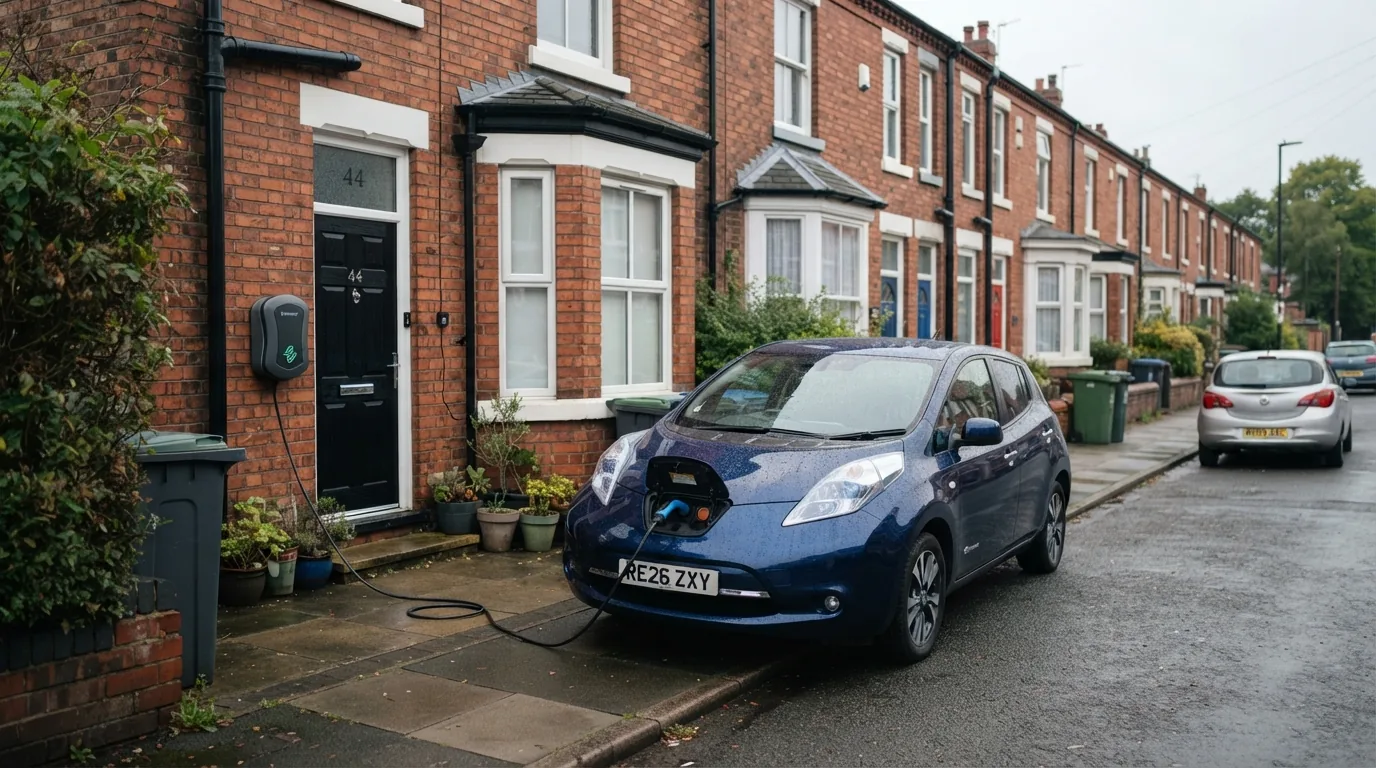
The grant covers 75% of the purchase and installation cost, up to £500 per socket. You must use an OZEV-approved installer, who claims the grant on your behalf. You need to own or have a qualifying lease on an OZEV-approved EV before applying.
If you only have on-street parking, you may still be eligible if you install an approved cross-pavement cable management solution, such as a charging gully.
What does the Workplace Charging Scheme offer?
The Workplace Charging Scheme (WCS) is available to businesses, charities and public sector organisations. From 1 April 2026, it covers 75% of the purchase and installation cost of EV chargepoints, up to £500 per socket. You can apply for up to 40 sockets across all your sites, meaning a maximum grant of £20,000.
To qualify, you must own the property or have consent from the landlord, and the site must have dedicated off-road parking clearly associated with the premises. You must apply before installation begins; installing chargepoints before receiving OZEV approval voids the grant.
Are there any other incentives worth knowing about?
Salary sacrifice. Not a grant but significant: employees can sacrifice gross salary to pay for an EV lease through their employer, saving income tax and National Insurance. The Benefit in Kind rate for EVs is just 4% in 2026/27. Combined with the salary sacrifice mechanism, most employees save 35 to 60% compared with privately leasing the same car. For high earners this can be more impactful than any direct grant.
Local authority grants. Some councils still operate top-up grants for low-income buyers or residents in areas with poor charging coverage. These vary widely by area and change frequently; check your local council’s website.
Government charging infrastructure investment. The £381 million Local Electric Vehicle Infrastructure (LEVI) Fund is rolling out over 100,000 new public chargepoints across England through 2026 and 2027. While this is not a consumer grant, it directly affects how easy it is to own an EV without a home charger.
Common mistakes when claiming EV grants
Assuming a specific model qualifies without checking. The eligible list changes regularly as new models are assessed and older ones are removed. Verify on OZEV’s official site.
Not using an approved installer for chargepoint grants. Using an installer who is not on the OZEV approved list means no grant, full stop.
Thinking renters cannot get a chargepoint grant. The 2026 scheme specifically includes renters, provided you have private off-street or allocated parking and a qualifying EV.
Believing there is still a tax exemption on new EVs. Free VED ended on 1 April 2025. New EVs pay £10 in year one and £200 per year from year two.
What should you do next?
Check the current OZEV eligibility list for the Electric Car Grant before committing to a specific model. If you are buying a van for your business, the Plug-in Van Grant is worth up to £5,000 and applies at the dealer; there is no separate application.
If you are renting or own a flat, check whether your parking situation qualifies for the £500 chargepoint grant before arranging installation.
For a ranked list of the best-value EVs under the current grant structure, see our guide to best value EVs that qualify for UK grants. For the full policy context, return to the grants, policy and legislation hub.
How we test and where our numbers come from
Range figures are official WLTP combined values taken from manufacturer UK specification pages, with real-world estimates drawn from independent comparative testing. Prices are UK list prices at the time of the latest update. Tax, grant and charging-scheme figures come from GOV.UK and HMRC publications. We re-check every guide when pricing, specification or policy changes. Last checked 11 August 2026.
Frequently asked questions
What grants are available right now?
From 1 April 2026, the chargepoint grant rates increased from £350 to £500 per socket across all schemes. Three older chargepoint schemes closed on 31 March 2026; the remaining five run to March 2027 and the government has described the current portfolio as a "final year" with a simplified structure.
Is the Electric Car Grant the same as the Plug-in Car Grant?
No. The Plug-in Car Grant (PiCG) was discontinued in October 2023.
How does the Electric Car Grant work?
The price cap is £37,000 and the car must be 100% zero-emission (no plug-in hybrids), with at least 100 miles of WLTP range and a minimum top speed of 60mph. Warranty requirements also apply: at least three years general warranty and eight years on the battery and drivetrain.
How does the Plug-in Van Grant work?
The van must produce fewer than 50g/km of CO2 and be capable of travelling at least 60 miles with zero tailpipe emissions. As with the car grant, the dealer deducts the grant at the point of sale; buyers do not claim it separately.
Who qualifies for the home chargepoint grant?
This is where many people are confused. Since April 2026, homeowners who own a house with a driveway are no longer eligible for the home chargepoint grant.
Sources and further reading
- gov.ukGOV.UK OZEVPrimary source referenced in this article.

EV Compared
The EV Compared editorial team tracks the UK electric vehicle market full time: new model launches, list prices, WLTP and real-world range, public charging tariffs and the tax rules that decide what an EV actually costs to run. Every guide is checked against manufacturer specifications and official GOV.UK figures, and updated whenever the numbers move.
Related reading
View all
What Does the 2030 Petrol and Diesel Ban Actually Mean?
Separating the facts from the myths: what changes in 2030, what does not, and what it means for your next car
Best Affordable EVs Under the Electric Car Grant
The electric cars that combine a government grant with the lowest purchase prices in the UK market right now

What Is the Benefit in Kind Rate for Electric Cars?
The electric car BiK rate is 4% for 2026/27, rising to 9% by 2029/30 on a confirmed schedule. Here is what that means for your tax bill, with worked examples and a full multi-year projection.