Is the Plug in Car Grant Still Available in the UK?
The original Plug-in Car Grant was scrapped in 2023, here is what replaced it and how much you can still save
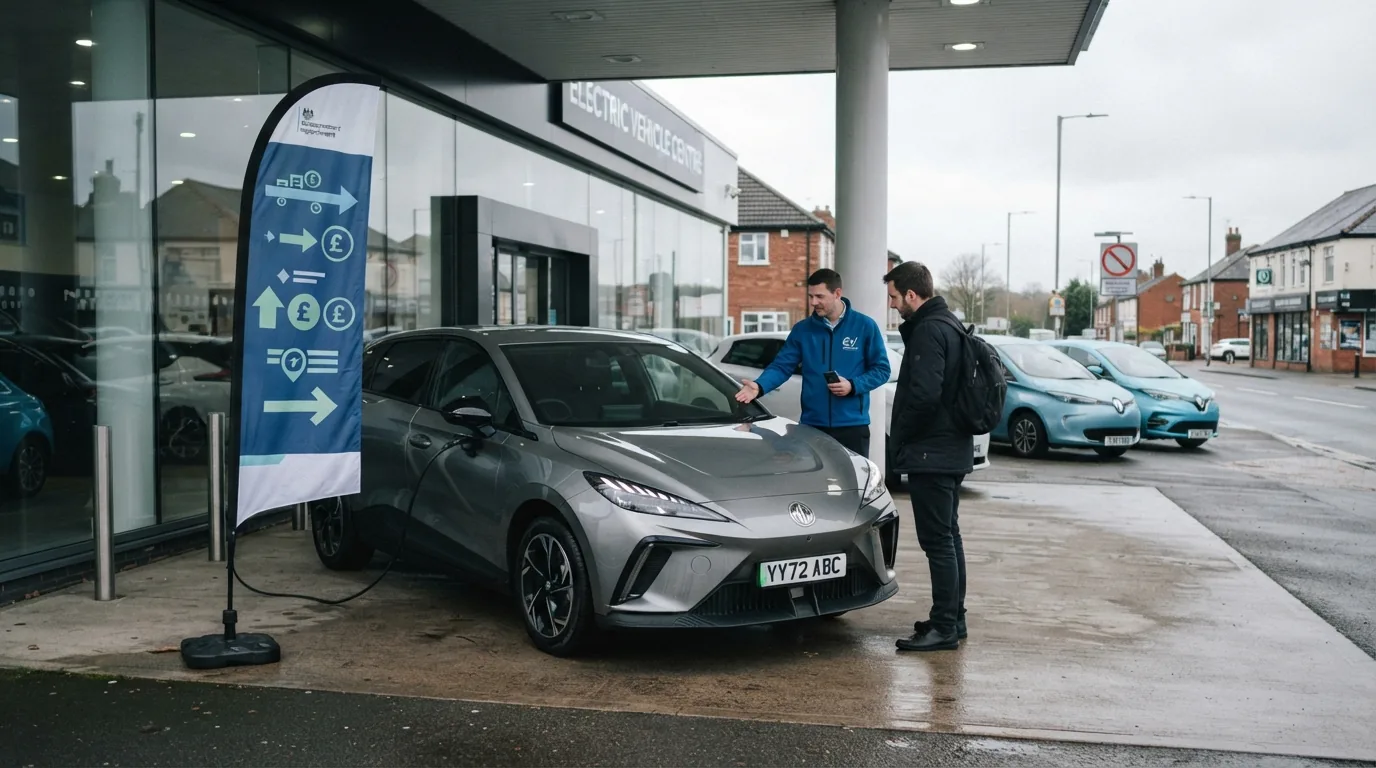
Quick answers
- The Plug-in Car Grant is no longer available. It was permanently closed to new applications on 14 June 2022 for cars, following years of cuts and a gradual shift in government strategy.
- What happened to the Plug-in Car Grant: The Plug-in Car Grant (PiCG) was introduced in 2011 by the coalition government.
- The Electric Car Grant is the active successor to the Plug-in Car Grant.
- Which cars currently qualify: The list changes as new models are assessed and older ones are removed.
- How do you claim the Electric Car Grant: The practical implication is that you should always ask whether a specific trim or configuration qualifies.
- Are there any grants left for chargepoints: Yes, and these are arguably more widely accessible than the car purchase grant.
The Plug-in Car Grant is no longer available. It was permanently closed to new applications on 14 June 2022 for cars, following years of cuts and a gradual shift in government strategy. A successor scheme, the Electric Car Grant, launched in late 2023 and is still active in 2026, offering up to £3,750 off eligible new electric cars. If you have read recently that “the Plug-in Car Grant” is still available, the source is either out of date or using the old name for the new scheme.
What happened to the Plug-in Car Grant?
The Plug-in Car Grant (PiCG) was introduced in 2011 by the coalition government. At its peak it offered £5,000 off new plug-in vehicles. Over the following decade, successive governments reduced the grant as EV sales grew and battery costs fell:
| Year | Maximum grant amount | Price cap |
|---|---|---|
| 2011 | £5,000 | None |
| 2016 | £4,500 | £60,000 |
| 2018 | £3,500 | £50,000 |
| 2020 | £3,000 | £50,000 |
| 2021 | £2,500 | £35,000 |
| June 2022 | Closed for cars | N/A |
When the PiCG for cars closed in June 2022, the government argued that the EV market had matured enough not to need a flat purchase subsidy. Vans and motorcycles remained eligible for plug-in grants under a separate strand.
A new scheme, the Electric Car Grant (ECG), replaced the PiCG in October 2023 with a fundamentally different structure.
What is the Electric Car Grant and how is it different?
The Electric Car Grant is the active successor to the Plug-in Car Grant. Key differences:
Banded structure rather than a flat rate. The ECG places eligible cars in one of two bands. Band 1 cars receive £3,750; Band 2 cars receive £1,500. The band is determined by a sustainability assessment covering factory standards, production efficiency and price positioning, not just the vehicle’s price and range.
Higher maximum discount. The original PiCG was just £1,500 when it was closed; the ECG’s maximum is £3,750.
Price cap raised slightly. The ECG applies to cars priced up to £37,000, slightly above the PiCG’s final £35,000 limit.
No plug-in hybrids. The ECG covers only 100% zero-emission vehicles. Plug-in hybrids are excluded.
Sustainability filter. This is the most significant change. Cars that do not meet the government’s environmental production criteria do not qualify, regardless of price or range. In practice, this has excluded most Chinese-manufactured models, even those that are competitively priced and have strong range figures.
Which cars currently qualify?
As of May 2026, there are 45 models on the eligible list. Nine are in Band 1 (£3,750 discount) and 36 in Band 2 (£1,500 discount).
Selected Band 1 models (£3,750 off):
- Renault 5 (52kWh battery, from around £23,000 before grant)
- Renault 4 (from around £27,000 before grant)
- Nissan Micra (52kWh)
- MINI Countryman Electric
- Renault Alpine A290
Selected Band 2 models (£1,500 off):
- Citroën e-C3 Aircross
- Volkswagen ID.3
- Peugeot e-308
- Cupra Raval (recently added)
- Various other European and Korean-manufactured EVs
The list changes as new models are assessed and older ones are removed. Always verify on OZEV’s official GOV.UK pages before finalising a purchase.
How do you claim the Electric Car Grant?
You do not apply for the ECG separately. The grant is deducted at the point of sale: your dealer claims it on OZEV’s behalf and reduces the invoice price by the appropriate amount. You simply pay the post-grant price.
The practical implication is that you should always ask whether a specific trim or configuration qualifies. Grants apply to specific model variants; a 40kWh version of a car might sit in Band 2 while the 52kWh version qualifies for Band 1.
Are there any grants left for chargepoints?
Yes, and these are arguably more widely accessible than the car purchase grant. As of 2026:
- Renters and flat-owners: up to £500 per socket (75% of purchase and installation cost)
- Residential landlords: up to £500 per socket (75% of cost)
- Businesses and employers (Workplace Charging Scheme): up to £500 per socket, max 40 sockets (up to £20,000 total)
All three schemes run to 31 March 2027. From 1 April 2026, the maximum per-socket rate increased from £350 to £500 for both the home and workplace schemes.
Note that homeowners who own a house with a private driveway are no longer eligible for the home chargepoint grant. The scheme has been refocused on those who face genuine barriers to installation.
What about vans?
The Plug-in Van Grant (PiVG) was never cancelled and remains active. It offers:
- Up to £2,500 for small vans (under 2,500kg GVW)
- Up to £5,000 for larger vans (2,500kg to 4,250kg GVW)
The van grant covers 35% of the vehicle’s price up to the relevant cap. It applies to qualifying zero-emission vans bought new and registered in the UK. The scheme has been extended and is expected to run to at least 2027.
The common myth: “there are no more EV grants”
This is one of the most widespread misconceptions in the UK EV market. The original Plug-in Car Grant for cars was closed in 2022, but it was replaced by the Electric Car Grant, which is more generous at the top end (£3,750 vs the final PiCG value of £1,500). On top of that, chargepoint grants, van grants and salary sacrifice incentives all remain available.
A driver who buys an eligible Band 1 EV through an employer salary sacrifice scheme in 2026 could realistically combine: a £3,750 purchase discount via the ECG, a £500 chargepoint grant (if a renter or flat-owner), and a 35 to 60% reduction in monthly costs through salary sacrifice. That is a very different picture from “no grants”.
How long will the Electric Car Grant last?
The OZEV funding for the ECG currently runs to the 2028/29 financial year. The November 2025 Budget added an extra £1.3 billion to the grant pool. However, the scheme can close earlier if the allocated budget runs out. With the ZEV Mandate requiring 33% of new car registrations to be zero-emission in 2026, demand for grant-eligible models is high. Popular Band 1 models such as the Renault 5 and Renault 4 have seen strong order books, and there is a realistic prospect that certain allocations could be exhausted before the scheme’s stated end date. If you are considering an ECG-eligible car, buying sooner is generally the more prudent approach.
What should you check before buying?
- Confirm your chosen model’s band on the OZEV eligible vehicles list.
- Check whether the specific trim level and battery size you want qualifies; grants apply to particular configurations, not entire model ranges.
- Ask your dealer to confirm they are an OZEV-approved agent for the grant.
- If you rent or own a flat, check eligibility for the £500 chargepoint grant.
- Ask your employer whether a salary sacrifice scheme is available; this can save significantly more than the grant alone for employed buyers.
For a full list of the best-value EVs under the current grant structure, see our guide to best value EVs that qualify for UK grants. For the broader policy picture, return to the grants, policy and legislation hub.
How we test and where our numbers come from
Range figures are official WLTP combined values taken from manufacturer UK specification pages, with real-world estimates drawn from independent comparative testing. Prices are UK list prices at the time of the latest update. Tax, grant and charging-scheme figures come from GOV.UK and HMRC publications. We re-check every guide when pricing, specification or policy changes. Last checked 11 August 2026.
Frequently asked questions
What happened to the Plug-in Car Grant?
The Plug-in Car Grant (PiCG) was introduced in 2011 by the coalition government. At its peak it offered £5,000 off new plug-in vehicles.
Which cars currently qualify?
As of May 2026, there are 45 models on the eligible list. Nine are in Band 1 (£3,750 discount) and 36 in Band 2 (£1,500 discount).
How do you claim the Electric Car Grant?
You do not apply for the ECG separately. The grant is deducted at the point of sale: your dealer claims it on OZEV's behalf and reduces the invoice price by the appropriate amount.
Are there any grants left for chargepoints?
All three schemes run to 31 March 2027. From 1 April 2026, the maximum per-socket rate increased from £350 to £500 for both the home and workplace schemes.
What about vans?
The van grant covers 35% of the vehicle's price up to the relevant cap. It applies to qualifying zero-emission vans bought new and registered in the UK.
Sources and further reading
- gov.ukGOV.UK OZEVPrimary source referenced in this article.

EV Compared
The EV Compared editorial team tracks the UK electric vehicle market full time: new model launches, list prices, WLTP and real-world range, public charging tariffs and the tax rules that decide what an EV actually costs to run. Every guide is checked against manufacturer specifications and official GOV.UK figures, and updated whenever the numbers move.
Related reading
View all
What Does the 2030 Petrol and Diesel Ban Actually Mean?
Separating the facts from the myths: what changes in 2030, what does not, and what it means for your next car
Best Affordable EVs Under the Electric Car Grant
The electric cars that combine a government grant with the lowest purchase prices in the UK market right now

What Is the Benefit in Kind Rate for Electric Cars?
The electric car BiK rate is 4% for 2026/27, rising to 9% by 2029/30 on a confirmed schedule. Here is what that means for your tax bill, with worked examples and a full multi-year projection.